.png)
.png)

Your Expert 5-Point Guide to Buying a Carbon Wheelchair in 2025
December 16, 2025
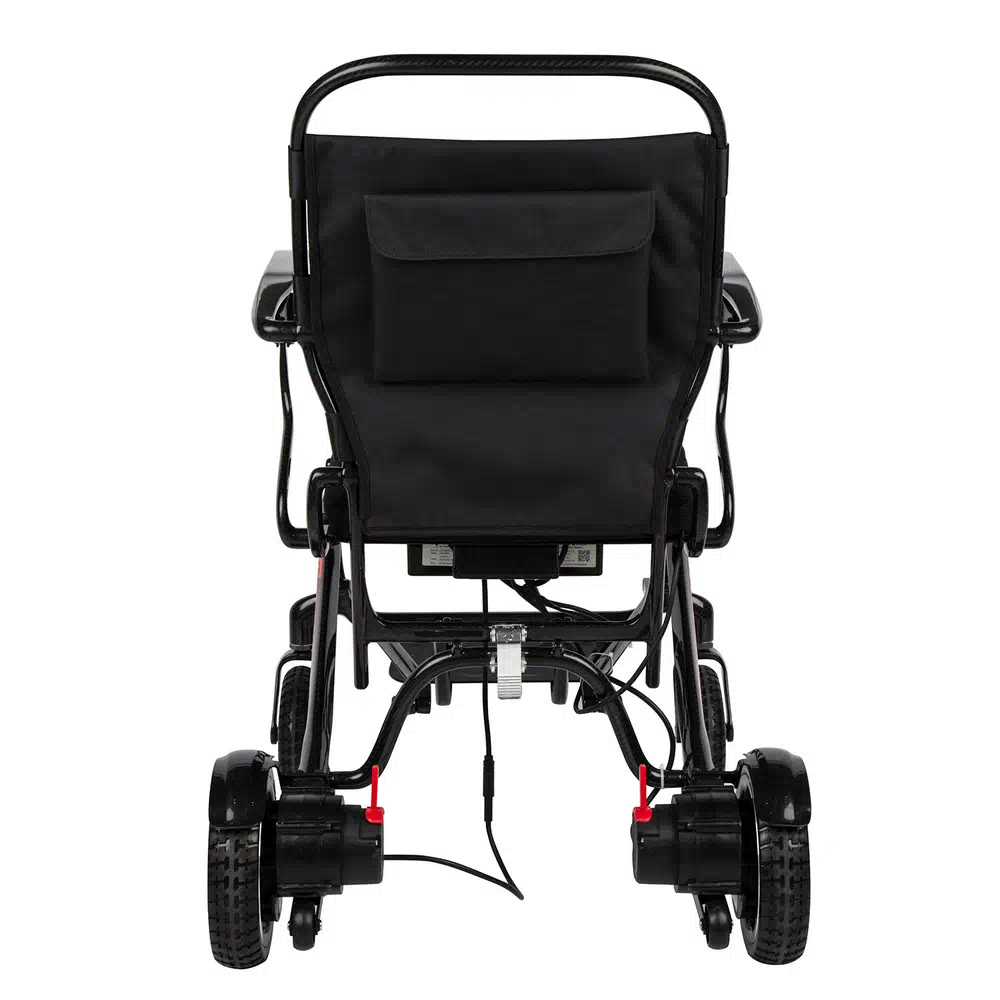
Abstract
The proliferation of advanced composite materials into the medical device sector has precipitated a significant evolution in personal mobility aids. A carbon wheelchair represents a paradigm shift from traditional steel or aluminum-framed devices, offering a unique confluence of high strength-to-weight ratio, durability, and user-centric design features. An analysis of the material science reveals carbon fiber’s anisotropic properties, which, when engineered correctly, provide exceptional rigidity and fatigue resistance while drastically reducing overall mass. A reduction in mass directly correlates with enhanced portability for users and caregivers, improved battery efficiency in electric models, and a reduction in the physical strain associated with manual propulsion. A comprehensive evaluation considers not only the material benefits but also the integrated systems, including motor technology, battery compliance with air travel regulations, and ergonomic adjustability. The higher initial acquisition cost of a carbon wheelchair is examined against its long-term value proposition, which encompasses lower maintenance, extended product lifespan, and the profound, albeit less quantifiable, impact on user independence and quality of life.
Key Takeaways
- Assess the strength-to-weight ratio, as it directly impacts portability and user effort.
- Verify battery specifications comply with IATA regulations for seamless air travel.
- Prioritize models with adjustable components to ensure proper ergonomic fit and comfort.
- Evaluate the long-term value of a carbon wheelchair beyond its initial purchase price.
- Consider folding mechanisms to match the chair’s portability with your lifestyle needs.
- Examine motor type in electric models for efficiency, noise, and maintenance.
- Investigate the manufacturer’s warranty and after-sales support for peace of mind.
Table of Contents
- Point 1: The Material Itself – Deconstructing the Carbon Fiber Advantage
- Point 2: A Question of Lifestyle – Portability, Folding Mechanisms, and Daily Use
- Point 3: Powering Your Freedom – Batteries, Motors, and Navigating Global Travel
- Point 4: The Human-Machine Interface – Ergonomics, Customization, and Comfort
- Point 5: An Investment in Mobility – Calculating the True Return on a Carbon Wheelchair
- Frequently Asked Questions (FAQ)
- Conclusion
- References
Point 1: The Material Itself – Deconstructing the Carbon Fiber Advantage
To truly comprehend the value and function of a modern carbon wheelchair, one must first develop an appreciation for the material at its core. Carbon fiber is not merely a “lighter metal”; it is a sophisticated composite whose properties are fundamentally different from the isotropic materials, like aluminum or steel, that have dominated wheelchair construction for decades. Thinking about carbon fiber requires a shift in perspective, moving from the world of bulk metals to the realm of engineered fabrics.
Imagine a rope. A single thread is weak, but thousands of threads woven together create a structure of immense strength along the length of the fibers. Carbon fiber operates on a similar principle, but at a microscopic scale. The material consists of thousands of incredibly thin crystalline filaments of carbon, each far thinner than a human hair. These filaments are bundled together to form a “tow,” which is then woven into a fabric-like sheet. The magic happens when these sheets are impregnated with a rigid polymer resin, typically an epoxy, and layered in a specific orientation within a mold. When cured under heat and pressure, the result is a carbon-fiber-reinforced polymer (CFRP)—a solid, lightweight component whose strength is directional, determined by the orientation of the fibers within. A manufacturer like carbon fiber electric wheelchairs supplier integrates design, production, and sales to harness these unique properties effectively.
From Aerospace to Personal Mobility: A Brief History of Carbon Fiber
The journey of carbon fiber from a laboratory curiosity to a cornerstone of high-performance engineering is a fascinating narrative. Its origins trace back to the late 1950s and early 1960s, driven by the demands of the aerospace industry for materials that were both stronger and lighter than the aluminum alloys of the day (Chung, 2017). Early applications were focused on military aircraft and spacecraft, where every kilogram of weight saved translated into significant gains in performance, fuel efficiency, or payload capacity. You can see the legacy of that pursuit of performance in the sleek, minimalist frames of today’s high-end mobility devices.
The material then migrated to the world of Formula 1 racing in the 1980s. Designers realized that a carbon fiber monocoque chassis could provide a rigid, protective survival cell for the driver that was also extraordinarily light, improving acceleration, braking, and cornering speed. The material’s ability to be molded into complex, aerodynamic shapes was another significant benefit. What does a race car have to do with a wheelchair? The engineering principles are strikingly similar: the need for a rigid frame that efficiently transfers energy (from an engine or from your arms), the desire for minimal weight to improve performance, and the requirement for absolute structural integrity. The same engineering that protects a driver at 300 km/h now provides security and efficiency for a person navigating a city sidewalk. The transition into consumer products, from high-end bicycles to tennis rackets and eventually to the carbon wheelchair, was a natural progression as manufacturing techniques became more refined and costs began to decrease.
The Weave and the Resin: How a Carbon Wheelchair Frame is Made
The construction of a carbon wheelchair frame is a process more akin to sculpture or bespoke tailoring than traditional metalworking. It begins with the design phase, where engineers use sophisticated software to simulate stresses and determine the optimal layup for the carbon fiber sheets. The “layup” refers to the precise orientation and number of layers of carbon fabric at every point in the frame. For instance, areas subject to high tension or compression, like the main cross-braces, will have more layers with fibers aligned to resist those specific forces. Areas with lower stress can use fewer layers, saving weight without compromising integrity.
Two primary methods are common in manufacturing:
- Monocoque Construction: In a monocoque frame, large sections of the wheelchair, or even the entire frame, are molded as a single, hollow piece. This method, borrowed directly from motorsport, creates a seamless, incredibly strong, and lightweight structure. It eliminates the stress points and weight associated with welds or mechanical joints found in metal frames. The smooth, flowing lines of many modern carbon wheelchair models are a direct result of this molding process.
- Tube-to-Tube Construction: An alternative method involves creating individual carbon fiber tubes, which are then mitered and bonded together, often with an overwrap of additional carbon fiber at the joints. While potentially slightly heavier than a true monocoque, a tube-to-tube frame allows for greater customization in frame geometry, making it a preferred method for creating bespoke, custom-fit manual wheelchairs.
Once the carbon layers are placed in the mold, the entire assembly is vacuum-bagged to remove any air and then cured in an autoclave—essentially a high-pressure oven. A process that ensures the resin fully impregnates the fibers and that the final part is free of voids or imperfections. The precision required in every step of this process is what contributes to the higher cost of a carbon wheelchair, but it is also what guarantees its superior performance characteristics.
Strength vs. Weight: A Comparative Analysis
The most frequently cited benefit of a carbon wheelchair is its remarkable strength-to-weight ratio. To put it in context, let’s compare the typical materials used in wheelchair construction. The table below offers a simplified but illustrative comparison of the material properties.
| Feature | Steel | Aluminum | Carbon Fiber (CFRP) |
|---|---|---|---|
| Relative Density | High (~7.8 g/cm³) | Medium (~2.7 g/cm³) | Very Low (~1.6 g/cm³) |
| Relative Strength | High | Medium | Very High |
| Strength-to-Weight Ratio | Good | Better | Best |
| Stiffness (Rigidity) | High | Medium | Very High (Tunable) |
| Fatigue Resistance | Fair | Poor to Fair | Excellent |
| Corrosion Resistance | Poor (requires coating) | Good | Excellent |
| Manufacturing Cost | Low | Medium | High |
What does this table mean for a wheelchair user? The very low density of carbon fiber is the most immediate and noticeable difference. A typical lightweight aluminum manual wheelchair might weigh around 12-15 kg. A comparable carbon wheelchair can weigh as little as 7-9 kg. In the world of electric wheelchairs, the difference is even more pronounced. A standard folding electric wheelchair might weigh 25-30 kg, making it a two-person job to lift into a car. A carbon fiber electric wheelchairs made from carbon fiber can weigh as little as 16-18 kg without batteries. A difference that is not just a number on a spec sheet; it is the difference between independent travel and being reliant on assistance. It is the freedom to decide to go somewhere on a whim, without the logistical challenge of managing a heavy piece of equipment.
Beyond Lightness: Vibration Damping and Fatigue Resistance
While the weight savings are profound, the other material properties of carbon fiber contribute significantly to the user experience. One of the most underrated benefits is vibration damping. Think of the difference between tapping a metal bell and a wooden block. The metal bell rings, vibrating for a long time. The wooden block produces a dull thud, absorbing the energy of the impact. Carbon composites behave more like the wooden block.
When a wheelchair rolls over uneven surfaces—cobblestones, cracked pavement, or even just textured flooring—the frame is subject to constant high-frequency vibrations. In a metal frame, these vibrations are transmitted directly to the user, leading to discomfort and fatigue over the course of a day. A carbon wheelchair frame has natural damping properties, meaning it absorbs and dissipates a significant portion of these vibrations (Gideon & Riemer, 2020). The result is a smoother, less jarring ride that can reduce back pain and overall body fatigue. It is a subtle but constant improvement in comfort that makes a substantial difference in daily life.
Furthermore, the fatigue resistance of carbon fiber is superior to that of aluminum. Metals, when subjected to repeated cycles of stress and relaxation, can develop microscopic cracks that eventually lead to failure. This phenomenon is known as metal fatigue. Aluminum is particularly susceptible to it. Carbon composites, on the other hand, are extremely resistant to fatigue. A well-made carbon wheelchair frame can withstand a lifetime of use and abuse without losing its structural integrity. It will not slowly become “soft” or flexible over time, as some older aluminum frames are known to do. That provides not just longevity but also a consistent, predictable level of performance for years to come.
Point 2: A Question of Lifestyle – Portability, Folding Mechanisms, and Daily Use
Choosing a wheelchair is not merely a medical decision; it is a lifestyle choice. The right wheelchair should be an extension of your body and an enabler of your ambitions, not a barrier to them. The introduction of the carbon wheelchair has fundamentally altered the calculus of this choice, particularly concerning portability and its integration into the fabric of daily life. The physical properties of carbon fiber, as discussed, are the foundation, but it is in the design and engineering of the complete system that these properties are translated into tangible freedom.
The central question to ask yourself is: “What does my day, my week, my ideal life look like?” Your answer will guide you toward the right type of carbon wheelchair. Are you a frequent traveler who needs to navigate airports and taxis? Are you a city dweller who primarily uses public transport? Or do you live in a suburban or rural area where your primary mode of transport is a personal vehicle? The demands of each scenario are different, and so are the solutions.
Manual vs. Electric: Defining Your Propulsion Needs
The first branching point in your decision tree is the choice between a manual and an electric carbon wheelchair.
A manual carbon wheelchair is the ultimate expression of lightweight design. These chairs are built for active users who have the upper body strength to self-propel. The benefits of the carbon frame are magnified here. Every push of the handrim is more efficient because less energy is wasted flexing the frame and more is converted directly into forward motion. The reduced weight makes every aspect of use less strenuous: accelerating, climbing inclines, and especially lifting the chair for transport. For a user who lifts their chair in and out of a car multiple times a day, saving 4-5 kg per lift amounts to a massive reduction in cumulative physical strain, potentially preventing shoulder and back injuries over the long term. These chairs are about maximizing human performance and preserving the user’s energy for living, not just for getting around.
An electric carbon wheelchair, on the other hand, is designed to provide mobility for individuals who cannot self-propel or who need to travel longer distances than is practical with manual power. Historically, electric wheelchairs were notoriously heavy and cumbersome. The use of carbon fiber in their frames has been revolutionary. Models like those found in the Richall product line carbon fiber electric wheelchairs supplier demonstrate how a powerful and feature-rich electric wheelchair can still be genuinely portable. The weight savings in the frame allow for a lighter overall system, or conversely, for the inclusion of more powerful batteries and motors without making the chair unmanageably heavy. An electric carbon wheelchair offers a powerful sense of independence, enabling users to tackle hills, cover several kilometers, and participate in activities that would be exhausting or impossible otherwise.
Folding Philosophies: One-Touch vs. Multi-Step Mechanisms
For both manual and electric models, the ability to fold the chair for transport or storage is a paramount concern. Not all folding mechanisms are created equal. The design of the folding system on a carbon wheelchair is often a key differentiator between models.
Consider the ‘one-touch’ or ‘automatic’ folding mechanism, often found on high-end electric models. These systems, sometimes operated by a remote control or a single button on the chair, can fold the wheelchair into a compact, luggage-like shape in a matter of seconds. This is a game-changer for users with limited strength or dexterity. There is no need to bend down, struggle with complex latches, or remove multiple parts. The entire process is automated and effortless.It is a prime example of such technology. The psychological benefit of such a system is immense; it removes a potential point of frustration and embarrassment, making the user more confident and willing to go out.
In contrast, many manual and some electric wheelchairs use a multi-step folding process. This typically involves folding down the backrest, flipping up the footplates, and then pulling up on a strap in the center of the seat to collapse the frame horizontally, like an accordion. While requiring more user interaction, these systems are often lighter and mechanically simpler than automated ones. For active users, the process becomes second nature in a few days. The key is to evaluate the process in the context of your own physical abilities. Can you comfortably bend and lift? Do you have the hand strength to operate the latches? A good mobility provider should allow you to test the folding mechanism yourself before you buy.
The ‘Car-Trunk Test’: Real-World Portability Metrics
The spec sheet can tell you the folded dimensions and the weight, but the “car-trunk test” is where theory meets reality. A wheelchair’s portability is not just about its weight; it is also about its shape when folded, its balance points, and the ease with which it can be gripped and lifted.
Imagine you are standing at the back of your car. You need to lift the folded wheelchair from the ground into the trunk. A chair that is not only light but also compact and well-balanced is far easier to manage. A chair that weighs 18 kg but is awkwardly shaped and has no good handholds can be more difficult to lift than a 20 kg chair that is designed with lifting in mind. Look for models that fold into a neat, rectangular shape that can be stood upright on its own. Some electric carbon wheelchair models are even designed to be wheeled like a piece of luggage when folded, completely eliminating the need to carry them over short distances.
Here is a practical exercise: before you purchase, measure the opening of your car’s trunk and the internal dimensions. Compare these with the folded dimensions of the wheelchair you are considering. Remember to account for the angle at which you will need to maneuver the chair into the trunk. The lightest carbon wheelchair in the world is of little use if it does not fit into your vehicle.
Matching the Chair to Your Environment: Urban vs. Rural Use
Your typical environment should heavily influence your choice of a carbon wheelchair, particularly the wheel and tire configuration.
For a predominantly urban user, who navigates smooth pavements, shopping malls, and public transport, a chair with smaller, solid tires may be ideal. Solid tires are puncture-proof and require zero maintenance, offering peace of mind in a city environment. Smaller wheels contribute to a more compact folded size and a tighter turning radius, which is invaluable for maneuvering in crowded cafes, narrow aisles, or small apartments. The inherent vibration-damping properties of the carbon wheelchair frame help to offset the harder ride of solid tires.
For a rural or suburban user, who might encounter more varied and challenging terrain—grass, gravel paths, uneven sidewalks—a wheelchair with larger, pneumatic (air-filled) rear tires is often a better choice. Larger wheels roll over obstacles more easily. Pneumatic tires act as a primary form of suspension, absorbing impacts and providing a much smoother, more comfortable ride on rough surfaces. While they require occasional air pressure checks and carry a risk of punctures, the improvement in comfort and capability on non-paved surfaces is significant. Many modern pneumatic tires also come with puncture-resistant linings to mitigate this risk. Some high-end electric carbon wheelchair models also incorporate dedicated suspension systems, with springs or elastomers at the front or rear wheels, further enhancing their all-terrain capability.
Point 3: Powering Your Freedom – Batteries, Motors, and Navigating Global Travel
For an electric carbon wheelchair, the frame is the skeleton, but the powertrain—the motors and batteries—is the heart and muscle. The technological advancements in these components are just as significant as the use of carbon fiber itself. Understanding how they work together is essential for selecting a chair that not only meets your daily mobility needs but also unlocks the possibility of long-distance travel. The lightweight nature of the carbon frame creates a virtuous cycle: a lighter chair requires less energy to move, which means batteries can be smaller and lighter for a given range, or a standard battery can provide a much greater travel distance.
Brushless vs. Brushed Motors: The Heart of Your Electric Carbon Wheelchair
The electric motors are what convert electrical energy from the batteries into motion. The vast majority of modern, high-quality electric wheelchairs, especially those in the carbon wheelchair category, use brushless DC motors. It is important to understand why this technology is superior to the older, brushed motor design.
Think of a brushed motor as a system with physical contacts (the “brushes”) that deliver power to the rotating part of the motor. These brushes wear down over time, creating dust and requiring periodic replacement. They are a point of friction and mechanical failure. They are also less efficient, meaning some of the battery’s energy is lost as heat instead of being converted into motion.
A brushless motor, by contrast, uses electronics to switch the direction of the magnetic field, eliminating the need for physical brushes. The benefits are numerous and profound:
- Higher Efficiency: Brushless motors are typically 85-90% efficient, compared to 75-80% for brushed motors. This means you get more range from the same battery.
- Longer Lifespan: With no brushes to wear out, the lifespan of a brushless motor is limited only by its bearings and is significantly longer. They are virtually maintenance-free.
- Quieter Operation: The absence of friction from brushes makes these motors noticeably quieter, providing a more pleasant user experience.
- Higher Power-to-Weight Ratio: Brushless motors can produce more power for their size and weight, a perfect complement to a lightweight carbon wheelchair frame.
When this is a marker of modern, high-quality engineering. It signals a commitment to performance, reliability, and a better user experience.
Lithium-Ion Technology: Understanding Battery Capacity, Range, and Lifespan
The second part of the powertrain is the energy source: the battery. The shift from heavy sealed lead-acid (SLA) batteries to lightweight, energy-dense lithium-ion batteries has been the single most important factor in creating truly portable electric wheelchairs. A lithium-ion battery can store three to four times the energy of an SLA battery of the same weight.
When looking at battery specifications, you will encounter two key numbers: Voltage (V) and Amp-hours (Ah).
- Voltage (V): This is the electrical potential of the system, typically 24V for most wheelchairs.
- Amp-hours (Ah): This is a measure of the battery’s capacity—how much charge it can hold. A higher Ah rating means a longer potential range.
The total energy capacity of a battery is measured in Watt-hours (Wh), which you can calculate by multiplying the voltage by the amp-hours (Wh = V x Ah). For example, a 24V, 10Ah battery has a capacity of 240Wh. This number is particularly important for air travel, as we will see.
The advertised range of an electric wheelchair (e.g., “up to 20 km”) is an estimate based on ideal conditions: a flat, smooth surface, a moderate speed, and an average-weight user. Your real-world range will be affected by:
- Terrain: Climbing hills consumes significantly more power.
- User Weight: A heavier user will reduce the maximum range.
- Speed: Driving at top speed will drain the battery faster than a steady, moderate pace.
- Temperature: Cold weather can temporarily reduce a lithium-ion battery’s effective capacity.
Many modern electric carbon wheelchair models come with two smaller batteries instead of one large one. This design offers several advantages. It can make each individual component lighter and easier to handle. It also provides redundancy; if one battery fails, you may still be able to operate the chair on the other.
The Frequent Flyer’s Dilemma: IATA Regulations and Air Travel
For many, the ultimate expression of freedom is the ability to travel by air. The regulations surrounding the transport of lithium-ion batteries on aircraft can seem confusing, but they are based on clear safety principles. The International Air Transport Association (IATA) sets the guidelines that most airlines worldwide follow (IATA, 2024).
Here is a breakdown of the rules as they apply to wheelchairs in 2025:
- The battery must be removable. You will need to remove the battery from the wheelchair and carry it with you into the aircraft cabin. The wheelchair itself is checked as baggage.
- There are limits on battery capacity.
- You can carry on one main battery with a capacity up to 300 Wh.
- Alternatively, you can carry on two smaller batteries, each with a capacity up to 160 Wh.
- A spare battery is also permitted. In addition to the battery/batteries powering the device, you may carry one spare battery up to 300 Wh, or two spares up to 160 Wh each.
This is why you will see many travel-focused electric wheelchair models, such as those from the Richall N3901 or W3902 series, equipped with two smaller batteries (e.g., 24V x 10Ah = 240Wh each, or sometimes two batteries around 150Wh each). This is not an accident; it is a specific design choice to ensure compliance with IATA regulations. The Golden Cricket GP302, another carbon fiber model, also features an FAA-approved battery designed for travel .
Before you fly, you must:
- Confirm the Watt-hour (Wh) rating of your batteries. The rating should be clearly printed on the battery casing.
- Contact your airline at least 48 hours before your flight. Inform them that you will be traveling with a battery-powered mobility device. They will give you specific instructions.
- Protect the battery terminals. When you carry the battery into the cabin, its terminals must be protected from short-circuiting. This can be done by placing it in its original retail packaging, a protective pouch, or by taping over the terminals.
Charging Infrastructure and Global Compatibility
Another practical aspect of travel is charging your wheelchair in a different country. Most modern wheelchair chargers are designed with universal voltage input, typically labeled “100-240V, 50/60Hz”. This means the charger can handle the electrical standards in Europe (230V), the US (120V), and most other parts of the world. All you will need is a simple, inexpensive plug adapter to fit the local wall socket.
When choosing an electric carbon wheelchair, confirm that its charger has this universal voltage capability. It is a small feature that provides enormous convenience and peace of mind for the international traveler. The ability to simply plug in your chair in a hotel room in Paris, Sydney, or New York, using only a small adapter, is another way that modern engineering removes barriers to a global lifestyle.
Point 4: The Human-Machine Interface – Ergonomics, Customization, and Comfort
A wheelchair is one of the most intimate pieces of technology a person can use. It is a device that you wear, that becomes a part of your physical form as you move through the world. Therefore, the way the chair fits your body—its ergonomics—is not a secondary consideration; it is of primary importance. A poorly fitting wheelchair can cause discomfort, pressure sores, and even long-term postural problems. A well-fitting chair, on the other hand, promotes health, comfort, and efficient function. The advanced materials and manufacturing of a carbon wheelchair are wasted if the human-machine interface is not correctly configured.
The Importance of a Perfect Fit: Seat Dimensions and Adjustability
The three most critical dimensions of a wheelchair seat are its width, depth, and height from the floor.
- Seat Width: The seat should be wide enough to accommodate your hips without being so wide that you have to stretch to reach the handrims (on a manual chair) or that your posture becomes unstable. As a general rule, you should be able to slide your hands flat between your hips and the side guards of the chair. Too narrow a seat will cause pressure and friction, while too wide a seat will lead to instability and difficulty in propulsion.
- Seat Depth: The seat depth should support the majority of your thigh length without pressing into the back of your knees. The ideal depth leaves a gap of about two to three fingers’ width between the front edge of the seat and the back of your calf. Too shallow a seat provides inadequate support and stability. Too deep a seat can cut off circulation and cause pressure behind the knees.
- Seat-to-Floor Height: This dimension affects your ability to transfer in and out of the chair, as well as your interaction with the environment. For manual users, it must be low enough that your feet can rest flat on the floor for foot-propulsion if needed. For all users, it should allow you to sit comfortably at tables and desks. Many high-quality carbon wheelchair models offer some degree of adjustability in these key dimensions, or they are available in a range of sizes to suit different body types.
Beyond these basic dimensions, look for adjustability in other components. The height of the armrests, the angle of the backrest, and the position of the footplates can all have a significant impact on your posture and comfort throughout the day. A chair that allows you to fine-tune these elements is a chair that you can truly make your own.
Control Systems: From Simple Joysticks to Advanced Programming
For an electric carbon wheelchair, the joystick is your connection to the world. It is the steering wheel, accelerator, and brake all in one. The quality of the controller can dramatically affect the user experience.
A basic controller will offer proportional control—the further you push the joystick, the faster the chair moves. It will have a simple on/off button and perhaps a horn. These are intuitive and easy to learn.
However, more advanced controllers, like the Dynamic LiNX system mentioned for some Golden Technologies models , offer a much greater degree of programmability. A technician can connect a computer to the controller and fine-tune dozens of parameters, including:
- Acceleration and Deceleration: How quickly the chair starts and stops.
- Turning Speed: The speed can be automatically reduced when turning for enhanced stability.
- Tremor Damping: The controller can filter out involuntary hand movements, allowing users with tremors to drive safely and smoothly.
- Veer Correction: The system can be programmed to compensate for any tendency of the chair to drift to one side.
Some modern joysticks also feature LCD screens that provide real-time information such as battery level, current speed, and diagnostic codes. Some even incorporate Bluetooth connectivity, allowing the user to control their smartphone or tablet directly from the wheelchair’s joystick. When evaluating an electric carbon wheelchair, inquire about the type of controller it uses and the extent of its programmability. A customizable controller can adapt the chair’s performance to your specific needs and abilities.
Suspension Systems: Smoothing Out Life’s Bumps
We have already discussed the natural vibration-damping properties of a carbon wheelchair frame. However, for an even smoother ride, especially on an electric model designed for outdoor use, a dedicated suspension system can be invaluable.
Suspension on a wheelchair works just like suspension on a car, allowing the wheels to move up and down to absorb impacts from bumps and uneven terrain. This isolates the main frame, and therefore the user, from the jarring forces. Common types of suspension found on wheelchairs include:
- Spring Suspension: Simple, effective coil or leaf springs are used to absorb impacts.
- Elastomer Suspension: Blocks of a specialized rubber-like polymer (an elastomer) are used to absorb shock. These are often lighter and require less maintenance than springs.
- Articulating Frames: Some advanced designs allow parts of the frame to pivot or flex, enabling all wheels to remain in contact with the ground on uneven surfaces, which greatly improves stability and traction.
The presence of a suspension system, even a simple one, can make a world of difference to a user who regularly travels over cracked sidewalks, park trails, or other imperfect surfaces. It reduces the fatigue and discomfort associated with whole-body vibration and enhances the overall feeling of stability and control.
Accessorizing Your Ride: From Cushions to Bags
The final layer of customization comes from the accessories you choose. These are not mere add-ons; they are integral to the chair’s function and your comfort.
- Seat Cushions: The standard cushion that comes with a wheelchair may not be sufficient, especially for users who spend many hours in their chair each day. A high-quality pressure-relief cushion is one of the most important investments you can make. Cushions are made from a variety of materials, including foam, gel, and air cells, and are designed to distribute pressure evenly to prevent the development of pressure sores. A consultation with an occupational therapist or a seating specialist is highly recommended to find the right cushion for your needs.
- Backrests: Similar to cushions, aftermarket backrests can provide superior support and comfort compared to the standard upholstery. Options range from simple tension-adjustable backs to rigid, contoured shells that provide significant postural support.
- Storage: Where will you put your phone, wallet, a bottle of water, or a light jacket? Look for wheelchairs that offer integrated storage solutions, such as under-seat bags or pouches that attach to the armrests. A well-designed storage system keeps your essential items secure and within easy reach, enhancing your independence.
- Other Accessories: A vast ecosystem of accessories exists, including cup holders, phone mounts, oxygen tank holders, and travel bags designed to protect your folded carbon wheelchair during transport. Companies like Richall often list optional parts and accessories for their models, allowing you to tailor the chair to your specific activities .
The process of selecting and customizing a carbon wheelchair is a collaborative one. It involves you, your family or caregivers, healthcare professionals, and a knowledgeable mobility equipment supplier. By carefully considering each of these ergonomic and customization factors, you can ensure that your wheelchair is not just a device, but a perfect partner in your journey toward greater mobility and independence.
Point 5: An Investment in Mobility – Calculating the True Return on a Carbon Wheelchair
There is no avoiding the fact that a carbon wheelchair represents a significant financial outlay. The advanced materials and complex manufacturing processes mean that its initial purchase price is considerably higher than that of an aluminum or steel equivalent. It is natural to ask, “Is it worth it?” To answer that question, we must look beyond the price tag and adopt a more holistic view of value, calculating the total cost of ownership and the less tangible, but profoundly important, return on investment in terms of quality of life.
The Upfront Cost: What Are You Paying For?
When you purchase a carbon wheelchair, you are not just paying for a few kilograms of carbon fiber. You are investing in a cascade of benefits that stem from that material choice. Let’s break down the cost:
- Raw Materials: The carbon fiber fabric and the specialized epoxy resins are inherently more expensive than aluminum or steel tubing.
- Labor-Intensive Manufacturing: As described earlier, the process of laying up carbon fiber, molding it, and curing it in an autoclave is far more hands-on and time-consuming than welding a metal frame. That skilled labor contributes to the cost.
- Research and Development: Companies that produce high-end carbon wheelchairs, like the manufacturers in the provided search results, invest heavily in engineering, design, and testing to optimize their products. This R&D cost is amortized across the products they sell.
- Integrated High-End Components: Premium wheelchairs are typically equipped with other high-quality components. An electric carbon wheelchair will almost certainly have efficient brushless motors and energy-dense lithium-ion batteries, which are more expensive than their older counterparts. High-quality wheels, bearings, and control systems also add to the total cost.
So, the higher price reflects a higher level of technology, performance, and craftsmanship throughout the entire product. It is a payment for a premium piece of engineering. A search on a B2B platform like Alibaba might show a price of around $1,000 USD per unit for a bulk order of a carbon fiber electric wheelchair , while a single-unit retail price for a high-end model like the Golden Cricket can be closer to $3,000 USD .
Maintenance and Longevity: A Carbon Wheelchair’s Lifespan
The total cost of ownership is the initial purchase price plus the cost of maintenance and repairs over the life of the product. A carbon wheelchair often excels in this regard.
- Frame Maintenance: A carbon frame requires virtually no maintenance. It will not rust or corrode, even in damp or coastal environments. It does not need to be repainted. A simple wipe-down with a damp cloth is all that is needed to keep it clean.
- Fatigue Life: As mentioned, carbon fiber’s excellent fatigue resistance means the frame is unlikely to fail or lose its stiffness over time. A metal frame might need to be replaced after 5-7 years of heavy use, whereas a carbon frame can last much longer, potentially 10 years or more. By purchasing one carbon wheelchair instead of two aluminum ones over the same period, the initial cost difference begins to narrow.
- Component Wear: The lighter weight of the overall system can also reduce wear and tear on other components. Tires, wheel bearings, and motor components may last longer because they are subjected to less stress.
The primary maintenance tasks for a carbon wheelchair will be the same as for any wheelchair: checking tire pressure (if pneumatic), ensuring bolts are tight, and caring for the batteries (on electric models). The frame itself, the most expensive component, is exceptionally durable and maintenance-free.
The Intangible ROI: Quantifying Independence and Quality of Life
The most significant return on investment from a carbon wheelchair is not measured in dollars or euros, but in freedom, independence, and well-being. How do you put a price on these things?
Consider these scenarios:
- Reduced Physical Strain: The ability for a user or their aging partner to lift the wheelchair into a car without risk of injury. That prevents pain, medical bills, and a potential loss of independence for the caregiver.
- Spontaneity: The freedom to decide to go to the park, visit a friend, or take a weekend trip without a major logistical operation. That spontaneity is a cornerstone of a normal, fulfilling life.
- Reduced Fatigue: The smoother ride and more efficient propulsion (manual or electric) leave the user with more energy at the end of the day. That energy can be spent on hobbies, work, or time with family, rather than on recovering from the effort of getting around.
- Social Participation: A lightweight, portable wheelchair makes it easier to navigate restaurants, theaters, friends’ homes, and other social venues. That reduces social isolation, which is a major factor in mental and physical health.
- Employment: For some, the ability to independently transport their wheelchair may be the deciding factor in being able to commute to a job. The financial and personal returns from employment are immense.
These are not trivial benefits. They are profound improvements to a person’s capability and flourishing, in the sense that philosopher Martha Nussbaum would describe. The wheelchair ceases to be just a medical device and becomes a tool for empowerment and life engagement. When viewed from this perspective, the higher initial cost can be seen as a direct investment in a higher quality of life.
Resale Value and Future-Proofing Your Investment
Finally, a well-maintained carbon wheelchair from a reputable brand tends to have a better resale value than a standard metal chair. The material is still seen as premium and desirable, and its durability means that a used model is often in excellent condition. Should your needs change in the future, you may be able to recoup a larger portion of your initial investment.
Furthermore, by investing in a chair with modern technology—a carbon frame, brushless motors, lithium-ion batteries—you are “future-proofing” your purchase. You are buying a device that is at the forefront of current technology, not one that is already on the verge of being obsolete. It will remain a capable and relevant piece of equipment for many years to come.
In the final analysis, the decision to purchase a carbon wheelchair is a value judgment. It requires weighing the tangible financial cost against the profound and life-altering benefits of reduced weight, enhanced performance, and greater independence. For many, the calculation is clear: the freedom and capability that a carbon wheelchair provides is an investment that pays dividends every single day.
Frequently Asked Questions (FAQ)
What is the real weight of an electric carbon wheelchair with batteries?
The advertised weight of electric wheelchairs is often the weight of the frame alone. It is a critical question to ask about the weight with the batteries included. For example, the Richall W3902 model has a net weight of 16.3 kg without batteries, but 18.8 kg with its two lithium batteries installed. Always confirm the total operational weight, as that is the figure relevant for lifting and transport.
Are carbon wheelchair frames more fragile or prone to breaking than metal ones?
This is a common misconception. While carbon fiber can be damaged by a very sharp, focused impact, a well-designed carbon wheelchair frame is incredibly strong and resilient. It is engineered to withstand the stresses of daily use far better than aluminum. It does not bend on impact like metal; it either flexes and returns to its shape or, in a catastrophic failure (which is extremely rare in normal use), it would crack. Its resistance to fatigue means it is actually less likely to fail over time from repeated stress.
How do I clean and maintain a carbon fiber frame?
Maintenance is remarkably simple. The carbon composite frame is impervious to water and most cleaning agents. To clean it, simply use a soft cloth with mild soap and water. Avoid using abrasive scouring pads or harsh chemical solvents, as these could dull the clear coat finish. Periodically check that all bolts and fasteners on the chair are secure, but the frame itself requires no special upkeep.
Can I get a carbon wheelchair reimbursed by insurance or national health services?
Coverage varies dramatically by country and by insurance plan. In the United States, Medicare Part B may cover a portion of the cost of an electric wheelchair if it is deemed a medical necessity for use within the home (Medicare.gov, n.d.). However, they typically reimburse based on the cost of a standard, lower-cost model. The additional cost for a premium model like a carbon wheelchair is often an out-of-pocket expense. In European countries with national health services, the process is different and depends on the specific assessment and funding criteria of that country. It is essential to consult with your doctor and your insurance provider or local health authority to understand what coverage may be available to you.
What is the real-world battery range I can expect from an electric carbon wheelchair?
The advertised range (e.g., 20 km) is a best-case scenario. Real-world range is influenced by user weight, terrain, speed, and even ambient temperature. A good rule of thumb is to expect about 70-80% of the maximum advertised range in mixed, everyday use. If you live in a very hilly area or are a heavier individual, you might expect closer to 50-60%. Understanding these factors helps you plan your journeys and avoid “range anxiety.”
Is a carbon wheelchair suitable for a very heavy user?
Yes, absolutely. The strength of carbon fiber means that these wheelchairs can be designed to have very high weight capacities. Many standard models support users up to 120-136 kg (265-300 lbs). Heavy-duty versions are also available that can safely accommodate heavier individuals, all while still offering significant weight savings compared to a heavy-duty metal wheelchair. Always check the specified weight capacity for any model you are considering.
Can the joystick on an electric wheelchair be moved for a left-handed user?
Yes, on almost all modern electric wheelchairs, the joystick controller is designed to be easily mounted on either the left or right armrest. The process usually involves loosening a clamp, moving the controller and its cable to the other side, and re-tightening the clamp. This is a standard feature that ensures the chair is accessible to both right-handed and left-handed users.
Conclusion
The journey through the world of the carbon wheelchair reveals a technology that is far more than just a lighter alternative to the status quo. It is a fundamental rethinking of personal mobility, where principles from aerospace engineering and elite motorsports are applied to enhance human capability and freedom. The choice of material initiates a cascade of benefits: the drastic reduction in weight makes transport and self-propulsion less taxing, the inherent vibration damping provides a smoother and more comfortable ride, and the exceptional fatigue resistance ensures a long and reliable service life.
For the prospective user in 2025, the decision-making process is a thoughtful deliberation of lifestyle, physical needs, and long-term value. It involves matching the chair’s portability and folding mechanism to your daily routines, understanding the nuances of battery technology for seamless travel, and ensuring the ergonomic design can be tailored to your unique body shape for optimal health and comfort. While the initial financial investment is significant, a deeper analysis shows a return that transcends monetary value. The true return on investment is measured in the reduction of physical and mental burdens, the newfound spontaneity in daily life, and the quiet confidence that comes from having a reliable, high-performance tool that enables, rather than restricts, your engagement with the world. Making an informed choice is the first step toward harnessing that potential.
References
Chung, D. D. L. (2017). Carbon fiber composites. Butterworth-Heinemann.
Gideon, R., & Riemer, R. (2020). Whole body vibration during wheelchair propulsion: A systematic review. Applied Ergonomics, 88, 103175.
Home-Med-Equip. (n.d.). Electric power wheelchairs. Retrieved May 15, 2025, from
International Air Transport Association. (2024). IATA dangerous goods regulations. Retrieved May 15, 2025, from
Made-in-China.com. (n.d.-a). Richall automatic folding lightweight power wheelchair remote control carbon fibre electric wheelchair. Retrieved May 15, 2025, from https://electricwheelchair.en.made-in-china.com/product/OdofkxVvLlGs/China-Richall-Automatic-Folding-Lightweight-Power-Wheelchair-Remote-Control-Carbon-Fibre-Electric-Wheelchair.html
Medicare.gov. (n.d.). Wheelchairs & scooters. The Official U.S. Government Site for Medicare. Retrieved May 15, 2025, from
Richall Medical. (n.d.-a). Best carbon fiber folding wheelchair for travel. Retrieved May 15, 2025, from https://www.richallmed.com/Best-Carbon-Fiber-Folding-Wheelchair-for-Travel-id46725416.html
Richall Medical. (n.d.-b). RICHALL: Leading carbon fiber electric wheelchair supplier. Retrieved May 15, 2025, from https://www.richallmed.com/
Richall Medical. (n.d.-c). Top 5 lightweight electric wheelchairs under 50 pounds. Retrieved May 15, 2025, from https://www.richallmed.com/Top-5-Lightweight-Electric-Wheelchairs-Under-50-Pounds-id41635416.html