.png)
.png)

Expert Buyer’s Guide: The Top 5 Folding Electric Wheelchairs for 2025
décembre 23, 2025
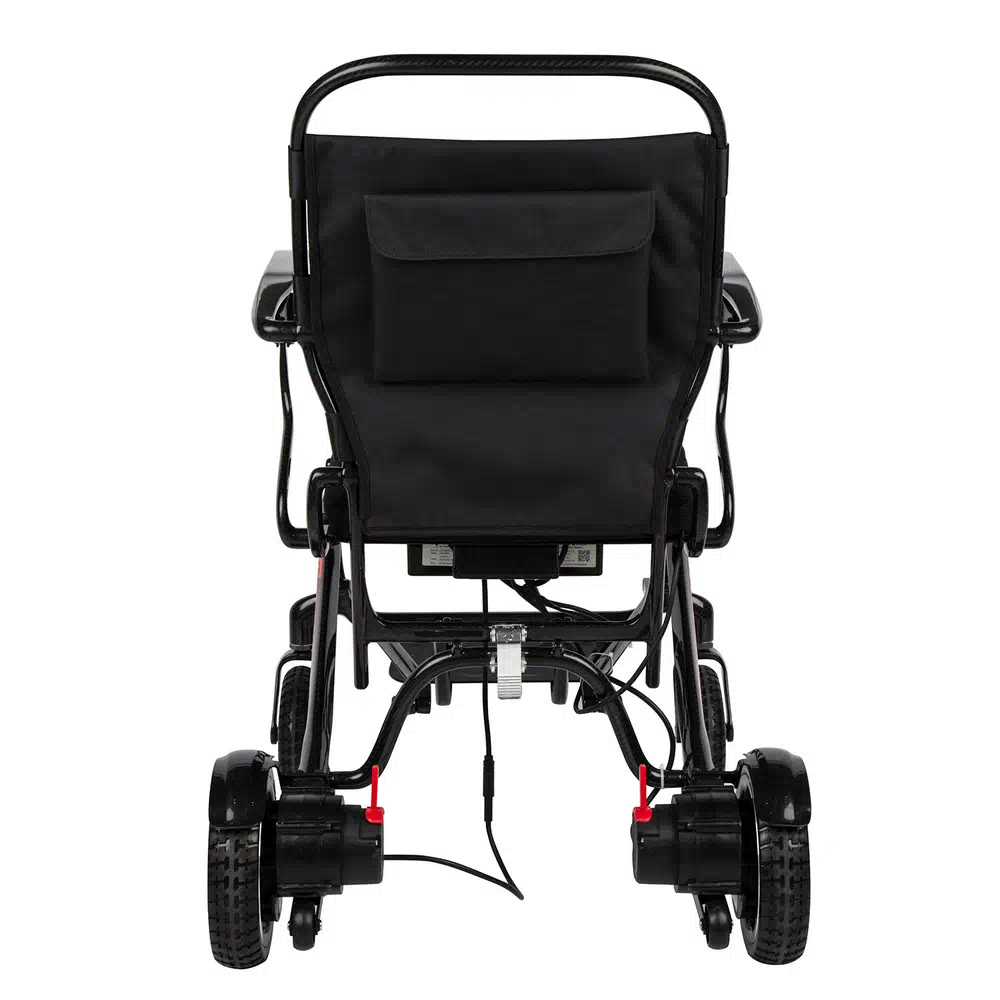
Résumé
The landscape of personal mobility is undergoing a significant transformation, driven by advancements in material science and engineering. This article provides a comprehensive examination of the leading folding electric wheelchairs available in 2025, focusing on models that epitomize the balance between powered mobility, lightweight design, and portability. It evaluates five distinct models, analyzing their construction, performance specifications, and suitability for various user lifestyles, from daily urban navigation to international travel. The analysis places a particular emphasis on the impact of carbon fiber construction, which has enabled the development of ultra-lightweight yet durable frames. The discussion extends beyond product specifications to explore the ergonomic, practical, and regulatory considerations that inform a user’s selection process. The objective is to equip prospective users with a deep, nuanced understanding of the available technology, facilitating an informed decision that aligns with their specific mobility requirements and aspirations for independence. This review serves as a critical resource for consumers navigating the increasingly sophisticated market of assistive mobility devices.
Principaux enseignements
- Prioritize carbon fiber frames for the best combination of low weight and high strength.
- Verify battery specifications for airline compliance before planning any air travel.
- Assess your daily environment to choose between indoor maneuverability and outdoor power.
- Consider the folded dimensions of a chair to ensure it fits your vehicle and home storage.
- Evaluate seating ergonomics to ensure long-term comfort for your specific needs.
- The top 5 folding electric wheelchairs for 2025 offer unprecedented freedom through technology.
- Test drive different joystick controllers to find one that feels intuitive to you.
Table des matières
- A New Epoch for Personal Mobility
- The Heart of the Matter: Understanding Frame Materials
- Navigating Your Choices: A Guide to Selecting the Perfect Chair
- The Top 5 Folding Electric Wheelchairs for 2025: An In-Depth Review
- Maximizing Your Mobility: Essential Accessories and Maintenance
- Foire aux questions (FAQ)
- A Reflection on Modern Mobility
- Références
A New Epoch for Personal Mobility
The human desire for autonomy is profound; it is a current that runs through the very core of our being. For individuals facing mobility challenges, this desire manifests as a quest for tools that do not merely assist, but empower. We have moved far beyond the era where a mobility aid was a symbol of limitation. Today, particularly as we look at the market in 2025, these devices represent a reclamation of freedom, a passport to participation in the wider world. The evolution from heavy, cumbersome manual wheelchairs to the sophisticated power chairs of today is a narrative of human ingenuity. Yet, for a long time, a fundamental tension existed: the choice between the effortless movement of a power chair its significant weight, bulk, which limited transportability. The introduction of the folding electric wheelchair began to resolve this tension, but the true revolution has been in the materials used to build them.
Imagine for a moment the difference between carrying a heavy suitcase filled with books versus one made of lightweight, advanced composites filled with the same books. The contents are identical, but the effort required to move them is vastly different. This is the conceptual leap we are witnessing. The development of folding electric wheelchairs, especially those utilizing materials like carbon fiber, has fundamentally altered the user’s relationship with their mobility device. It is no longer a static object to be used only in a limited area. It becomes a dynamic partner, one that can be folded with ease, lifted into the trunk of a car, checked onto an airplane, or stored neatly in a closet. This guide is dedicated to exploring the pinnacle of this technological wave. We will examine the top 5 folding electric wheelchairs for 2025, not just as a list of products, but as a study in how technology can foster a more profound sense of personal liberty.
The Heart of the Matter: Understanding Frame Materials
Before we can appreciate the specific models that define the market, we must first understand the foundation upon which they are built: the frame. The frame of a wheelchair is its skeleton. It dictates the chair’s weight, its strength, its durability, its very character. For decades, steel was the standard, chosen for its strength and low cost. Its considerable weight was simply an accepted trade-off. Then came aluminum, a lighter alternative that made wheelchairs more manageable, but the true paradigm shift has arrived with carbon fiber. To make a truly informed choice, one must grasp the distinct philosophies embodied by these materials.
The Case for Carbon Fiber: Strength in Lightness
Carbon fiber is a material that seems almost paradoxical. It is lighter than aluminum yet, pound for pound, can be up to five times stronger than steel (Advani & Sozer, 2018). How is this possible? The answer lies in its microscopic structure. Carbon fiber is composed of thousands of incredibly thin strands of carbon atoms, woven together like thread into a fabric. This fabric is then laid in layers, often in different orientations, infused with a resin, and cured under high heat and pressure. The result is a unified composite material, or a “matrix,” where the woven carbon provides immense tensile strength while the hardened resin provides compressive strength holds everything together.
Think of it like reinforced concrete. The steel rebar provides strength against pulling forces, while the concrete resists crushing forces. Together, they create a structure far stronger than either component alone. In a carbon fiber frame, the carbon weave is the rebar, the resin is the concrete. This intricate process is what makes lightweight carbon fiber wheelchairs so remarkable. They are not just light; they possess a designed strength that can be tailored by altering the direction of the carbon weave to handle specific stresses a wheelchair frame endures. This allows engineers to create frames that are both astonishingly light for lifting into a car, while also being rigid enough to provide a responsive, stable ride. A carbon fiber electric wheelchair is the result of this advanced engineering, offering a premium experience for those who prioritize portability above all else.
The Enduring Appeal of Aluminum Alloy
While carbon fiber represents the cutting edge, aluminum alloy remains a hugely popular and practical choice for wheelchair frames. It strikes a fantastic balance between weight, strength, corrosion resistance, cost. The term “alloy” is key here; pure aluminum is quite soft, so it is mixed with other elements like magnesium, silicon, or zinc to create a material with significantly enhanced properties. The resulting aluminum alloy is much lighter than steel, making an aluminum electric wheelchair far easier to propel or lift than its older steel counterparts.
The primary advantage of aluminum over carbon fiber is cost effectiveness. The manufacturing process for an aluminum frame, which typically involves welding extruded tubes, is less complex labor-intensive than the process of creating a carbon fiber composite. This makes aluminum-framed folding electric wheelchairs more accessible from a price perspective. They may weigh a few kilograms more than their carbon fiber cousins, but for many users, this slight increase in weight is a perfectly acceptable compromise for a more attainable price point. Furthermore, aluminum has a well-understood performance profile; it is durable has excellent resistance to rust, making it a reliable choice for an outdoor electric wheelchair that will be exposed to the elements.
Material Comparison: A Head-to-Head Analysis
| Fonctionnalité | Fibre de carbone | Alliage d'aluminium |
|---|---|---|
| Poids | Exceptionally light, often 30-40% lighter than aluminum. | Lightweight, significantly lighter than steel. |
| Rapport résistance/poids | Extremely high; stronger than steel for its weight. | Good; provides robust performance for its weight. |
| Durability & Fatigue | Highly resistant to fatigue and cyclical stress. | Good durability, but can be prone to fatigue over many years. |
| Ride Quality | Excellent vibration damping properties, leading to a smoother ride. | More rigid; can transmit more vibration from the ground. |
| Coût de fabrication | High, due to complex, labor-intensive processes. | Moderate, due to well-established manufacturing techniques. |
| Résistance à la corrosion | Completely immune to rust and corrosion. | Excellent corrosion resistance, especially when anodized or painted. |
| Profil de l'utilisateur idéal | The user who prioritizes lowest possible weight for travel and lifting. | The user seeking a balance of good performance, light weight, and value. |
Navigating Your Choices: A Guide to Selecting the Perfect Chair
Choosing from the top 5 folding electric wheelchairs for 2025 is not about finding the “best” chair in an absolute sense. It is about finding the chair that is best for you. This requires a thoughtful process of self-reflection, an honest assessment of your daily life, your physical capabilities, your aspirations. A wheelchair is an extension of your body, a tool that should integrate seamlessly into your life’s routines. Let us break down the core considerations into a structured thought process.
Assessing Your Mobility Needs: Indoor vs. Outdoor Use
First, paint a mental picture of your typical week. Where do you go? What surfaces do you travel over? The answer to these questions will guide your choice of drive system and wheel size.
An fauteuil roulant électrique d'intérieur is designed for maneuverability in confined spaces. Think of navigating narrow hallways, tight corners in a kitchen, or a crowded cafe. For these environments, a mid-wheel drive system is often superior. With the main drive wheels located directly under the user’s center of gravity, these chairs can essentially turn on the spot, boasting a very small turning radius. They often feature smaller, solid tires that perform well on smooth, flat surfaces like tile, wood, or low-pile carpet.
Conversely, an fauteuil roulant électrique d'extérieur is built for performance and stability on more varied terrain. This might involve crossing a grassy park, navigating cracked sidewalks, or climbing gentle inclines. These chairs often benefit from a rear-wheel drive system, which provides excellent straight-line stability at higher speeds, much like a car. They will typically have larger, often pneumatic (air-filled) tires that provide better traction a smoother ride by absorbing bumps small obstacles. Some front-wheel drive models also excel outdoors, offering great obstacle-climbing capabilities. The key is to match the chair’s design to the challenges of your most common environment.
The Traveler’s Checklist: Airline Compliance and Portability
For many, the ultimate expression of freedom is the ability to travel. If airplanes, trains, or cruise ships are in your plans, your focus must sharpen on two areas: battery regulations portability.
Aviation authorities like the Federal Aviation Administration (FAA) in the United States the European Union Aviation Safety Agency (EASA) have strict rules regarding lithium-ion batteries, which power virtually all modern folding electric wheelchairs. Generally, you can travel with your wheelchair, but the batteries must meet certain criteria. As of early 2025, a user can typically bring a wheelchair with an installed lithium-ion battery up to 300 Watt-hours (Wh) or two spare batteries of up to 160 Wh each (Federal Aviation Administration, 2024). It is absolutely vital to check the Wh rating of a wheelchair’s battery before purchase if you plan to fly. Reputable manufacturers will clearly state if their batteries are “airline-approved” provide the necessary documentation (like a Material Safety Data Sheet) you may need to show the airline.
Portability extends beyond the battery. Consider the chair’s total weight its folded dimensions. Can you, or a travel companion, realistically lift it into a car’s trunk or a taxi? The lightest carbon fiber models, weighing around 15-18 kg (33-40 lbs), are a game-changer in this regard. Also, examine the folding mechanism. Is it a simple, one-step process, or does it require multiple steps or even partial disassembly? The ideal travel chair folds compactly intuitively, minimizing hassle at a busy airport or train station.
Understanding Key Specifications: Battery, Range, and Motor Power
Diving into the technical specifications can feel daunting, but understanding a few key numbers will empower your decision.
- Battery Capacity (Ah and Wh): Battery capacity is usually measured in Amp-hours (Ah). A higher Ah number generally means a longer range. To find the Watt-hour (Wh) rating for airline purposes, you multiply the Amp-hours by the voltage (V). For example, a 10 Ah battery on a 24V system is 240 Wh (10 Ah x 24V = 240 Wh).
- Travel Range: This is the manufacturer’s estimate of how far the chair can travel on a single charge. It is usually quoted in kilometers (km) or miles. Be aware that this figure is based on ideal conditions (flat surface, average user weight). Your actual range will vary based on terrain, user weight, speed, even temperature.
- Motor Power (Watts): Motors are rated in Watts (W). Most folding chairs use two brushless motors, often around 200W or 250W each. Brushless motors are more efficient, quieter, require less maintenance than older brushed designs. Higher wattage generally translates to better climbing ability more power for heavier users or rougher terrain.
- Maximum Speed: Most folding electric wheelchairs have a top speed of around 6-8 km/h (4-5 mph), which is a brisk walking pace. This is generally sufficient for safe comfortable navigation in most environments.
Comfort and Ergonomics: Seating, Suspension, and Controls
You could have the most technologically advanced chair in the world, but if it is not comfortable, you will not want to use it. Ergonomics are paramount for a device you may spend hours in each day.
- Seating: Look at the seat cushion material. Is it a simple foam pad or a more advanced memory foam or gel cushion designed for pressure relief? Is the backrest supportive? Can its angle be adjusted? Are the armrests adjustable in height or removable for easier transfers? Seat width depth are also critical for a proper fit.
- Suspension : A good suspension system can be the difference between a jarring ride a smooth one. While many ultra-lightweight folding chairs have limited suspension to save weight, some incorporate shock absorbers on the front or rear wheels. This can make a significant difference in comfort when traveling over uneven ground.
- Controls: The joystick is your interface with the chair. Most are quite intuitive, but some offer more features than others. Look for a controller with a clear battery level indicator adjustable speed settings. Some advanced models might have an LCD screen with diagnostic information or even a USB port for charging your phone. Most importantly, ensure the joystick can be mounted on either the left or right armrest to suit your preference.
The Top 5 Folding Electric Wheelchairs for 2025: An In-Depth Review
Having established a framework for evaluation, we now turn our attention to the specific models that exemplify the best of what the 2025 market has to offer. This selection reflects a balance of cutting-edge technology, user-centric design, and real-world practicality, drawing from market leaders like Fauteuil roulant en gros and other key innovators.
1. The Richall W3902: The All-Round Performer
The Richall W3902 stands out as a masterful blend of advanced materials, thoughtful design, and practical performance. It represents a mature expression of the carbon fiber wheelchair concept, refined for the discerning user who demands both low weight exceptional functionality. It is not designed to be the absolute lightest or the most powerful, but to strike a near-perfect equilibrium that serves a wide array of user needs.
Design Philosophy and Target User
The philosophy behind the W3902 appears to be one of balanced excellence. The designers at Richall have clearly aimed to create a chair that makes very few compromises. The full carbon fiber frame is the centerpiece, providing the immense benefits of low weight rigidity. The target user is someone who leads a varied life: they need a chair that is nimble enough for indoor use, robust enough for daily outdoor errands, light enough for frequent car travel. They are travelers, commuters, active seniors, or anyone who refuses to let mobility challenges dictate the scope of their life. This user values quality engineering expects their equipment to be reliable, day in day out.
Key Specifications and Performance
The specifications of the W3902 tell a story of capable, efficient performance.
- Frame Material: 100% Fibre de carbone
- Net Weight (without battery): 16.2 kg (approx. 35.7 lbs)
- Weight Capacity: 136 kg (approx. 300 lbs)
- Motors: Dual 24V 200W Brushless Motors
- Piles : Dual 24V 10Ah Lithium-ion Batteries (totaling 20Ah)
- Travel Range: ≥ 20 km (approx. 12.4 miles)
- Tires: 7″ Solid Front, 8.5″ Solid Rear
The dual 200W brushless motors provide ample power for most daily situations, including navigating ramps gentle slopes. The use of two 10Ah batteries is a clever design choice. It keeps each individual battery under the 160Wh limit for air travel spares (24V x 10Ah = 240Wh, so this needs clarification for air travel; likely one battery is used at a time, or special provisions are needed). The 20km range is more than sufficient for a full day of activities. The solid tires are a practical choice, eliminating the risk of punctures providing a maintenance-free solution, though they may offer a slightly firmer ride than pneumatic tires.
Portability and Travel Friendliness
With a frame weight of just over 16 kg, the W3902 is firmly in the “easy to lift” category for many individuals or their companions. The folding mechanism is designed for simplicity, collapsing the chair into a compact package that fits easily into the trunk of a standard sedan. Its folded dimensions (62cm x 34cm x 72cm) are impressively small, making it suitable for storage in apartments or during travel. As noted, the battery configuration is a key point for air travelers to confirm with their airline. The manufacturer’s documentation states the batteries are suitable for carriage, which is a significant asset for the globetrotting user.
User Experience and Comfort Features
Richall has not sacrificed comfort for low weight. The W3902 typically comes with a well-padded seat cushion backrest, made from breathable materials to enhance comfort during prolonged use. The joystick controller is intuitive, with clear displays for battery life speed settings, can be mounted on either side. The armrests are designed to flip up, facilitating easy side transfers from a bed, toilet, or car seat. The overall impression is one of a chair designed with the user’s daily rituals in mind.
Potential Considerations
The primary consideration for the W3902 is its position as a premium product. The use of a full carbon fiber frame places it at a higher price point than aluminum or hybrid models. Additionally, while the solid tires are maintenance-free, users who frequently travel over very rough or broken pavement might prefer the cushioning effect of pneumatic tires, which may be an optional upgrade on some models.
2. The Golden Cricket GP302: The Featherweight Champion
In the competitive world of ultra-lightweight mobility, the Golden Cricket GP302 has made a significant impact. It is a chair that takes the concept of “lightweight” to an extreme, targeting a specific user for whom every single pound or kilogram matters. Its design is minimalist focused, stripping away non-essential features to achieve a record-breakingly low weight.
Design Philosophy and Target User
The Cricket’s design philosophy is one of radical weight reduction. The engineers at Golden Technologies appear to have asked themselves, “What is the absolute lightest a functional, comfortable folding power chair can be?” The answer is the GP302. The target user is someone for whom portability is the number one, non-negotiable priority. This could be an older individual with limited strength, a caregiver who needs to lift the chair frequently, or a city dweller who relies on taxis ride-sharing services. The Cricket is for the person who wants to grab their chair go with the least possible physical strain.
Key Specifications and Performance
The specs of the GP302 are all about achieving that low weight.
- Frame Material: Fibre de carbone
- Total Weight: 15 kg (approx. 33 lbs) with battery
- Weight Capacity: 136 kg (approx. 300 lbs)
- Batterie : Single FAA-approved Lithium-ion
- Travel Range: Up to 15 km (approx. 9.3 miles)
- Tires: 8.5″ Rear Drive Wheels
The most stunning specification is the total weight: 33 pounds including the battery. This is a remarkable achievement makes the Cricket one of the lightest folding electric wheelchairs on the market. To achieve this, some trade-offs are made. The travel range of 9.3 miles is slightly less than some competitors, but still ample for most daily excursions. The focus is on providing enough power for a day out, without the extra weight of a higher-capacity battery. The weight capacity remains a robust 300 lbs, demonstrating that the carbon fiber frame does not compromise on strength.
Portability and Travel Friendliness
This is where the Cricket truly shines. At 33 pounds, it is as easy to lift as a piece of carry-on luggage. The folding mechanism is quick intuitive, collapsing the chair into a trolley-like form that can be wheeled along. Its compact size when folded is a major benefit for storage travel. With its explicitly FAA-approved lithium-ion battery, it is designed from the ground up to be the frequent flyer’s ideal companion. There is less ambiguity about air travel compliance, which provides valuable peace of mind.
User Experience and Comfort Features
Despite its minimalist design, the Cricket does not ignore comfort. The seating is ergonomically designed, the frame itself has some natural vibration-damping properties. However, to save weight, it lacks a complex suspension system. The ride is comfortable on smooth surfaces, but can be firm on rougher terrain. The armrests flip back for transfers, the joystick is a standard, user-friendly design. The experience is one of supreme convenience, a chair that never feels like a burden to take with you.
Potential Considerations
The single-minded focus on weight saving means the Cricket may not be the best choice for users who need maximum outdoor performance. Its smaller wheels lack of advanced suspension make it best suited for urban suburban environments rather than rugged trails. The 9.3-mile range, while sufficient for many, might be a limiting factor for users who want to go on very long, all-day adventures without the opportunity to recharge.
3. The Richall CF-Mini: The Urban Navigator
If the Richall W3902 is the balanced all-rounder, the CF-Mini is its specialized city-dwelling sibling. As its name suggests, the CF-Mini is all about compactness. It is designed for life in dense urban environments, where navigating tight spaces is a daily reality. It combines a lightweight carbon fiber frame with an exceptionally small footprint, both when in use when folded.
Design Philosophy and Target User
The CF-Mini is born from an understanding of urban life. Its design philosophy prioritizes agility maneuverability. Think of weaving through crowded market aisles, using a small elevator, or storing the chair in a compact apartment. Every aspect of the CF-Mini is optimized for these scenarios. The target user is the quintessential city resident. They rely on public transport, live in a space where storage is at a premium, value a chair that feels nimble, not bulky. They need a mobility tool that can keep up with a fast-paced urban lifestyle.
Key Specifications and Performance
The specs reflect this focus on compact efficiency.
- Frame Material: Fibre de carbone
- Poids : 15.4 kg (approx. 34 lbs)
- Folded Dimensions: 61cm x 30.5cm x 71cm (approx. 24” x 12” x 28”)
- Travel Range: 15-20 km (approx. 9-12 miles)
- Max Gradient: 10 degrés
Weighing in at just 34 pounds, the CF-Mini sits in the same featherweight class as the Golden Cricket. Its defining feature, however, is its incredibly compact folded dimensions. At just 12 inches wide when folded, it can be tucked into the tightest of spaces. The 15-20 km range is impressive for such a small package, offering plenty of endurance for a day of city exploration. The 10-degree gradient capability is also noteworthy, ensuring it can handle standard accessibility ramps with ease.
Portability and Travel Friendliness
The CF-Mini is a traveler’s dream, especially for those navigating bustling cities. Its low weight makes it easy to lift into a bus or taxi. Its slim folded profile means it takes up minimal space on a train or in a hotel room. Like other premium carbon fiber models, it features airline-friendly batteries, making it a reliable partner for both domestic international journeys. The ease with which it can be handled moved makes spontaneous trips far more feasible.
User Experience and Comfort Features
The user experience of the CF-Mini is defined by a sense of agility. It feels quick responsive, allowing the user to navigate dynamic environments with confidence. While it prioritizes a small size, comfort is still a consideration. The seating is supportive for daily use, the carbon frame helps to dampen minor vibrations. Due to its small wheels compact frame, it is not intended for rough, off-road use. It is at its best on pavement, in malls, museums, airports—the managed terrain of modern urban life.
Potential Considerations
Users who are larger in stature may find the compact frame of the CF-Mini a bit restrictive compared to a full-sized chair. Its smaller wheels, while excellent for indoor maneuverability, are less capable on very uneven surfaces like cobblestones or thick grass compared to a dedicated outdoor electric wheelchair. It is a specialized tool, it excels within its intended environment.
4. The Richall W3501: The Hybrid Innovator
The Richall W3501 carves out a unique niche in the market by offering an intelligent compromise. It is a hybrid chair, integrating both carbon fiber aluminum into its frame. This approach seeks to capture some of the weight-saving benefits of carbon fiber while maintaining a more accessible price point, characteristic of aluminum chairs.
Design Philosophy and Target User
The design philosophy of the W3501 is one of pragmatic innovation. It acknowledges that while a full carbon fiber frame is the ultimate in lightweight performance, it may be beyond the budget of some users. By using carbon fiber in key structural areas for strength weight reduction, using aluminum in other areas to control costs, Richall has created a “best of both worlds” solution. The target user for the W3501 is a value-conscious consumer who still desires a chair that is significantly lighter than all-aluminum models. They are looking for a smart investment that delivers a tangible improvement in portability without the full expense of a top-tier carbon model.
Key Specifications and Performance
The specifications highlight this balanced approach.
- Frame Material: Carbon Fiber Aluminum Alloy Hybrid
- Net Weight: 20 kg (approx. 44 lbs)
- Weight Capacity: 136 kg (approx. 300 lbs)
- Motors: Dual 24V 200W Brushless Motors
- Batterie : Dual 24V 10Ah Lithium-ion
- Tires: 8″ Solid Front, 12″ Solid Rear
At 20 kg, the W3501 is heavier than the full carbon models, but still remarkably light compared to older generation power chairs which could easily weigh over 50 kg. It is a noticeable, meaningful weight reduction. The performance is robust, with the same powerful 200W motors a similar battery setup to its more premium siblings. A key feature is the larger 12″ rear wheels, which provide better performance over varied terrain compared to smaller wheels, giving it a slight edge in outdoor comfort stability.
Portability and Travel Friendliness
While not as effortlessly liftable as a 15 kg chair, the W3501’s 20 kg weight is still very manageable for many people, especially when using proper lifting techniques. It folds into a compact shape for transport. Its travel-friendliness is high, offering a significant portability upgrade over standard power chairs. It represents a gateway to easier travel for those who might have found other models prohibitively heavy.
User Experience and Comfort Features
The W3501 delivers a user experience that feels solid reliable. The larger rear wheels contribute to a smoother ride outdoors. The chair comes with comfortable seating flip-up armrests, maintaining the user-centric features found across the Richall lineup. The slightly higher weight can even contribute to a feeling of being more “planted” stable on the ground, which some users may prefer. It does not feel like a budget option; it feels like a cleverly engineered one.
Potential Considerations
The main consideration is the weight. While light, it is not in the same “featherweight” category as the sub-16 kg models. A prospective buyer should honestly assess their physical ability to lift 20 kg. For some, this will be perfectly fine; for others, the extra cost for a full carbon model might be justified by the 4-5 kg weight saving.
5. The Jovy DC02: The Australian Contender
Rounding out our list is the Jovy DC02, a popular model in the Australian market that underscores the global nature of this mobility revolution. It is another entry into the ultra-lightweight carbon fiber space, offering a compelling package of features that make it a strong competitor.
Design Philosophy and Target User
The Jovy DC02, offered by retailers like Active Mobility, is designed with portability convenience at its core. Its philosophy is to provide a simple, reliable, lightweight solution for active users. The target user in the Australian context is someone who wants to enjoy the country’s vibrant outdoor lifestyle—visiting parks, beaches (on the boardwalks), cafes—without being encumbered by a heavy mobility device. They need a chair that can be easily thrown in the back of a “ute” or a sedan for a weekend trip.
Key Specifications and Performance
- Frame Material: Fibre de carbone
- Total Weight: Approx. 18-20 kg (varies with configuration)
- Weight Capacity: 140 kg (approx. 308 lbs)
- Folding: Simple folding mechanism
The Jovy DC02’s specifications place it in direct competition with other lightweight carbon fiber models. Its weight is very low, its weight capacity is generous. It is engineered to be a dependable daily-use chair that provides a good balance of indoor maneuverability outdoor capability, much like the Richall W3902. It emphasizes a hassle-free user experience through its straightforward design.
Portability and Travel Friendliness
The DC02 is built for a life on the move. Its low weight simple folding process make it highly portable. It is well-suited for car travel, public transport, air travel (with the requisite battery checks). For the Australian user, this means easier access to the country’s vast landscapes sprawling cities.
User Experience and Comfort Features
The user experience is focused on ease of use. A standard joystick, comfortable seating, practical design elements like flip-up armrests are all present. The ride quality is good, with the carbon fiber frame absorbing many of the minor bumps of daily travel. It is a chair that is easy to live with, requiring minimal fuss.
Potential Considerations
As with other imported models, availability after-sales support can be a consideration depending on the user’s location. It is important to purchase from a reputable dealer that can provide service repairs. Its feature set is competitive but may not have the unique specializations of a model like the CF-Mini (ultra-compact) or the W3501 (hybrid value). It is a strong, capable all-rounder.
Comparative Overview of the Top 5 Models
| Modèle | Matériau du cadre | Weight (approx.) | Range (approx.) | Caractéristiques principales |
|---|---|---|---|---|
| Richall W3902 | Fibre de carbone | 16.2 kg / 35.7 lbs | 20 km / 12.4 mi | Balanced All-Round Performance |
| Golden Cricket GP302 | Fibre de carbone | 15 kg / 33 lbs | 15 km / 9.3 mi | Extreme Lightweight Design |
| Richall CF-Mini | Fibre de carbone | 15.4 kg / 34 lbs | 15-20 km / 9-12 mi | Unmatched Compactness |
| Richall W3501 | Hybrid (Carbon/Alu) | 20 kg / 44 lbs | 20 km / 12.4 mi | Hybrid Value and Performance |
| Jovy DC02 | Fibre de carbone | 18-20 kg / 40-44 lbs | N/A (Varies) | Solid, Reliable Portability |
Maximizing Your Mobility: Essential Accessories and Maintenance
Owning one of the top 5 folding electric wheelchairs for 2025 is just the beginning. To truly integrate this tool into your life, you should consider accessories that enhance its functionality your own comfort, establish a routine for simple maintenance to ensure its longevity performance.
Personalizing Your Ride: Must-Have Accessories
- Coussins améliorés : While stock cushions are adequate, a high-quality pressure-relief cushion (gel, air, or memory foam) can dramatically improve comfort for those who spend many hours in their chair. It is an investment in your health well-being.
- Travel Bags: A durable, padded travel bag is indispensable for frequent flyers. It protects your chair from damage during handling by airline staff can make it easier to manage.
- Cup Holders and Bags: Small additions like a cup holder or a storage bag that attaches to the armrest or under the seat can make a huge difference in daily convenience. They keep your personal items—phone, wallet, water bottle—within easy reach.
- Joystick Protection: A simple silicone cover for your joystick can protect it from rain dust, safeguarding the crucial electronic components.
Preserving Your Investment: A Simple Maintenance Checklist
A little regular care will keep your folding electric wheelchair running smoothly for years. Think of it like the routine checks you would perform on a bicycle or a car.
- Battery Care: This is the most important aspect. Always use the charger supplied by the manufacturer. Avoid fully depleting the batteries regularly. If you are storing the chair for an extended period (more than a month), it is best to store the batteries with a partial charge (around 50-70%) in a cool, dry place. Refer to your user manual for specific instructions on long-term storage.
- Tire Inspection: If you have solid tires, periodically check them for significant wear or embedded debris. If you have pneumatic tires, check the air pressure weekly to ensure a smooth ride optimal range.
- Keep it Clean: Regularly wipe down the frame joystick with a damp cloth. This prevents the buildup of dirt grime can help you spot any potential issues like a loose bolt or a frayed wire early.
- Check Fasteners: Once a month, do a quick visual inspection of the main nuts bolts on your chair to ensure everything is secure. The vibrations of daily use can occasionally cause things to loosen over time.
By personalizing your chair with accessories maintaining it properly, you transform it from a mere product into a reliable personal companion.
Foire aux questions (FAQ)
What is the main difference between a folding electric wheelchair and a mobility scooter? A folding electric wheelchair is typically controlled with a joystick, offers superior indoor maneuverability due to a smaller turning radius, is often lighter more portable. A mobility scooter is steered with a tiller (like bicycle handlebars), is generally designed for outdoor use, often requires more space to turn. Wheelchairs are often better for all-day use provide more postural support.
Can I get financial assistance or insurance coverage for a folding electric wheelchair? This varies greatly by country insurance provider. In the United States, Medicare Part B may cover a portion of the cost for a power wheelchair if it is deemed a medical necessity prescribed by a doctor for use within the home. Private insurance policies have their own rules. In countries like Australia with the NDIS, or in European countries with national health services, funding may be available. You must consult with your doctor your insurance provider to understand your specific eligibility.
How difficult is it to switch between electric and manual (freewheel) mode? On most folding electric wheelchairs, it is very simple. There are usually two levers, one near each of the rear motors. Flipping these levers disengages the motors from the wheels, allowing the chair to be pushed manually like a traditional wheelchair. This is useful if the battery runs out or if a caregiver needs to maneuver the chair in a very tight space.
Are carbon fiber wheelchairs durable enough for everyday use? Absolutely. While “lightweight” can sometimes imply fragility, this is not the case with carbon fiber. The material is incredibly strong resistant to the stresses of daily use (Advani & Sozer, 2018). It does not rust or corrode is highly resistant to fatigue, meaning it can withstand the repeated loading unloading cycles of regular use for many years.
How long does it take to charge the batteries, and can I leave them charging overnight? Most models take between 4 to 8 hours for a full charge. Modern chargers supplied with these wheelchairs have an automatic shut-off function. This means they will stop charging once the battery is full, preventing overcharging. So, it is generally safe to leave your wheelchair charging overnight.
A Reflection on Modern Mobility
The emergence of the ultra-lightweight folding electric wheelchair, particularly the advanced models of 2025, marks a significant point in the story of human assistive technology. These devices are more than just a collection of motors, batteries, carbon fiber frames. They are tangible manifestations of a deeper principle: that a physical limitation should not define the boundaries of a person’s life. The careful engineering that shaves off each kilogram of weight, the thoughtful design that makes a folding mechanism intuitive, the advanced battery technology that makes air travel possible—all of these innovations are in service of restoring agency, spontaneity, participation.
Choosing the right chair is a deeply personal process, one that involves a dialogue between your needs your aspirations. It is an exercise in understanding your own life what tools will best support it. The top 5 folding electric wheelchairs for 2025 offer a spectrum of possibilities, from the featherweight specialist to the robust all-rounder. By understanding the technology that underpins them the philosophy that guides their design, you are empowered to make a choice that does not just help you move through the world, but helps you engage with it more fully, on your own terms.
Références
Advani, S. G., & Sozer, E. M. (2018). Process modeling in composites manufacturing (2nd ed.). CRC Press.
Federal Aviation Administration. (2024). Pack safe: Wheelchairs and mobility devices. U.S. Department of Transportation.
Made-in-China.com. (n.d.). Richall automatic folding lightweight power wheelchair remote control carbon fibre electric wheelchair. https://electricwheelchair.en.made-in-china.com/product/OdofkxVvLlGs/China-Richall-Automatic-Folding-Lightweight-Power-Wheelchair-Remote-Control-Carbon-Fibre-Electric-Wheelchair.html
Richall Medical. (n.d.-a). RC-W3501 carbon & aluminum electric wheelchair. Retrieved May 16, 2024, from https://www.richallmed.com/RC-W3501-Carbon-aluminum-Electric-Wheelchair-pd559069078.html
Richall Medical. (n.d.-b). RC-W3902 best seller all carbon electric wheelchair. Retrieved May 16, 2024, from https://www.richallmed.com/RC-W3902-Best-Seller-All-Carbon-Electric-Wheelchair-pd546915278.html
Richall Medical. (n.d.-c). Top 5 lightweight electric wheelchairs under 50 pounds. Retrieved May 16, 2024, from https://www.richallmed.com/Top-5-Lightweight-Electric-Wheelchairs-Under-50-Pounds-id41635416.html