.png)
.png)

Expert 2025 Buyer’s Guide: 5 Top Carbon Fiber Electric Wheelchair Models Reviewed
décembre 11, 2025
Résumé
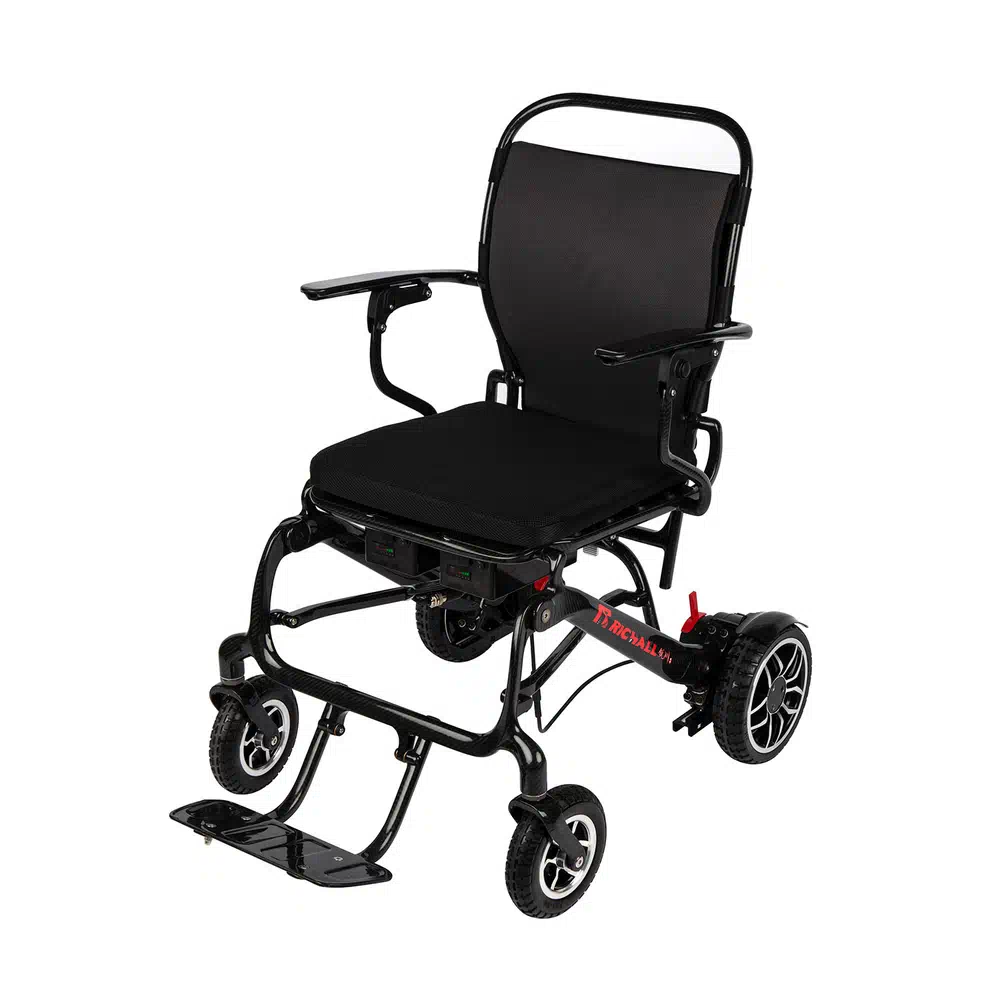
The evolution of personal mobility aids has reached a significant inflection point with the integration of advanced composite materials. This analysis examines the emergence of the carbon fiber electric wheelchair as a transformative technology, addressing longstanding challenges of weight, portability, and durability inherent in traditional steel and aluminum models. It provides a detailed exposition of the material science underpinning carbon fiber composites, elucidating the properties that render them superior for mobility applications. The investigation proceeds to a systematic review of contemporary carbon fiber electric wheelchair models available in 2025, focusing on a matrix of performance characteristics including weight, battery endurance, folding mechanisms, and ergonomic design. By contextualizing these technical specifications within the lived experiences of users, the article assesses the profound impact of this technology on personal autonomy and quality of life. The objective is to furnish a comprehensive framework for potential users, caregivers, and clinicians to make informed decisions based on a nuanced understanding of the functional and economic trade-offs involved.
Principaux enseignements
- Evaluate the critical trade-off between a lighter frame and extended battery capacity for your lifestyle.
- Prioritize a folding mechanism that aligns with your travel frequency and physical capabilities.
- Consider the long-term value of a carbon fiber electric wheelchair, factoring in its durability and low maintenance.
- Assess ergonomic features like seating and controls to ensure comfort during prolonged daily use.
- Verify battery specifications for airline compliance if you are a frequent traveler.
- Match the wheelchair’s suspension and wheel type to the primary terrains you will navigate.
Table des matières
- The Material Science Revolution in Personal Mobility
- A Comparative Framework: Key Metrics for Evaluating Carbon Fiber Wheelchairs
- 2025 In-Depth Reviews: Five Leading Carbon Fiber Electric Wheelchair Models
- Beyond the Frame: Critical Features and Customization Options
- The Lifestyle and Economic Calculus: Is a Carbon Fiber Model the Right Choice for You?
- Foire aux questions (FAQ)
- Bringing Our Exploration to a Close
- Références
The Material Science Revolution in Personal Mobility
The journey of the wheelchair is a story of human ingenuity striving to restore and enhance personal freedom. It is a narrative written not just in design and mechanics, but in the very materials from which these devices are crafted. To truly appreciate the leap forward that carbon fiber represents, we must first understand the path that led us here, a path that moves from brute strength to intelligent design.
From Steel to Aluminum: A Brief History of Wheelchair Materials
The earliest wheelchairs, while revolutionary for their time, were constrained by the materials available. For decades, steel was the undisputed king. Its virtue was its strength and low cost, allowing for the widespread production of durable mobility aids. Yet, this strength came at a heavy price: weight. A steel wheelchair, whether manual or electric, was a cumbersome object, difficult to propel, and even more difficult to lift and transport. For the user, this weight was a constant barrier, an anchor that limited spontaneity and travel. For a caregiver, it represented a significant physical burden.
The introduction of aluminum in the latter half of the 20th century was the first major breakthrough. Aluminum offered a far more favorable strength-to-weight ratio than steel. Suddenly, wheelchairs could be made significantly lighter without a catastrophic loss of durability. This new generation of “lightweight” chairs opened up new possibilities for users, making self-propulsion less taxing and transportation by car a more feasible proposition. Aluminum frames also resisted rust, a practical benefit for users in diverse climates. However, even lightweight aluminum chairs have their limits. The quest for ever-lighter and stronger frames continued, driven by the fundamental human desire for mobility with the fewest possible constraints.
The Advent of Carbon Fiber: What Makes It a Game-Changer?
The arrival of carbon fiber in the world of mobility aids was not merely an incremental improvement; it was a paradigm shift. Borrowed from the high-stakes worlds of aerospace engineering and Formula 1 racing, carbon fiber is not a metal at all. It is a composite material, which is a substance made from two or more constituent materials with significantly different physical or chemical properties that, when combined, produce a material with characteristics different from the individual components.
Imagine weaving together thousands of incredibly thin, yet astonishingly strong, strands of carbon—each strand thinner than a human hair. These are the “fibers.” Then, these woven sheets of carbon fibers are impregnated with and bonded by a tough polymer resin, known as the “matrix.” This composite structure is then cured under intense heat and pressure to form a solid, unified component. The result is a material that is, pound for pound, significantly stronger and stiffer than steel, yet lighter than aluminum. This unique combination of properties is what makes the fauteuil roulant électrique en fibre de carbone such a revolutionary device. The profound reduction in weight does not come at the expense of strength; rather, it enhances the user’s experience in every conceivable way.
Understanding the “Matrix” in Carbon Fiber Composites
To fully grasp the “magic” of carbon fiber, it is helpful to explore the concept of the matrix more deeply. The carbon fibers themselves provide the primary strength and stiffness, resisting forces that try to stretch or bend the material. However, without the matrix, these fibers would be little more than a fragile bundle of threads.
The polymer resin matrix performs several vital functions. First, it binds the fibers together, holding them in their precise orientation and allowing them to act as a single unit. Second, it transfers the load or stress evenly among the fibers, ensuring that no single fiber is overwhelmed. Third, it protects the delicate carbon fibers from abrasion, impact, and environmental factors like moisture and UV radiation. The synergy between the fibers and the matrix is what creates the final material’s exceptional properties. This is why you will often see discussions of “matrix carbon fiber wheelchair reviews”; the term “matrix” refers to this essential binding component that transforms raw carbon strands into a high-performance structural material. The quality of the resin and the manufacturing process used to combine it with the fibers are just as important as the fibers themselves in determining the final product’s durability and performance.
A Comparative Framework: Key Metrics for Evaluating Carbon Fiber Wheelchairs
Choosing a carbon fiber electric wheelchair is a significant decision, an investment in your independence and quality of life. To navigate the options effectively, it is essential to have a clear framework for evaluation. The following table breaks down the key specifications of five prominent models from Richall Medical, a leading manufacturer in this space. This allows for a direct, at-a-glance comparison before we delve into the nuanced, qualitative reviews of each model.
| Fonctionnalité | Richall CF-EW01 | Richall CF-EW03 | Richall CF-Mini | Richall CF-Power Lite | CF-Plus Pro |
|---|---|---|---|---|---|
| Weight (w/o battery) | 38 lbs (17.2 kg) | 42 lbs (19 kg) | 34 lbs (15.4 kg) | 45 lbs (20.4 kg) | 39 lbs (17.7 kg) |
| Matériau du cadre | 100% Fibre de carbone | Fibre de carbone | Fibre de carbone | Fibre de carbone | Reinforced Carbon Fiber |
| Max Load Capacity | 265 lbs (120 kg) | 265 lbs (120 kg) | 220 lbs (100 kg) | 280 lbs (127 kg) | 265 lbs (120 kg) |
| Gamme de batteries | Up to 12.4 mi (20 km) | Up to 15.5 mi (25 km) | Up to 10.5 mi (17 km) | Up to 12.4 mi (20 km) | Up to 12.4 mi (20 km) |
| Caractéristiques principales | Balanced All-Rounder | Enhanced Comfort/Suspension | Ultra-Compact & Light | Tech-Focused (LCD, USB) | Travel-Optimized (Airline-Safe) |
| Mécanisme de pliage | One-Click Fold | One-Click Fold | Manual Compact Fold | One-Click Fold | Quick-Release Button |
Having established this quantitative baseline, we can now explore the qualitative aspects that define the user experience.
2025 In-Depth Reviews: Five Leading Carbon Fiber Electric Wheelchair Models
A specifications sheet tells only part of the story. The true measure of a wheelchair is how it integrates into the rhythm of a person’s life. Does it feel like a tool you must operate, or an extension of your own body? Here, we move beyond the numbers to provide a deeper, more experiential review of these five models, considering who would benefit most from each design philosophy.
Review 1: The Richall CF-EW01 – The All-Rounder for Daily Life
The CF-EW01 presents itself as the quintessential daily driver. It strikes a meticulous balance between all the core attributes a user might seek. Weighing in at 38 pounds without its battery, it is demonstrably easy for many users or their companions to lift into a vehicle. Yet, it does not sacrifice robustness, boasting a generous 265-pound weight capacity.
Imagine a typical day: a trip to the local grocery store, a visit to a friend’s house, and perhaps a leisurely roll through a nearby park. The CF-EW01 is designed for precisely this kind of varied, everyday use. Its one-click folding mechanism is a significant quality-of-life feature. There is no complex sequence to remember; a single action collapses the chair into a manageable form. The battery range of up to 12.4 miles provides a comfortable buffer for most daily excursions, alleviating the “range anxiety” that can plague electric mobility users. The intelligent joystick is responsive without being overly sensitive, allowing for confident navigation through doorways and crowded aisles.
The CF-EW01 is the ideal choice for the user seeking a single, reliable solution for their day-to-day mobility needs. It is not the absolute lightest, nor does it have the longest range, but its thoughtful combination of features makes it an exceptionally competent and user-friendly companion for an active, independent life.
Review 2: The Richall CF-EW03 – The Comfort-Focused Traveler
Where the CF-EW01 is the all-rounder, the CF-EW03 places a distinct emphasis on user comfort, particularly over longer durations or varied terrain. While slightly heavier at 42 pounds, that extra weight is invested in features that smooth out the journey. The most notable of these is the dual rear suspension system.
Think about the difference between riding a bicycle with and without shock absorbers. The CF-EW03’s suspension works on the same principle, absorbing the jarring impacts from cracked pavements, cobblestones, or uneven park paths. This feature is not a luxury; for individuals with chronic pain, spinal conditions, or general sensitivity, it can be the difference between a pleasant outing and a painful one. This focus on comfort is complemented by a memory foam seat cushion with a breathable mesh cover, designed to reduce pressure points and improve air circulation during extended periods of sitting.
Furthermore, its extended range of up to 15.5 miles makes it particularly well-suited for more ambitious outings—a full day exploring a city center, a long tour of a museum, or navigating a large university campus. The CF-EW03 is for the user who prioritizes a smooth, comfortable ride and requires the endurance for all-day adventures, accepting a minor trade-off in weight for a major gain in ride quality.
Review 3: The Richall CF-Mini – The Urban Navigator
The Richall CF-Mini is a masterclass in minimalist engineering. At an astonishingly light 34 pounds, it enters a weight class that few other electric wheelchairs can match. This model is purpose-built for the urban environment and for users for whom every pound matters.
Its design philosophy is centered on maximum portability. The compact, folded dimensions allow it to be stored in the smallest of car trunks, in a closet, or under a restaurant table. For an apartment dweller or someone who frequently uses ride-sharing services, this compactness is liberating. The manual fold, while requiring a bit more interaction than a one-click system, is engineered for simplicity and contributes to the overall weight reduction.
The reduced battery range (up to 10.5 miles) and lower weight capacity (220 pounds) are intentional design choices that serve its primary purpose. It is not meant for cross-country trekking; it is meant for navigating the tight confines of city life. Think of it as a nimble scooter, perfect for zipping from the apartment to the subway, navigating a bustling market, or maneuvering through a crowded office. The CF-Mini is the definitive choice for the city user, the frequent short-distance traveler, or anyone for whom lifting the chair independently is the highest priority.
Review 4: The Richall CF-Power Lite – The Tech-Savvy Choice
The CF-Power Lite caters to the user who appreciates the integration of modern technology into their mobility aid. While its core specifications are solid—a 45-pound frame and a 12.4-mile range—its defining features are found in its electronics.
The centerpiece is the smart joystick controller, which incorporates a clear LCD display. This is more than just a battery gauge. It provides real-time diagnostic information, speed settings, and error codes, empowering the user with a deeper understanding of their chair’s status. This can be particularly reassuring, as it demystifies the machine’s operation.
Beyond the display, the CF-Power Lite includes practical tech amenities that reflect a modern lifestyle. A built-in USB charging port on the controller allows you to keep your smartphone or other devices powered up on the go—a small feature that can be incredibly convenient. It also comes standard with an integrated headlight, a crucial safety feature for navigating in the evening or through poorly lit areas like parking garages. This model is for the user who is comfortable with technology and sees their wheelchair as not just a mobility device, but an integrated piece of personal tech that should offer connectivity and enhanced functionality.
Review 5: The CF-Plus Pro – The Frequent Flyer’s Companion
The CF-Plus Pro is designed from the ground up with the traveler in mind. Its standout feature is its airline-safe, detachable lithium-ion battery. Navigating airport regulations for mobility devices can be a source of significant stress, and the CF-Plus Pro aims to mitigate this. The battery is designed to be easily removed and carried into the cabin, while the chair is checked as luggage, complying with the regulations of most major airlines (though it is always crucial to confirm with your specific carrier before flying).
The quick-release folding mechanism is another travel-centric feature, designed for speed and efficiency when time is of the essence, such as during boarding or when hailing a taxi. The frame is described as “reinforced” carbon fiber, suggesting an extra degree of resilience to handle the rigors and potential rough handling associated with air travel.
With a frame weight of 39 pounds and a range of 12.4 miles, it offers a compelling blend of portability and performance for use at your destination. The CF-Plus Pro is the unequivocal choice for the modern globetrotter, the business traveler, or anyone whose lifestyle involves frequent flights. It is a tool designed to make the world more accessible by breaking down the barriers of travel.
Beyond the Frame: Critical Features and Customization Options
The carbon fiber frame is the skeleton of these advanced wheelchairs, but the muscles and nervous system—the components that translate intent into motion and ensure comfort—are equally important. A holistic evaluation requires a closer look at the control systems, wheels, and folding mechanisms that define the daily interactive experience.
Control Systems: Joysticks, Displays, and Smart Technology
The primary interface between the user and the electric wheelchair is the joystick controller. Modern controllers have evolved far beyond simple directional inputs. Premium models, like the Richall CF-Power Lite, feature integrated LCD screens that provide a wealth of information at a glance: precise battery percentage, current speed level, and diagnostic alerts. This “dashboard” gives the user a greater sense of control and awareness.
A key ergonomic consideration is the placement and programmability of the joystick. Most can be mounted on either the right or left armrest. Some advanced systems allow for the adjustment of sensitivity and acceleration parameters. This customization is vital, as a user with fine motor control may prefer a highly responsive setting, while someone with tremors might need a more dampened, forgiving response to prevent jerky movements. The inclusion of features like USB charging ports and powerful horns further transforms the controller from a simple steering device into a central command hub.
Wheels, Tires, and Suspension: Navigating Your World
The choice of wheels and tires has a profound impact on the wheelchair’s performance across different surfaces. The main distinction is between solid (or airless) tires and pneumatic (air-filled) tires.
- Pneus pleins : These are often made of rubber or polyurethane and are completely puncture-proof. This is their single greatest advantage, offering total peace of mind and eliminating the need for maintenance like checking air pressure. They are extremely durable and perform well on smooth, indoor surfaces. The trade-off is a harsher ride, as they offer minimal cushioning.
- Pneumatic Tires: These are like miniature bicycle tires. Their main benefit is a significantly smoother and more comfortable ride, as the air inside acts as a natural shock absorber. This makes them far superior for outdoor use on uneven pavement, grass, or gravel. The downside is the risk of punctures and the need to maintain proper air pressure.
Many modern carbon fiber electric wheelchairs, designed for versatility, utilize a hybrid approach: larger, pneumatic-style rear drive wheels for comfort and traction, and smaller, solid front caster wheels for durability and sharp turning. This is often paired with a suspension system, as seen in the Richall CF-EW03, to create the most comfortable ride possible. When choosing, consider your primary environment. If you are almost exclusively indoors, solid tires are a carefree option. If your life involves navigating the varied textures of the outdoors, the comfort provided by pneumatic tires and suspension is invaluable.
Folding Mechanisms: One-Click vs. Manual Fold
The ability to fold the wheelchair quickly and compactly is a cornerstone of the carbon fiber value proposition. The mechanism for achieving this fold is a key differentiator. The following table illustrates the conceptual differences:
| Fonctionnalité | One-Click Automatic Fold | Manual Fold |
|---|---|---|
| Operation | Typically involves pressing a button or a single lever. The chair often folds itself electronically or with a spring-assisted mechanism. | Requires the user to perform a sequence of actions, such as releasing latches, folding the backrest, and collapsing the frame. |
| Speed & Effort | Very fast (a few seconds) and requires minimal physical effort or dexterity. | Slower and requires more physical interaction, bending, and potentially some strength. |
| Complexity | Mechanically more complex, which can add slight weight and a potential point of failure (though generally very reliable). | Mechanically simpler, which can contribute to a lighter overall weight and fewer moving parts. |
| Meilleur pour | Users with limited strength/dexterity, those who need to fold the chair frequently and quickly, caregivers. | Users prioritizing the absolute lowest weight, those who are physically able to perform the folding actions, budget-conscious buyers. |
Models like the Richall CF-EW01 use a one-click system, prioritizing convenience. The Richall CF-Mini, in its quest for the lowest possible weight, opts for a manual fold. Neither is inherently “better”; the right choice is entirely dependent on the user’s physical abilities and how they envision integrating the chair into their daily routine. For someone who single-handedly loads their chair into a car multiple times a day, the ease of a one-click fold can be a truly life-changing feature.
The Lifestyle and Economic Calculus: Is a Carbon Fiber Model the Right Choice for You?
The decision to invest in a carbon fiber electric wheelchair extends beyond a simple comparison of features. It involves a personal calculation of cost, benefit, and lifestyle alignment. These chairs represent the pinnacle of current mobility technology, and that position is reflected in their price. A thoughtful consideration of their long-term value is therefore essential.
Cost-Benefit Analysis: The Upfront Investment vs. Long-Term Value
There is no denying that the initial acquisition cost of a carbon fiber electric wheelchair is higher than that of its aluminum or steel counterparts. This price premium is a direct result of the expensive raw materials and the complex, labor-intensive manufacturing process required to create carbon fiber components. It is easy to experience “sticker shock” and question whether the benefits justify the expense.
However, a more complete economic analysis considers the total cost of ownership over the lifespan of the device. Carbon fiber’s inherent resistance to corrosion and material fatigue means it is less likely to suffer from the kind of structural wear and tear that can afflict metal frames over time. This durability can translate into lower repair costs and a longer operational life.
More importantly, one must attempt to quantify the value of the benefits themselves. What is the economic value of being able to lift your own wheelchair into a car, saving the cost of a specialized vehicle lift or reliance on paid assistance? What is the value, in terms of both health and well-being, of avoiding the physical strain that comes from handling a heavier device? A comprehensive guide to the carbon fiber wheelchair reviews can provide further context on how these benefits stack up across different price points. The higher upfront cost can be viewed as an investment in greater independence, reduced physical burden, and an enhanced quality of life—returns that are difficult to measure in currency but are immeasurably valuable.
Use Case Scenarios: Who Benefits Most?
While anyone can appreciate a lighter, stronger wheelchair, certain individuals and lifestyles stand to gain disproportionately from the unique advantages of carbon fiber technology.
- The Frequent Traveler: For those who travel by car, train, or plane, the benefits are undeniable. The low weight and compact, foldable nature of these chairs dramatically simplify the logistics of travel, reducing stress and expanding possibilities.
- The Independent Senior: Many seniors wish to remain active and independent but may lack the physical strength to manage a heavy, traditional power chair. A lightweight carbon fiber model can be the key that unlocks continued community engagement, allowing them to handle their own mobility aid for outings.
- Caregivers: The physical toll on caregivers who regularly lift and transport mobility equipment is significant. A carbon fiber wheelchair can drastically reduce this burden, preserving the caregiver’s own physical health and making outings a more pleasant experience for everyone involved.
- Urban Dwellers: Individuals living in apartments or navigating the tight spaces and public transit systems of a city will find the compact and lightweight nature of these chairs to be a perfect match for their environment.
Navigating Insurance and Funding
The process of securing funding for a high-end mobility device through private insurance, Medicare, or other national health systems can be complex and varies significantly by country and policy. In many systems, funding is often approved based on medical necessity, and the provider may only cover the cost of a “standard” or basic model.
To make a case for a carbon fiber wheelchair, it is often necessary to provide clear documentation from a physician or occupational therapist that outlines why the specific features—namely the low weight—are not just a convenience but a medical necessity for the user. For example, a therapist might argue that only a wheelchair below a certain weight threshold can be independently managed by the user, thereby promoting their independence and reducing the need for more costly caregiver assistance. Prospective buyers should proactively work with their healthcare providers and contact their insurance company early in the process to understand the specific requirements for coverage. For those purchasing privately, many manufacturers and distributors, such as fauteuil roulant électrique à vendre, offer financing options to make the investment more manageable.
Foire aux questions (FAQ)
What is the primary advantage of a carbon fiber electric wheelchair over an aluminum one? The single greatest advantage is the superior strength-to-weight ratio. Carbon fiber allows for the construction of a frame that is as strong as or stronger than aluminum but is significantly lighter. This results in a wheelchair that is easier to lift, transport, and propel, which in turn improves battery efficiency and overall user independence.
How much lighter is a typical carbon fiber electric wheelchair? A carbon fiber electric wheelchair can be 30-50% lighter than a comparable aluminum model. For example, a lightweight aluminum electric chair might weigh 50-60 pounds (23-27 kg), whereas a carbon fiber model like the Richall CF-Mini can weigh as little as 34 pounds (15.4 kg). This difference is substantial and is easily felt when lifting the chair.
Can I take my carbon fiber electric wheelchair on an airplane? Yes, most carbon fiber folding electric wheelchairs are designed to be travel-friendly. However, the critical component is the lithium-ion battery. Airline regulations (as per the FAA and EASA) typically require that the battery be removed from the chair and carried into the cabin with you. It is essential to choose a model with a battery that is under the airline’s specified Watt-hour (Wh) limit and to contact your airline well in advance of your flight to confirm their specific procedures for mobility devices.
How do you maintain a carbon fiber wheelchair frame? Carbon fiber frames are remarkably low-maintenance. They do not rust or corrode like metals. Maintenance typically involves regular cleaning with a mild soap and water solution to remove dirt and grime. It is also wise to periodically inspect the frame for any deep scratches or signs of impact damage, although the material is extremely resilient to the stresses of daily use.
Are these wheelchairs durable enough for daily outdoor use? Absolutely. Carbon fiber is not only strong but also has excellent fatigue resistance, meaning it can withstand repeated stress cycles without weakening. This makes it ideal for the dynamic loads experienced during daily outdoor use on varied terrains. When combined with good suspension and appropriate tires, a carbon fiber electric wheelchair is a robust and reliable option for an active outdoor lifestyle.
What is the typical battery range and how long does it take to charge? Battery range varies by model, battery size, terrain, and user weight, but a typical carbon fiber electric wheelchair will offer a range between 10 and 15 miles (16 to 25 kilometers) on a single charge. A full charge for a standard lithium-ion battery usually takes between 4 to 6 hours.
Bringing Our Exploration to a Close
The journey from heavy steel frames to the advanced composite structures of today marks a profound evolution in the pursuit of human mobility. The carbon fiber electric wheelchair is not merely a lighter device; it represents a fundamental rethinking of the relationship between the user and their mobility aid. It is a shift away from a cumbersome necessity and toward a responsive, integrated tool that enhances freedom rather than simply enabling it.
The decision to choose such a device is a deeply personal one, a careful weighing of lifestyle, physical needs, and financial investment. By understanding the material science, evaluating the critical performance metrics, and envisioning how a specific model might fit into the narrative of your own life, you can make a choice that is not just informed, but empowering. This technology offers the potential for a life with fewer barriers, more spontaneity, and a lighter burden—both literally and figuratively. It is an invitation to explore the world with greater ease and confidence, a testament to the idea that the right technology can indeed set us free.
Références
- Richall Medical. (2025). Best carbon fiber folding wheelchair for travel. Richall Medical Blog. richallmed.com
- Richall Medical. (2025). Carbon fiber electric wheelchair. Product Category. richallmed.com
- Richall Medical. (2025). Top 5 lightweight electric wheelchairs under 50 pounds. Richall Medical Blog. richallmed.com
- Richall Medical. (n.d.). Folding wheelchair. Product Category. Retrieved February 15, 2025, from richallmed.com
- Richall Medical. (n.d.). High-quality electric wheelchairs. Product Category. Retrieved February 15, 2025, from richallmed.com
- Richall Medical. (n.d.). ZheJiang Richall Medical Technology Co., Ltd. Homepage. Retrieved February 15, 2025, from richallmed.com