.png)
.png)
Votre liste de contrôle en 7 points : Choisir des fauteuils roulants électriques en alliage d'aluminium et de carbone fabriqués selon les normes internationales
30 décembre 2025
Résumé
The selection of a personal mobility device represents a significant decision, impacting user autonomy, health, and quality of life. This analysis examines the critical factors involved in choosing electric wheelchairs, focusing on the material science of aluminum alloy and carbon fiber frames, and the imperative of adherence to international manufacturing standards. An objective evaluation of these materials reveals distinct advantages in weight, durability, and cost, which must be weighed against individual user needs and lifestyle patterns. The study further investigates the landscape of global safety and performance certifications, such as the ISO 7176 series, CE marking, and FDA regulations, elucidating their role as essential benchmarks for consumer protection and product reliability. By systematically deconstructing the technical, ergonomic, and regulatory dimensions of modern mobility aids, this document provides a comprehensive framework for making an informed and empowered choice in 2026, ensuring the selected device is not merely a tool, but a true extension of personal freedom.
Principaux enseignements
- Understand that carbon fiber offers superior lightness, while aluminum provides proven value and durability.
- Prioritize wheelchairs that are certified to international standards like ISO 7176 for guaranteed safety.
- Evaluate battery technology and real-world range based on your specific daily travel requirements.
- Confirm the ergonomic adjustability of the seat, backrest, and controls for long-term health.
- Consider the total cost of ownership, including maintenance and potential battery replacement costs.
- Verify that Electric Aluminium Alloy Carbon Wheelchairs Manufactured to International Standards meet your lifestyle needs.
- Choose a manufacturer with a transparent and robust after-sales support and warranty program.
Table des matières
- 1. Deconstructing the Frame: The Foundational Choice of Material
- 2. Decoding the Alphabet of Safety: Understanding International Standards
- 3. The Heart of the Machine: Power, Batteries, and Range Anxiety
- 4. The Human-Machine Interface: Ergonomics, Control, and Customization
- 5. Portability in Practice: Folding Mechanisms and Real-World Usability
- 6. The Long View: Durability, Maintenance, and After-Sales Support
- 7. Aligning with Your Life: A Holistic Needs Assessment
- Foire aux questions (FAQ)
- Conclusion
- Références
1. Deconstructing the Frame: The Foundational Choice of Material
The journey toward selecting the right electric wheelchair begins with its very skeleton—the frame. This is not a mere structural component; it is the foundation upon which every other feature is built. The material of the frame dictates the chair’s weight, its strength, how it feels to navigate over varied surfaces, and ultimately, its suitability for your specific life. In 2026, the market is largely defined by two dominant material philosophies: the advanced, lightweight promise of carbon fiber and the time-tested, reliable performance of aluminum alloy. To approach this choice is to engage with a fascinating intersection of material science and human need, where the properties of a substance translate directly into the lived experience of mobility and independence. Let us examine each with the careful consideration they deserve.
The Case for Carbon Fiber: Strength Meets Featherlight Portability
Carbon fiber is not simply a material; it is a composite, a carefully engineered marriage of elements. It consists of thousands of incredibly thin strands of carbon atoms, woven into a fabric-like textile. This fabric is then impregnated with a resin and layered meticulously in a mold before being cured under intense heat and pressure. The result is a material that is, pound for pound, significantly stronger and stiffer than steel, yet astonishingly light. Think of the applications where it has revolutionized industries: the chassis of a Formula 1 car that must protect a driver at extreme speeds, or the fuselage of a modern aircraft that must be both strong and fuel-efficient.
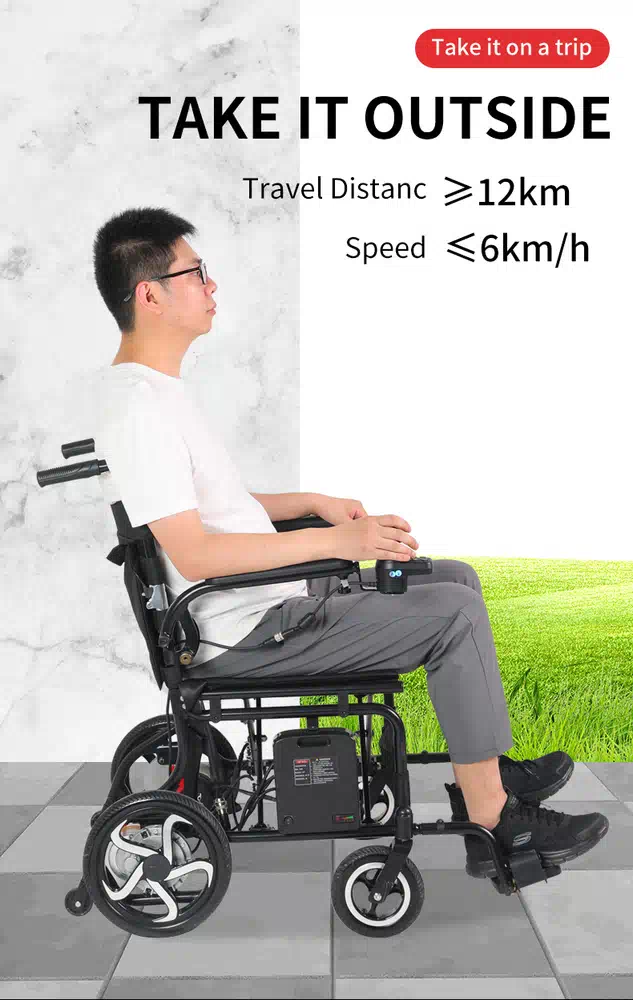
When this technology is applied to a wheelchair, the benefits are immediate and profound. A fauteuil roulant électrique en fibre de carbone can weigh as little as 15-20 kilograms (around 33-44 pounds), a fraction of the weight of its traditional steel or even some aluminum counterparts. What does this mean in practical terms? It means the difference between being able to lift the chair into a car trunk independently and needing assistance. It means less strain on a caregiver. For the user, it translates to a nimbleness and responsiveness that feels less like operating a machine and more like a natural extension of one’s own body.
Furthermore, carbon fiber possesses excellent vibration-damping properties. As you travel over uneven pavement, cobblestones, or textured indoor flooring, the frame absorbs a significant portion of the jarring impacts, leading to a smoother, more comfortable ride. This reduction in micro-vibrations is not just a matter of comfort; over time, it can reduce fatigue and the physical toll on the body (Shore, 2021). The material is also highly resistant to corrosion and fatigue, meaning it does not rust and can withstand the repeated stresses of daily use without degrading, ensuring a long and reliable service life.
The Enduring Appeal of Aluminium Alloy: Reliability and Value
While carbon fiber represents the cutting edge, aluminum alloy stands as the stalwart champion of modern wheelchair construction. Its prevalence is a testament to a superbly balanced profile of strength, weight, and cost-effectiveness. The aluminum used in wheelchairs is not the same as the foil in your kitchen; it is a sophisticated alloy, typically from the 6000 or 7000 series, blended with other elements like magnesium and silicon to enhance its structural properties. These alloys are shaped through processes like extrusion and hydroforming, then meticulously welded to create a frame that is both robust and reasonably lightweight.
An aluminum electric wheelchair offers a pragmatic and highly effective solution for a vast range of users. While not as featherlight as carbon fiber, it is significantly lighter than steel, making it a massive improvement over older generations of mobility devices. The frames are strong, capable of supporting substantial weight capacities while providing a stable and secure platform for the user. One of the key virtues of aluminum is its isotropic nature—it exhibits uniform properties in all directions. This makes its performance predictable and its manufacturing process more straightforward and less costly than that of carbon fiber.
This cost-effectiveness is perhaps aluminum’s most compelling argument. It allows manufacturers to produce high-quality, durable, and feature-rich wheelchairs at a more accessible price point. For many individuals and families, this makes the difference between acquiring a necessary mobility aid and going without. Moreover, aluminum is a ductile material, meaning it tends to bend or deform under extreme impact rather than shattering, a property that can be a safety advantage. While repairs to a welded aluminum frame can be complex, the material’s inherent toughness makes it a reliable choice for the rigors of everyday use.
A Comparative Analysis: Making an Informed Decision
To truly grasp the distinctions, a direct comparison is necessary. The choice is not about which material is “better” in an absolute sense, but which is better suited to your priorities, your lifestyle, and your budget. Are you a frequent traveler who values ultimate portability above all else? Or are you a daily user who needs a durable, cost-effective workhorse for navigating your home and community?
| Fonctionnalité | Composite en fibre de carbone | Aluminium Alloy |
|---|---|---|
| Poids | Exceptionally light (15-20 kg frame avg.) | Moderately light (20-30 kg frame avg.) |
| Rapport résistance/poids | Très élevé | Haut |
| Coût de fabrication | Haut | Modéré |
| Confort de conduite | Excellent vibration damping, smooth ride | Good, but can transmit more vibration |
| Durabilité | High resistance to fatigue and corrosion | Good resistance to corrosion, very tough |
| Impact Response | Stiff, can fracture under extreme impact | Ductile, tends to bend or dent |
| Aesthetic | Often has a distinctive woven pattern | Typically has a painted or anodized finish |
Imagine you are faced with two frames, one made of carbon fiber and one of aluminum. Lifting the carbon fiber frame feels almost effortless, surprising you with its lack of heft. The aluminum frame is heavier, but still feels manageable and substantial. This physical sensation is the core of the decision. The lightness of the carbon fiber frame is a daily luxury, a constant ease. The sturdiness of the aluminum frame is a quiet reassurance, a feeling of solid, dependable value. Your choice rests in which of these feelings aligns more closely with the narrative of your life.
2. Decoding the Alphabet of Safety: Understanding International Standards
When you acquire a medical device, you are placing your trust—and your well-being—in the hands of its creators. This trust cannot be based on marketing claims alone. It must be grounded in objective, verifiable proof of safety, quality, and performance. This is the role of international standards. They are the common language spoken by engineers, regulators, and healthcare professionals across the globe to ensure that a device is fit for its purpose. For electric wheelchairs, this regulatory landscape can seem like a confusing soup of acronyms: ISO, CE, MDR, FDA. Yet, understanding what they represent is one of the most empowering steps you can take as a consumer. It is the process of transforming yourself from a passive buyer into an informed advocate for your own safety. These are not mere bureaucratic hurdles; they are your assurance that the chair has been rigorously tested against failure.
The Global Benchmark: What is the ISO 7176 Series?
At the heart of global wheelchair testing is the ISO 7176 series of standards. This is not a single rule, but a comprehensive suite of tests developed by the International Organization for Standardization to evaluate nearly every aspect of a wheelchair’s performance and safety. When a manufacturer states that they produce Electric Aluminium Alloy Carbon Wheelchairs Manufactured to International Standards, they are often referring specifically to their adherence to these critical tests. Let’s break down some of the most important parts:
- ISO 7176-1: Static Stability: This test determines how resistant the wheelchair is to tipping over on a slope when stationary. Testers place the chair on a tilting platform and measure the maximum angle it can withstand before becoming unstable. This is a direct measure of your safety on ramps and inclines.
- ISO 7176-8: Static, Impact, and Fatigue Strength: This is the durability test. It involves a series of grueling trials to simulate the long-term stresses of daily use. For the fatigue test, the wheelchair is placed on a machine with two rolling drums that it “drives” on for thousands of cycles, simulating miles of travel over uneven surfaces. Passing this test indicates the frame is built to last.
- ISO 7176-4: Energy Consumption: This standard measures the wheelchair’s efficiency and theoretical range. The chair is run on a dynamometer under controlled conditions to determine how far it can travel on a single battery charge. This provides a standardized baseline for comparing the range of different models.
- ISO 7176-14: Power and Control Systems: This evaluates the brain of the wheelchair—the joystick and the controller. It ensures the chair responds predictably to your commands, can be stopped safely and quickly, and that its electrical systems are reliable and protected from environmental factors.
- ISO 7176-19: Wheeled Mobility Devices for Use as Seats in Motor Vehicles: Often called “crash testing,” this is a vital standard for users who will remain in their wheelchair while traveling in a vehicle. The wheelchair must be able to withstand the forces of a simulated 30 mph (48 kph) crash, and it specifies securement points for safely tying the chair down.
A manufacturer’s commitment to testing against these ISO standards is a powerful indicator of their dedication to quality and user safety (Cooper et al., 2008).
Navigating Regional Compliance: CE, MDR, and FDA Explained
While ISO provides a global technical framework, specific economic regions have their own legal requirements for placing a medical device on the market. Understanding these is crucial depending on where you live.
In Europe, the key designation is the CE Mark. Historically, this mark indicated compliance with the Medical Devices Directive (MDD). However, as of 2021, a more stringent regulation is in full effect: the Medical Device Regulation (MDR 2017/745). The move from MDD to MDR represents a significant shift toward greater scrutiny and safety. The MDR places a much stronger emphasis on a lifecycle approach to safety, requiring manufacturers to conduct more thorough clinical evaluations, implement robust post-market surveillance (actively monitoring the device’s performance after it’s sold), and ensure greater transparency with a publicly accessible database (EUDAMED). A wheelchair bearing a CE mark under the new MDR has undergone a rigorous conformity assessment process, providing a high level of assurance about its quality and safety for consumers in the European Union.
In the United States, the regulatory body is the Food and Drug Administration (FDA). Most electric wheelchairs fall under Class II medical devices. For these, manufacturers typically use the Premarket Notification 510(k) pathway. This involves submitting a detailed application to the FDA demonstrating that the new wheelchair is “substantially equivalent” in terms of safety and effectiveness to a legally marketed device that is already on the market. The FDA reviews this data, which often includes results from tests like the ISO 7176 series, before granting clearance to sell the device. FDA clearance signifies that the device meets the required standards for the U.S. market.
For consumers in the United Kingdom post-Brexit, the UKCA (UK Conformity Assessed) mark is the new requirement, largely mirroring the principles of the CE mark for the Great Britain market. Similarly, Australia has its own regulatory body, the Therapeutic Goods Administration (TGA), which ensures medical devices meet specific standards of safety, quality, and performance.
Why Verified Compliance Matters for Your Peace of Mind
It can be tempting to view these standards and regulations as abstract technicalities. But their importance cannot be overstated. A wheelchair that has not been properly tested presents unknown risks. Will it remain stable on the ramp to your local library? Will the frame crack after a year of use? Can the brakes stop you reliably on a downhill slope?
Verified compliance with these standards answers these questions. It means the manufacturer has invested the time, resources, and engineering effort to build a product that is not just functional, but fundamentally safe. It provides you with a legal and ethical backstop. When you see the CE, FDA, or UKCA marking on a product from a reputable manufacturer like carbon fiber electric wheelchair wholesale, you are seeing a badge of diligence. It is a declaration that the product you are about to integrate into your life has been held to account against the highest benchmarks of international safety science. This knowledge provides a profound sense of security, allowing you to focus not on the integrity of your chair, but on the possibilities for a life lived with greater freedom.
3. The Heart of the Machine: Power, Batteries, and Range Anxiety
If the frame is the skeleton of an electric wheelchair, then the battery and motor system are its heart and muscles. This is the system that breathes life into the machine, transforming it from a static object into a dynamic vehicle for personal exploration. The performance of this system dictates your daily radius of activity, your confidence in venturing out, and your freedom from what has become known as “range anxiety”—the persistent fear of being stranded with a dead battery. In 2026, the technology powering these chairs is more advanced than ever, but understanding its nuances is key to ensuring your chair’s capabilities align with the demands of your life.
Lithium-Ion Technology in 2026: What’s New?
The era of heavy, inefficient sealed lead-acid (SLA) batteries in high-performance wheelchairs is largely behind us. The field is now dominated by lithium-ion (Li-ion) technology, the same chemistry that powers our smartphones, laptops, and electric cars. The reasons for this dominance are clear:
- High Energy Density: Lithium-ion batteries can store significantly more energy in a smaller, lighter package compared to older technologies. This is crucial for keeping a wheelchair’s overall weight down, especially in lightweight carbon fiber and aluminum models.
- Longer Lifespan: A modern Li-ion battery can typically endure hundreds, if not thousands, of charge-discharge cycles before its capacity begins to degrade significantly. This means a longer service life and a better return on investment.
- No “Memory Effect”: Unlike older nickel-cadmium batteries, you do not need to fully discharge a lithium-ion battery before recharging it. You can top it up whenever it’s convenient without harming its long-term health.
- Low Self-Discharge: When not in use, a Li-ion battery loses its charge very slowly, so the chair is more likely to be ready to go when you are.
By 2026, the key advancements are not just in the battery cells themselves, but in the sophisticated Battery Management System (BMS) that protects and optimizes them. The BMS is an intelligent electronic circuit board that acts as the battery’s guardian. It constantly monitors the voltage and temperature of each individual cell, preventing dangerous conditions like overcharging, over-discharging, and overheating. It also performs cell balancing, ensuring that all cells in the pack are charged and discharged evenly, which dramatically extends the battery’s overall lifespan and maintains its performance over time (Linden & Reddy, 2011). When choosing a chair, ask about the sophistication of its BMS—it’s a hallmark of a quality electrical system.
Calculating Your True Range: Beyond the Spec Sheet
Manufacturers provide a maximum range for their wheelchairs, often based on ideal conditions as defined by ISO 7176-4. This figure is a useful baseline, but your real-world range will almost certainly be different. It is vital to think of the advertised range not as a guarantee, but as a starting point for your own personal calculation. Several factors will influence how far you can travel on a single charge:
- Poids de l'utilisateur : A heavier user will require more energy to move, thus reducing the range.
- Terrain : Driving continuously on flat, smooth surfaces will yield the best range. Frequent hills, soft ground like grass or thick carpet, and rough pavement will dramatically increase energy consumption.
- Température : Batteries perform optimally in mild weather. Extreme cold can temporarily reduce a battery’s capacity and range by a significant margin.
- Pression des pneus : Under-inflated tires increase rolling resistance, forcing the motors to work harder and draining the battery faster. Maintaining proper tire pressure is one of the easiest ways to maximize your range.
- Driving Style: A smooth, steady pace is more efficient than a stop-and-go pattern with rapid acceleration.
Consider this mental exercise: If a chair is rated for 20 kilometers, but your daily route involves a steep hill and you live in a cold climate, you should realistically expect a range closer to 12-15 kilometers to be safe. It is always wise to choose a chair with a rated range that comfortably exceeds your longest typical day of travel by at least 30-40%.
Travel and Air-Friendliness: Navigating Airline Regulations
For many, the ultimate expression of freedom is the ability to travel. Taking an electric wheelchair on an airplane requires some advance planning, but it is entirely manageable with modern, travel-friendly designs. The key regulations come from the International Air Transport Association (IATA) and revolve around the lithium-ion battery.
The critical number is the battery’s capacity, measured in Watt-hours (Wh). This is usually printed on the battery’s label. If not, you can calculate it by multiplying the Voltage (V) by the Amp-hours (Ah). For example, a 24V, 10Ah battery is 240Wh.
Here are the general rules, though you must always confirm with your specific airline:
- Notify the Airline: When you book your flight, inform the airline that you will be traveling with an electric wheelchair. They will have specific procedures to follow.
- Removable Batteries: If your battery is removable and under 100Wh, you can typically carry it in your carry-on luggage. You are often allowed one larger battery between 101Wh and 300Wh in your carry-on, but this requires airline approval. Any spare batteries must also be in your carry-on, with their terminals protected (e.g., by taping over them) to prevent short circuits.
- Non-Removable Batteries: If the battery cannot be removed from the wheelchair, it must remain in the device. The battery’s terminals must be protected from short-circuiting, and the wheelchair’s power must be switched off.
- Checking the Chair: The wheelchair itself will be checked as mobility assistance baggage, usually at the gate. It is wise to have a copy of the battery’s material safety data sheet (MSDS) and the chair’s user manual with you.
Many manufacturers, recognizing the importance of travel, now design folding electric wheelchair models with batteries that are specifically sized to be under the 300Wh limit and are easily removable. This thoughtful design element transforms a potential travel headache into a seamless experience.
4. The Human-Machine Interface: Ergonomics, Control, and Customization
An electric wheelchair is more than a mode of transport; it is an intimate part of a person’s daily existence, a space where they may spend many hours. As such, the way the human body interfaces with the machine is of paramount importance. This is the domain of ergonomics: the science of designing and arranging things so that people can use them easily and safely. A well-designed ergonomic interface enhances comfort, prevents secondary health complications, and makes controlling the chair feel intuitive and effortless. It involves a deep consideration of seating, control systems, and the potential for customization to create a truly personalized fit.
The Science of Seating: Preventing Discomfort and Injury
The old adage that “prevention is better than cure” is profoundly true in wheelchair seating. Poor seating can lead to a cascade of problems, including discomfort, fatigue, poor posture, and most seriously, the development of pressure injuries (also known as pressure sores or bedsores). These injuries are caused by prolonged pressure on the skin, which restricts blood flow and leads to tissue damage.
A high-quality seating system is designed to combat this by effectively managing pressure and providing postural support. This involves several key components:
- The Cushion: This is the most critical element. Cushions come in various materials—high-density foam for support, gel for pressure redistribution, and air cells for maximum pressure relief. The choice depends on the user’s level of risk for pressure injuries.
- Adjustable Seat Dimensions: A “one-size-fits-all” approach does not work. The seat width should be snug but not tight, providing support without rubbing. The seat depth is equally crucial; it should support the full length of the thighs without pressing into the back of the knees, which can impede circulation.
- Adjustable Backrest: The ability to change the backrest angle (recline) allows the user to shift their weight and relieve pressure from their sitting bones throughout the day. A tension-adjustable backrest upholstery can be customized to contour to the user’s spine, providing better lumbar and thoracic support.
- Adjustable Armrests and Leg Rests: Armrests that are adjustable in height allow the user to support their arms comfortably, reducing strain on the shoulders and neck. Elevating leg rests are essential for users who need to manage swelling (edema) in their lower extremities or cannot bend their knees.
A truly ergonomic seating system is a dynamic tool for health management, not just a static place to sit. It acknowledges that the body is not static and provides the means to accommodate its changing needs throughout the day (Frank & Abel, 2019).
Intuitive Controls: The Evolution of the Joystick
The primary point of control for most electric wheelchair users is the joystick. The goal of a modern control system is to make maneuvering the chair feel as natural and responsive as possible, requiring minimal cognitive load. The technology inside these joysticks has evolved significantly.
Today’s advanced controllers are typically programmable. This means a technician or therapist can connect a laptop and fine-tune a wide range of parameters to match the user’s specific physical abilities and driving environment. These parameters can include:
- Accélération et décélération : How quickly the chair starts and stops. A user with spasticity might need a slower, gentler acceleration to prevent involuntary movements.
- Vitesse maximale : The maximum speed can be limited for safety, especially for indoor use or for new users.
- Turning Speed: The speed at which the chair turns can be adjusted independently of its forward speed.
- Joystick “Throw”: This refers to how far the joystick needs to be moved to achieve a certain response. A user with limited hand strength might need a joystick that responds to very small movements.
Beyond the standard joystick, a world of alternative control systems exists for individuals with more complex physical needs. These can include head arrays (where the user controls the chair with head movements), sip-and-puff systems (using breath control), or attendant controls mounted on the back of the chair for a caregiver. The availability of these options is a sign of a manufacturer that is committed to providing solutions for all levels of ability.
Tailoring Your Ride: Adjustability and Optional Accessories
Customization is the final layer in creating a perfect human-machine interface. It is the process of adding accessories and making small adjustments that adapt the chair to the unique contours of your life. This goes beyond the core ergonomic adjustments and into the realm of personal convenience and utility.
Think about the small things that could make a big difference in your daily routine. A secure mobile phone holder keeps your device accessible. A USB charging port integrated into the controller ensures your phone never runs out of battery while you are out. A durable cup holder keeps your drink stable. A versatile carry bag attached to the backrest provides space for groceries or personal items. For users who are out after dark, integrated LED headlights and taillights are a critical safety feature.
These are not frivolous additions. They are thoughtful design elements that recognize that a wheelchair user’s life is just as complex and multifaceted as anyone else’s. The ability to tailor your chair with these accessories is a final, crucial step in transforming it from a generic medical device into your personalized vehicle for engaging with the world.
5. Portability in Practice: Folding Mechanisms and Real-World Usability
For an electric wheelchair to be a true instrument of freedom, it must be able to move not just under its own power, but also with the rhythms of a modern, mobile life. It needs to fit into the trunk of a car, be stowed on a train, or checked onto an airplane. This is where the concept of portability becomes paramount. Portability is a function of three interconnected factors: the chair’s folding mechanism, its overall weight, and its folded dimensions. A chair might have an impressive range and a comfortable seat, but if it is too cumbersome to transport, its world-shrinking capabilities are severely limited. Examining portability is a practical exercise in imagining how the chair will integrate into your everyday transitions.
Manual vs. Automatic Folding: A Practical Showdown
The primary innovation in portability has been the development of sophisticated folding mechanisms that can collapse a complex machine into a compact, manageable package. In 2026, these mechanisms generally fall into two categories: manual and automatic.
Manual Folding chairs are the most common and are often designed with clever, user-friendly systems. A typical high-quality manual fold might involve releasing a single latch and then pushing the seat or pulling a handle, causing the frame to collapse in on itself like a piece of intricate origami. The best designs are intuitive and require minimal force. They are reliable, have fewer moving parts to potentially fail, and are generally lighter and less expensive than their automatic counterparts. They are an excellent choice for users who have a degree of manual dexterity or who will typically have a caregiver assisting with transport.
Automatic Folding chairs represent a leap forward in convenience. With the press of a button on a remote control or the controller itself, the wheelchair folds or unfolds on its own using small, integrated electric actuators. This feature can be transformative for users with significant strength or mobility limitations in their hands and arms, allowing them to manage the chair’s transport with complete independence. What once required a sequence of physical actions now requires only a single button press. This can be especially valuable in tight spaces or inclement weather, where a quick and effortless fold is a significant advantage.
To make an informed choice, a side-by-side comparison is helpful.
| Fonctionnalité | Manual Folding Mechanism | Automatic Folding Mechanism |
|---|---|---|
| Commodité | Requires physical action (e.g., pulling a lever, pushing the seat) | Folds/unfolds with the press of a button; highly convenient |
| User Requirement | Requires some manual dexterity and strength | Ideal for users with limited hand strength or mobility |
| Weight & Complexity | Generally lighter and simpler with fewer moving parts | Adds some weight and mechanical complexity to the chair |
| Coût | Less expensive | More expensive due to motors, electronics, and remote |
| Reliability | Very reliable due to mechanical simplicity | Highly reliable in quality models, but adds electronic components that could potentially require service |
| Meilleur pour | Users with a caregiver or those who can manage the physical action | Users seeking maximum independence in transporting the chair |
The decision between manual and automatic folding is a personal one, balancing the desire for ultimate convenience against factors like cost, weight, and simplicity.
Weight and Dimensions: The Litmus Test for Independence
Regardless of the folding mechanism, the two numbers that most define a chair’s real-world portability are its weight and its folded dimensions.
Poids is the more obvious factor. This is where the choice of frame material, particularly carbon fiber, has its most dramatic impact. An ultra-lightweight electric wheelchair weighing around 16 kg (35 lbs) is a fundamentally different object to manage than one weighing 30 kg (66 lbs). The lighter chair can be lifted into a car trunk with an ease that is simply not possible with the heavier model. When considering weight, always look for the specification “weight without battery,” as the battery can add several kilograms. Think about your own physical capacity or that of your caregiver. Can you comfortably and safely lift the required weight?
Dimensions pliées are just as critical. A chair that folds into a neat, rectangular shape is much easier to handle and store than one that collapses into an awkward, irregular form. Pay close attention to the length, width, and height of the folded chair. Will it fit in the trunk of your specific vehicle? Will it slide into the closet in your home? A compact, suitcase-like shape is the gold standard for portable design.
Storage Solutions for Home and Vehicle
Thinking through the logistics of storage is the final step in assessing portability. At home, a chair that can be folded and stood upright on its own (often on small anti-tip wheels) is a major advantage in smaller living spaces, allowing it to be tucked away in a corner or a closet without taking up valuable floor space.
In a vehicle, the key is a secure fit. A chair that slides easily into the trunk and does not require the rear seats to be folded down is ideal for preserving the car’s utility for other passengers or cargo. It is also important to consider how the chair will be secured during transit to prevent it from shifting or becoming a projectile in the event of a sudden stop. Some users opt for specialized vehicle lifts or hoists, but the goal of a truly portable modern wheelchair is to eliminate the need for such expensive vehicle modifications. The chair’s design should facilitate, not complicate, the simple act of getting in the car and going.
6. The Long View: Durability, Maintenance, and After-Sales Support
Purchasing an electric wheelchair is not a one-time transaction; it is the beginning of a long-term relationship with a crucial piece of technology. A chair’s value is not solely determined by its features on day one, but by its ability to perform reliably and consistently for years to come. This long-term value is a product of its inherent durability, the ease with which it can be maintained, and the quality of the support system the manufacturer provides. Taking this long view is essential for making a wise investment, ensuring that your wheelchair remains a dependable partner in your mobility, not a source of future frustration.
Built to Last: Assessing Manufacturing Quality and Durability
Durability begins with the quality of the manufacturing process. While it can be difficult for a consumer to assess this directly, there are several tell-tale signs of a well-made product.
- Inspect the Details: On an aluminum frame, look at the quality of the welds. They should be clean, even, and consistent, without any visible cracks or splatters. On a carbon fiber frame, the finish should be smooth and free of imperfections, indicating a well-executed molding and curing process.
- Check the Components: Examine the smaller parts. Are the fasteners high-grade stainless steel? Is the wiring neat, properly insulated, and secured to the frame to prevent chafing or snagging? Do the moving parts, like the folding mechanism, operate smoothly and lock into place securely? These details are indicative of a manufacturer that does not cut corners.
- Consider the Research and Development: A company that invests in its own R&D, like the dedicated R&D building mentioned by Zhejiang Richall Medical Technology Co., Ltd., is more likely to have a deep understanding of the materials and engineering principles required for durability (electricwheelchair.en.made-in-china.com, n.d.). They are not just assembling parts; they are designing and testing systems to withstand the rigors of the real world, often informed by years of experience and user feedback.
The goal is to find a chair that feels solid and well-integrated. It should not rattle or flex unduly. This feeling of solidity is the tactile evidence of quality engineering and construction.
A Routine of Care: Simple Maintenance for Longevity
Even the most durable wheelchair requires some routine maintenance to keep it in optimal condition. Fortunately, for a modern, well-designed chair, this is a straightforward process that does not require specialized mechanical skills. Establishing a simple routine of care can significantly extend the life of your chair and prevent minor issues from becoming major problems.
Here is a basic monthly checklist:
- Tires: Check the tire pressure (on pneumatic tires) and ensure it matches the manufacturer’s recommendation. For solid tires, inspect them for excessive wear or damage.
- Frame and Upholstery: Wipe down the frame with a damp cloth to keep it clean. Check the upholstery for any rips or tears and clean it according to the manufacturer’s instructions.
- Fasteners: Visually inspect the nuts, bolts, and screws on the chair to ensure none have become loose.
- Batterie : Keep the battery charged, avoiding letting it sit fully discharged for long periods. Clean the battery terminals if you notice any corrosion.
- Controls: Clean the joystick and controller with a slightly damp cloth to remove dust and debris.
Following these simple steps is like a regular health check-up for your wheelchair, ensuring it continues to perform safely and efficiently.
The Value of a Responsive Support System
No matter how well-made a product is, questions and issues can arise. This is when the quality of the manufacturer’s after-sales support becomes critically important. A strong support system is a key part of the product itself and a major factor in your long-term satisfaction.
What does good support look like?
- Clear Warranty: The manufacturer should provide a clear, comprehensive warranty that details what is covered and for how long. Typically, the frame may have a longer warranty than the electronic components or batteries.
- Accessible Technical Help: There should be a clear and easy way to contact a knowledgeable support team, whether by phone, email, or video call. As noted by Richall Medical, offering online diagnostics via video chat is a modern and efficient way to solve problems quickly (richallmed.com, n.d.).
- Availability of Spare Parts: Over the life of a chair, wear-and-tear items like tires, armrest pads, or even batteries will eventually need to be replaced. A good manufacturer ensures that these spare parts are readily available and can be shipped to you or your local dealer promptly.
- A Network of Service Providers: For more complex repairs, it is helpful if the manufacturer has a network of authorized dealers or service technicians in your region who are trained to work on their products.
Before you buy, investigate the manufacturer’s reputation for service. Read reviews, look at their website, and even try contacting their support line with a pre-sales question. Their responsiveness and helpfulness will give you a good indication of the support you can expect to receive after you have made your purchase. This peace of mind is an invaluable part of the ownership experience.
7. Aligning with Your Life: A Holistic Needs Assessment
We have journeyed through the technical landscapes of materials, standards, power systems, and ergonomics. Now, we arrive at the most personal and critical part of the process: turning the lens inward. The technically “best” wheelchair is meaningless if it does not align with the unique contours of your individual life. The final act of choosing is a holistic assessment, a thoughtful consideration of where you will go, what your body needs, and what resources you have. It is about matching the sophisticated engineering we have discussed with your personal narrative, ensuring the chair you select is not just a tool you own, but a partner that fits seamlessly into your world.
Indoor Navigator vs. Outdoor Adventurer: Defining Your Terrain
The first question to ask yourself is: where will I be using this chair most often? The answer will dramatically influence the ideal features for your device. Let’s imagine two different user profiles.
The Indoor Navigator: This person spends the majority of their time at home, in the office, or navigating shopping malls and other indoor public spaces. For them, the priorities are maneuverability and a compact footprint. A smaller turning radius is essential for navigating narrow hallways, tight corners in a kitchen, and crowded store aisles. A chair with a more compact base and perhaps smaller drive wheels would be highly advantageous. Top speed is less of a concern, but a responsive, low-speed control for precise maneuvering is vital. The focus is on agility and the ability to integrate into constrained environments.
The Outdoor Adventurer: This user loves to be out in the community, exploring parks, traveling along city sidewalks, and tackling the varied terrain of the outside world. For them, the priorities are different. A more robust suspension system to absorb bumps and cracks in the pavement is crucial for comfort. Larger, more substantial drive wheels can provide better traction and stability on uneven ground or even firm grass. A higher top speed is desirable for keeping pace on sidewalks, and a longer battery range is non-negotiable to provide the confidence to venture further from home without anxiety. The focus is on stability, range, and ride comfort over unpredictable surfaces.
Most people, of course, will be a blend of these two profiles. The key is to be honest about your primary environment. Are you 80% indoors and 20% outdoors, or the other way around? Let your answer guide your focus toward either maneuverability or robust, all-terrain capability.
The User’s Physical Profile: Matching the Chair to the Person
The next step is to consider the specific needs of the person who will be using the chair. This goes beyond basic ergonomics and into a more detailed assessment of physical capacity and condition.
- Weight Capacity: Every chair has a maximum user weight limit. It is essential to choose a chair with a capacity that safely exceeds the user’s weight. Overloading a chair can compromise its stability, strain the motors, and void the warranty.
- Transfers: Think about how the user will get in and out of the wheelchair. Do they need armrests that flip up and out of the way to facilitate a side transfer from a bed or another chair? Does the joystick controller swing away to provide clear access? These small features can have a huge impact on daily independence.
- Physical and Cognitive Ability: Consider the user’s hand strength and dexterity for operating the controls and any folding mechanisms. Assess their cognitive ability to learn and safely operate the chair. As discussed, a programmable controller can be a powerful tool for matching the chair’s responsiveness to the user’s abilities.
This part of the assessment may benefit from the input of a healthcare professional, such as an occupational therapist or a physical therapist. They are trained experts in matching assistive technology to individual needs and can provide invaluable guidance.
Budgeting for Value: Total Cost of Ownership
Finally, there is the practical consideration of budget. It is tempting to focus solely on the initial purchase price, but a more prudent approach is to consider the Total Cost of Ownership (TCO). This is a long-term perspective that accounts for not just the upfront cost, but also potential future expenses over the life of the chair.
A less expensive chair might seem like a bargain initially, but if it is made with lower-quality components, it may require more frequent repairs or an earlier battery replacement. A premium chair, such as one made from carbon fiber or from a manufacturer with a reputation for exceptional durability, may have a higher initial cost but could save you money in the long run through greater reliability and a longer service life.
When budgeting, factor in:
- The initial purchase price.
- The cost of any essential optional accessories.
- The potential cost of a replacement battery (check the warranty period and replacement cost).
- The cost of “wear and tear” items like tires or cushions that may need to be replaced outside of the warranty.
Considering the TCO helps you evaluate the chair as a long-term investment in your quality of life. The goal is to find the best possible value, which is not always the lowest price. It is the optimal balance of quality, features, durability, and support that fits within your financial means. It is the choice that provides the most mobility, independence, and peace of mind for every dollar spent.
Foire aux questions (FAQ)
Quel est le principal avantage d'un fauteuil roulant électrique en fibre de carbone par rapport à un fauteuil en aluminium ? The primary advantage is a significant reduction in weight. Carbon fiber frames are exceptionally light while maintaining high strength, making the wheelchair much easier to lift, transport, and handle, which is ideal for travelers or those who need to load the chair into a vehicle frequently. They also offer superior vibration damping for a smoother ride.
Can I take my electric wheelchair on an airplane in 2026? Yes, most modern folding electric wheelchairs are designed to be airline-friendly. The key is the battery. You must notify your airline in advance. Batteries typically must be under a certain Watt-hour (Wh) limit (usually 300Wh with airline approval) and must be removed and carried in your cabin baggage. Always confirm the specific policy with your airline before you travel.
How much do lightweight electric wheelchairs weigh? The weight varies by material and design. High-end carbon fiber models can weigh as little as 15-18 kg (33-40 lbs) without the battery. Lightweight aluminum models are typically in the 20-28 kg (44-62 lbs) range. The lightest models are specifically designed for maximum portability.
Are Electric Aluminium Alloy Carbon Wheelchairs Manufactured to International Standards more expensive? Yes, generally they are. The advanced materials (especially carbon fiber), rigorous testing required to meet standards like ISO 7176, extensive R&D, and high-quality components contribute to a higher cost. However, this often translates to better safety, durability, and a lower total cost of ownership over the chair’s lifespan.
How do I switch an electric wheelchair to manual mode if the battery dies? Most electric wheelchairs have a simple mechanism for this. There are usually two levers, one on each motor near the rear wheels. Flipping these levers disengages the motors from the wheels, allowing the chair to be pushed manually, just like a non-powered wheelchair.
What is the typical warranty on a high-quality electric wheelchair? Warranties vary, but a reputable manufacturer will typically offer a multi-tiered warranty. This often includes a longer period for the frame (e.g., 2-3 years), and a shorter period for the electronic components like the motor, controller, and battery (e.g., 1 year). Always read the warranty documentation carefully before purchasing.
How long should an electric wheelchair battery last before it needs replacement? With modern lithium-ion batteries and proper care, you can typically expect the battery to last for 3 to 5 years, or several hundred charge cycles, before its capacity significantly diminishes. Battery life depends on usage frequency, charging habits, and storage conditions.
Conclusion
The journey of selecting an electric wheelchair in 2026 is an exercise in thoughtful inquiry. It moves far beyond a simple purchase and becomes a profound exploration of technology, human anatomy, and personal aspiration. We have seen how the fundamental choice between the lightweight prowess of carbon fiber and the dependable value of aluminum alloy sets the stage for the user’s daily experience. We have navigated the critical, non-negotiable landscape of international safety standards, recognizing them not as abstract regulations, but as the bedrock of consumer trust and personal security.
The process demands a holistic view, weighing the technical merits of battery life and motor efficiency against the deeply personal requirements of ergonomic comfort and individual lifestyle. It is a dialogue between the machine’s capabilities and the user’s world—the indoor corridors and the outdoor paths, the trunk of a car and the aisle of an airplane. To choose wisely is to understand that features like a one-touch folding mechanism or a pressure-relieving cushion are not mere conveniences; they are facilitators of dignity and independence. By embracing a long-term perspective that values durability, serviceability, and the promise of a supportive manufacturer, an individual can make an investment that yields returns in freedom and quality of life for years to come. Ultimately, the right electric wheelchair is the one that fades into the background, allowing the user’s own potential and will to move to the forefront.
Références
Cooper, R. A., Boninger, M. L., & Rentschler, A. (2008). Evaluation of a manual wheelchair interface to computer games. IEEE Transactions on Neural Systems and Rehabilitation Engineering, 16(1), 48–57.
Frank, A. O., & Abel, E. (2019). The basic guide to wheelchairs. The Disabled Living Foundation. Retrieved from
International Air Transport Association. (n.d.). Lithium batteries. Retrieved January 15, 2026, from
International Organization for Standardization. (n.d.). ISO 7176-1:2014: Wheelchairs — Part 1: Determination of static stability. Retrieved January 15, 2026, from
Linden, D., & Reddy, T. B. (Eds.). (2011). Linden’s handbook of batteries (4th ed.). McGraw-Hill.
Richall Medical. (n.d.). Carbon Fiber Electric Wheelchair. Retrieved January 15, 2026, from https://www.richallmed.com/Carbon-Fiber-Electric-Wheelchair-pl68173967.html
Richall Medical. (n.d.). Top 5 Lightweight Electric Wheelchairs Under 50 Pounds. Retrieved January 15, 2026, from https://www.richallmed.com/expert-buyers-guide-the-top-5-folding-electric-wheelchairs-for-2025-article/
Shore, S. (2021). The ultimate guide to wheelchair frame materials. U.S. Rehab. Retrieved from
U.S. Food & Drug Administration. (2020). Premarket notification 510(k). Retrieved January 15, 2026, from https://www.fda.gov/medical-devices/premarket-submissions/premarket-notification-510k
Zhejiang Ruichuan Medical Technology Co., Ltd. (n.d.). Richall Automatic Folding Lightweight Power Wheelchair Remote Control Carbon Fibre Electric Wheelchair. Made-in-China.com. Retrieved January 15, 2026, from https://electricwheelchair.en.made-in-china.com/product/OdofkxVvLlGs/China-Richall-Automatic-Folding-Lightweight-Power-Wheelchair-Remote-Control-Carbon-Fibre-Electric-Wheelchair.html

.png)
