.png)
.png)
Guide de l'acheteur expert : 5 facteurs pour votre fauteuil roulant électrique en fibre de carbone 2025
4 décembre 2025
Résumé
The evolution of mobility aids has reached a pivotal moment, moving beyond purely functional design to embrace personalization, performance, and aesthetics. This guide examines the rise of the luxury custom wheelchair, with a specific focus on the technological and philosophical implications of the carbon fiber electric wheelchair. It investigates how advanced material science, particularly the use of carbon fiber composites, fundamentally alters the user experience by offering an unparalleled strength-to-weight ratio, enhanced durability, and improved vibration damping. The analysis extends to the importance of ergonomic customization, exploring how a bespoke fit contributes to long-term health, comfort, and posture. Furthermore, the document assesses the convergence of high-performance engineering—including brushless motors and lithium-ion battery systems—with sophisticated, stylish design. It posits that the aesthetic dimension of a wheelchair is not superficial but is deeply intertwined with the user’s identity, confidence, and social integration. The discussion provides a framework for evaluating these advanced mobility devices as holistic extensions of the individual.
Principaux enseignements
- Prioritize a professional fitting to ensure your wheelchair’s ergonomics support long-term health and comfort.
- Evaluate the battery system for range, weight, and airline compliance to match your travel and lifestyle needs.
- Consider the frame’s material, as a carbon fiber electric wheelchair offers superior lightness and strength.
- Explore customization options beyond function; aesthetics and style are vital for personal expression.
- Investigate the manufacturer’s after-sales support, warranty, and parts availability for long-term reliability.
- Understand that a lighter frame improves battery efficiency, extending the range of your daily travels.
Table des matières
- Understanding the Shift: From Medical Device to Personal Statement
- Factor 1: The Soul of the Machine – Material Science and Frame Construction
- Factor 2: A Seamless Union – The Critical Role of Customization and Ergonomics
- Factor 3: The Heart of Motion – Performance, Power, and Portability
- Factor 4: The Shape of Identity – Aesthetics, Style, and Personal Expression
- Factor 5: The Enduring Relationship – Support, Maintenance, and Future-Proofing
- Foire aux questions (FAQ)
- Conclusion
- Références
Understanding the Shift: From Medical Device to Personal Statement
For much of modern history, the wheelchair has existed in a space defined almost exclusively by medical necessity. Its form followed its function with a kind of grim determination, often resulting in heavy, cumbersome, and institutional-looking devices. The design language spoke of limitation rather than liberation. Yet, a profound shift is underway in 2025, one that re-imagines the wheelchair not merely as a tool for mobility but as an integrated part of a person’s life and identity. This is the world of the luxury custom wheelchair, a domain where engineering excellence meets deep empathy for the human experience.
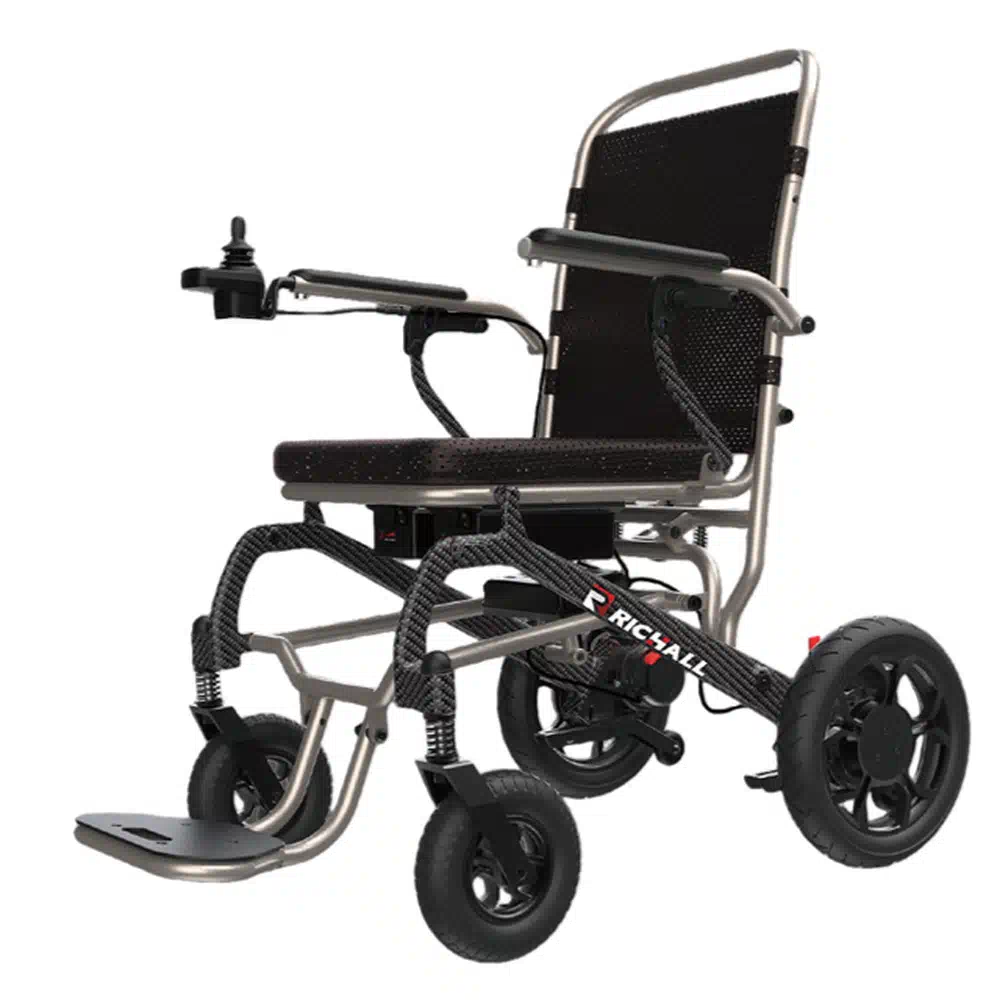
At the forefront of this revolution is the carbon fiber electric wheelchair. The adoption of this aerospace-grade material is more than just an engineering upgrade; it represents a philosophical change. It acknowledges that the experience of using a wheelchair is not confined to getting from point A to point B. It is about how one feels moving through the world, the ease with which one can travel, and the confidence projected. When a wheelchair is light enough to be lifted into a car without a second thought, durable enough to navigate varied terrains with grace, and designed with an elegance that reflects personal style, it ceases to be a symbol of disability. Instead, it becomes a vehicle for possibility.
This guide explores the five fundamental factors to consider when navigating this new landscape. We will examine the science behind the materials, the biomechanics of a perfect fit, the engineering of power and performance, the psychology of aesthetics, and the practicalities of long-term ownership. The goal is to provide a comprehensive understanding that empowers you to choose a device that not only meets your physical needs but also resonates with your sense of self. It is an invitation to see the modern wheelchair not as a compromise, but as a sophisticated piece of personal technology that enhances life in every dimension.
Factor 1: The Soul of the Machine – Material Science and Frame Construction
The frame is the skeleton of any wheelchair, the foundation upon which every other component is built. Historically, this skeleton was forged from steel—strong, yes, but punishingly heavy. Then came aluminum, offering a welcome reduction in weight. Today, we are in the era of composites, and carbon fiber stands as the pinnacle of this evolution. To appreciate the significance of a carbon fiber electric wheelchair, we must first understand the profound differences in these materials. It’s a story of physics, chemistry, and how they translate into lived, daily experience.
The Material Spectrum: Steel, Aluminum, and Carbon Fiber
Imagine you are a sculptor. Your choice of stone—marble, granite, or sandstone—will dictate not only the final appearance of your work but also the tools you can use and the very forms you can create. The same is true for wheelchair engineering.
Steel was the original choice for its low cost and high strength. However, its density is its downfall. A steel frame wheelchair is heavy, requiring more effort from the user or draining the battery of an electric model more quickly. Lifting it is a significant challenge, creating a barrier to travel and spontaneity.
Aluminum alloys presented the first major leap forward. Being roughly a third of the weight of steel, aluminum frames made wheelchairs significantly more manageable. They are resistant to corrosion and relatively easy to manufacture, which keeps them as a popular and viable option for many. Yet, aluminum has its limits. To achieve the necessary strength, tubes must have thicker walls, adding back some weight. It also transmits vibrations more readily than other materials, which can lead to user fatigue over a long day.
Then comes carbon fiber. It is not a metal but a composite material, or more precisely, a carbon-fiber-reinforced polymer. It is made of microscopic crystalline filaments of carbon, woven into a fabric and then set within a rigid polymer resin. The result is a material that possesses a truly remarkable combination of properties.
| Fonctionnalité | Acier | Alliage d'aluminium | Composite en fibre de carbone |
|---|---|---|---|
| Rapport résistance/poids | Bon | Très bon | Exceptional |
| Approximate Weight | Heavy (e.g., 20-25 kg for a frame) | Moderate (e.g., 12-18 kg for a frame) | Very Light (e.g., 5-10 kg for a frame) |
| Amortissement des vibrations | Pauvre | Juste | Excellent |
| Résistance à la fatigue | Bon | Moyen à bon | Excellent |
| Résistance à la corrosion | Médiocre (nécessite un revêtement) | Excellent | Excellent |
| Design Flexibility | Limited (tubular shapes) | Moderate (can be hydroformed) | Very High (moldable into complex shapes) |
| Coût | Faible | Modéré | Haut |
Why Carbon Fiber Changes Everything
The superior strength-to-weight ratio is the most celebrated feature of carbon fiber. A carbon fiber frame can be as strong as or even stronger than steel while weighing less than a comparable aluminum frame (Horikiri, 2021). This dramatic weight reduction is transformative. It means a carbon fiber electric wheelchair is easier to propel, requires less energy from its motors, and therefore can achieve a longer range from the same battery. For the user or a caregiver, it means the chair is vastly easier to lift into a vehicle, breaking down a significant barrier to travel and social engagement.
Beyond weight, two other properties are profoundly important for a wheelchair user: vibration damping and fatigue resistance.
- Vibration Damping: Every surface, from a cobblestone street to a tiled floor, creates vibrations that travel up through the wheelchair frame into the user’s body. Over a day, this constant, low-level jarring contributes to fatigue and discomfort. Carbon fiber composites have natural damping properties; they absorb and dissipate these vibrations far more effectively than metals. The ride in a well-made carbon fiber electric wheelchair is noticeably smoother, leading to greater comfort and reduced physical strain.
- Fatigue Resistance: Materials can weaken over time when subjected to repeated stress cycles, a phenomenon known as metal fatigue. Carbon fiber is exceptionally resistant to this. It can endure countless cycles of loading and unloading without losing its structural integrity. For a wheelchair, which is used daily under varying loads, this translates to superior long-term durability and safety.
The Art of Manufacturing: Monocoque vs. Tubular Frames
The way a frame is constructed is just as important as the material itself. Traditional wheelchairs use a tubular design, where tubes of metal are welded or bolted together. This is a proven method, but it has limitations. The joints can become points of weakness or flex, and the design is restricted to what can be achieved with tubes.
Carbon fiber unlocks a more advanced construction method: the monocoque frame. The term comes from Greek for “single shell.” In this process, layers of carbon fiber fabric are laid into a mold and then infused with resin and cured under heat and pressure. This creates a single, seamless, hollow structure. Think of the fuselage of a modern aircraft or the chassis of a Formula 1 racing car.
This approach offers several advantages. It eliminates the joints, which are potential weak points, creating a stronger and more rigid structure. This rigidity is crucial for performance; it means that the energy from the motors is transferred directly to the wheels with maximum efficiency, without being lost to frame flex. A rigid frame provides a more responsive and predictable handling experience. Moreover, molding allows for the creation of complex, organic shapes that are not only aesthetically pleasing but also ergonomically optimized. The frame can be sculpted to integrate components smoothly and to fit the human form in a way that tubular construction simply cannot match. This is a key element of a luxury custom wheelchair stylish design, where form and function are in perfect harmony.
Factor 2: A Seamless Union – The Critical Role of Customization and Ergonomics
If the frame is the skeleton, the seating and support system is the interface between the machine and the human body. It is here that a generic, one-size-fits-all approach fails most profoundly. A luxury custom wheelchair is defined by its ability to be tailored to the unique geometry and needs of its user. This is not a matter of simple comfort; it is a fundamental aspect of long-term health, functionality, and well-being. The principles of ergonomics—the science of fitting a workplace to the worker—are nowhere more critical than in the design of a device that a person may use for many hours each day.
The Biomechanics of Seating
Prolonged sitting, especially with inadequate support, can lead to a host of health issues. For a wheelchair user, these risks are magnified. Poor posture can contribute to pressure sores (also known as pressure ulcers), musculoskeletal pain, respiratory difficulties, and digestive problems (Dicianno et al., 2015). A properly configured seating system works to mitigate these risks by achieving several key biomechanical goals.
- Pressure Distribution: The goal is to distribute the user’s weight over the largest possible surface area, avoiding high-pressure points, particularly over bony prominences like the ischial tuberosities (the “sit bones”). This is achieved through a combination of a correctly sized seat and a specialized cushion. Cushions can be made from various materials, such as contoured foam, gel, or air cells, each designed to immerse the user and redistribute pressure effectively.
- Postural Stability: A stable posture is the foundation for all functional movement. The seating system should provide a solid base of support for the pelvis. If the pelvis is not stable—if it is tilted or rotated—it will negatively affect the alignment of the entire spine, head, and limbs. A properly fitted backrest, with options for lateral supports or contouring, is essential for maintaining trunk alignment and stability.
- Optimized Function: The right posture does more than prevent health problems; it enhances ability. A stable and well-supported posture frees the user’s arms and hands for functional tasks, whether it’s reaching for an item on a shelf, working at a desk, or propelling the chair. It also optimizes the field of vision and head control, which is vital for safe navigation and social interaction.
The Elements of a Custom Fit
Achieving this ergonomic ideal requires a detailed assessment and the ability to adjust multiple components of the wheelchair. This is where the “custom” in luxury custom wheelchair truly comes to life. A trained therapist or supplier will typically measure and assess the user to determine the optimal configuration.
Key points of customization include:
- Seat Dimensions: The width, depth, and height of the seat are the starting point. A seat that is too wide allows the pelvis to slide, leading to poor posture. One that is too narrow can cause pressure on the hips. A seat depth that is too long can put pressure behind the knees and encourage a slouched posture, while one that is too short reduces the support surface under the thighs.
- Backrest Configuration: The height of the backrest depends on the user’s need for support. A lower backrest allows for greater freedom of movement for the upper body, which can be ideal for active users. A higher backrest provides more support for individuals with reduced trunk control. The angle of the backrest is also adjustable to manage posture and comfort.
- Armrests and Footplates: Armrests should be set at a height that allows the shoulders to be relaxed, providing support without causing them to hunch. Footplates need to be adjusted so that the thighs are level and fully supported by the seat cushion, with the feet resting comfortably. The length, height, and angle of the footplates are all critical adjustments.
- Wheel and Caster Placement: On a carbon fiber electric wheelchair, the position of the drive wheels (rear-wheel, mid-wheel, or front-wheel drive) affects stability, maneuverability, and outdoor performance. The placement of the front casters can also be adjusted to optimize the chair’s wheelbase, balancing stability with the ability to make tight turns.
The process of fitting a custom wheelchair is a dialogue between the user, the clinician, and the technology. It requires a deep understanding of the user’s physical condition, daily activities, and personal goals. The result is a chair that feels less like a piece of equipment and more like a natural extension of the body.
Factor 3: The Heart of Motion – Performance, Power, and Portability
A wheelchair’s frame and fit provide the foundation, but its powertrain and control system give it life. For a carbon fiber electric wheelchair, the expectation is not just mobility, but performance. This means having the power to climb inclines, the range to last a full day of activity, the responsiveness to navigate intricate indoor spaces, and the portability to go wherever life takes you. Understanding the technology behind these capabilities is key to making an informed choice.
The Drive System: Motors and Wheels
The electric motors are the muscles of the wheelchair. The dominant technology in high-end models today is the brushless DC motor. Compared to older brushed motors, brushless motors are more efficient, more reliable, and quieter, and they have a longer lifespan because they have no brushes to wear out. This efficiency is a crucial part of the performance equation. It means more of the battery’s stored energy is converted into motion, which directly translates to a longer travel range.
The placement of the drive wheels also fundamentally defines the chair’s handling characteristics. There are three main configurations:
- Rear-Wheel Drive (RWD): This is the traditional configuration. RWD chairs are very stable at high speeds and perform well outdoors over uneven ground. Their main drawback is a larger turning radius, which can make them less nimble in tight indoor spaces.
- Mid-Wheel Drive (MWD): MWD chairs have a drive wheel directly under the user’s center of gravity, with casters at the front and back. Their standout feature is an incredibly small turning radius; they can essentially turn on the spot. This makes them exceptionally maneuverable indoors. They also offer a very intuitive driving experience.
- Front-Wheel Drive (FWD): FWD chairs excel at climbing obstacles, as the drive wheels pull the rest of the chair over them. They offer good stability and a smooth ride.
The choice depends heavily on the user’s primary environment. A mid-wheel drive carbon fiber electric wheelchair is often an excellent all-around choice, balancing superb indoor agility with competent outdoor performance.
The Lifeline: Battery Technology and Range
The battery is the fuel tank. Modern electric wheelchairs almost universally use lithium-ion (Li-ion) batteries. They have a much higher energy density than the older lead-acid batteries, meaning they can store more power in a smaller, lighter package. This is a perfect synergy with a lightweight carbon fiber frame; the combination of a light frame and a light, powerful battery is what makes ultra-lightweight and portable designs possible.
When evaluating a battery system, consider these factors:
- Range (Ah Rating): The capacity of a battery is measured in Ampere-hours (Ah). A higher Ah rating generally means a longer range. However, the actual range you experience will depend on many variables: the user’s weight, the terrain, the tire pressure, and even the ambient temperature. Manufacturers provide an estimated range, but it’s wise to consider it a best-case scenario. Think about your typical day. Do you need to cover long distances, or are your trips mostly short?
- Charging Time: How long does it take to fully recharge the battery from empty? Most modern lithium-ion systems can recharge in a matter of 4-8 hours, making overnight charging convenient.
- Airline Compliance: This is a critical consideration for travelers. Aviation authorities have strict regulations about the size of lithium-ion batteries allowed on aircraft (Federal Aviation Administration, 2024). Many manufacturers offer smaller, airline-compliant battery options. Often, a chair can be equipped with two smaller batteries that can be used together but are transported separately to meet the rules. Always check with your airline before you fly.
| Type de batterie | Lead-Acid | Lithium-ion (Li-ion) |
|---|---|---|
| Energy Density | Faible | Haut |
| Poids | Very Heavy | Lightweight |
| Lifespan (Charge Cycles) | ~300-500 | ~800-1500+ |
| Maintenance | Requires regular maintenance | Virtually maintenance-free |
| Charging Speed | Slow (8-12 hours) | Faster (4-8 hours) |
| Coût | Faible | Haut |
The Brains of the Operation: Control Systems
The joystick is the primary interface between the user and the chair. Modern control systems, however, are far more than simple directional controllers. They are sophisticated computers that allow for a high degree of personalization.
- Programming: The controller’s parameters can be adjusted to match the user’s specific needs and abilities. For example, the acceleration rate, turning speed, and top speed can all be programmed. For a user with tremors or limited fine motor control, the joystick’s sensitivity can be dampened to filter out unintentional movements, resulting in smoother, safer driving.
- Smart Features: Many high-end controllers now feature LCD screens that provide real-time information like battery level, current speed, and diagnostics. Some offer Bluetooth connectivity, allowing the wheelchair to be controlled via a smartphone app (for example, by a caregiver) or to interface with other smart devices. USB charging ports for personal electronics are also becoming a standard feature.
The combination of a lightweight carbon fiber frame, an efficient brushless motor, a high-density lithium-ion battery, and a smart controller creates a mobility device that is not just functional but truly high-performing. It is responsive, efficient, and adaptable to the demands of a modern, active life.
Factor 4: The Shape of Identity – Aesthetics, Style, and Personal Expression
For too long, the design of mobility aids has been governed by a sterile, clinical functionalism. The result has been devices that, while serving a purpose, also carry an unavoidable stigma. They are objects that can make a person feel like a patient. The movement toward a luxury custom wheelchair stylish design is a powerful rejection of this premise. It is founded on the understanding that aesthetics are not a frivolous luxury; they are integral to a person’s sense of self, their confidence, and how they are perceived by and interact with the world.
The Psychology of Design
Humans are visual creatures. The objects we choose to surround ourselves with—our clothes, our cars, our phones—are all expressions of our identity. They tell a story about who we are, what we value, and how we wish to be seen. Why should a wheelchair be any different? When a person’s mobility device is designed with elegance and intention, it can transform their relationship with it, and in turn, their relationship with themselves.
Think about the difference between a standard-issue hospital gown and a well-tailored suit. Both cover the body, but they communicate vastly different things. The gown signifies sickness and passivity. The suit projects confidence, competence, and intention. A stylishly designed wheelchair can have a similar effect. Instead of being an object that elicits pity or awkwardness, it can become a point of interest and admiration—a piece of sophisticated technology and personal style. This can fundamentally shift the dynamic of social interactions, moving the focus from the disability to the person.
This is not about vanity. It is about the human need for dignity and self-expression. A beautiful object can bring joy. A well-designed tool feels good to use. When that tool is something you rely on for your freedom and mobility, its aesthetic qualities take on a profound psychological importance (Pullin, 2009).
Elements of a Stylish Design
What constitutes a “stylish” wheelchair design? It is not about adding decorative flourishes. It is about a deeper, more integrated approach to form and function.
- Clean Lines and Integrated Forms: One of the hallmarks of a modern carbon fiber electric wheelchair is its clean, uncluttered appearance. The use of monocoque frames allows for flowing, organic shapes. Wires and cables can be routed internally, hidden from view. Components like batteries and motors can be integrated seamlessly into the frame’s design rather than looking like afterthoughts bolted on. The result is a cohesive, intentional object that looks sleek and purposeful.
- Color and Finish: The ability to choose a color and finish is one of the most direct ways to personalize a device. Instead of being limited to clinical shades of grey or black, manufacturers like fauteuil roulant électrique en fibre de carbone are offering a palette of options. A vibrant color can express a bold personality, while a subtle metallic finish can convey quiet sophistication. The raw, woven pattern of the carbon fiber itself is often featured under a clear coat, celebrating the high-tech nature of the material.
- Material Honesty: Good design often involves celebrating the nature of the materials used. The visual texture of carbon fiber, the machined precision of an aluminum component, the supple feel of quality upholstery—these details contribute to the overall sense of quality and craftsmanship. They engage not just the eye, but the sense of touch as well.
- Minimalism and Reduction: Often, the most elegant design is the one that has been stripped down to its essential elements. A minimalist aesthetic focuses on simplicity, removing visual clutter to highlight the purity of the form. This approach communicates confidence and modernity.
Choosing a wheelchair with a design that resonates with your personal taste is an act of empowerment. It is a declaration that you are not defined by your need for a mobility device. It is an assertion of identity, a choice to move through the world in a way that feels authentic and joyful. It transforms the wheelchair from a medical necessity into a chosen companion, a vehicle of personal expression that is as much a part of your style as the clothes you wear.
Factor 5: The Enduring Relationship – Support, Maintenance, and Future-Proofing
The purchase of a high-quality carbon fiber electric wheelchair is a significant investment, not just financially, but in your quality of life. The relationship with the chair and its manufacturer does not end the day it is delivered. A truly premium experience is defined by the support, reliability, and long-term value that comes after the initial purchase. Thinking about the future of your device—how it will be maintained, repaired, and potentially upgraded—is a critical part of the decision-making process.
The Ecosystem of After-Sales Support
Even the best-engineered machine will require maintenance and may eventually need repairs. The quality of the manufacturer’s after-sales support system is what separates a good product from a great ownership experience.
- Garantie : A comprehensive warranty is a manufacturer’s vote of confidence in its own product. Look closely at the terms. What parts are covered, and for how long? Typically, the frame will have the longest warranty (often several years or even a lifetime), while electronic components and batteries will have shorter terms (usually one or two years). A strong warranty provides peace of mind and protects your investment.
- Service and Repair Network: When a repair is needed, how is it handled? Does the manufacturer have a network of certified local technicians who can provide service? Is there a clear process for diagnosing problems, ordering parts, and getting the chair back in working order quickly? A wheelchair is a lifeline, and minimizing downtime is essential. Look for companies that have a responsive customer service team and a clear, efficient service process.
- Availability of Spare Parts: Over the lifespan of a wheelchair, consumable parts like tires, batteries, and joystick knobs will need to be replaced. Ensure that the manufacturer has a reliable supply chain for these parts and that they are reasonably priced. A beautifully designed chair is of little use if you cannot get a replacement tire for it.
Designing for the Future: Modularity and Upgradability
The best modern technology is not static; it is designed to evolve. This principle is increasingly being applied to wheelchair design. A future-proofed wheelchair is one that is modular and upgradable.
- Modularity: A modular design means that the chair is built from distinct, interchangeable components. This has several advantages. It makes repairs easier and faster, as a faulty component can be swapped out without having to replace the entire system. It also allows for future customization. As your needs change over time, you may be able to change parts of your seating system, controls, or other components without needing to purchase a whole new chair.
- Upgradability: Technology moves quickly. The cutting-edge controller of today may be standard in a few years. A forward-thinking manufacturer will design their electronic systems to be upgradable. This could mean the ability to update the controller’s software to get new features or improved performance, or even the ability to swap out the entire controller for a newer model in the future. This approach protects your investment and ensures your chair can continue to meet your needs for years to come. For those looking to make a selection, a detailed resource like a luxury wheelchair with personalized adjustments can offer specific model comparisons and insights into their upgradability.
Choosing a manufacturer that is committed to this kind of long-term thinking is a wise decision. It shows that they see their customers not as one-time buyers, but as partners in a long-term relationship. It transforms the purchase from a simple transaction into an entry into an ecosystem of support that will enhance your mobility and independence for many years to come.
Foire aux questions (FAQ)
Un fauteuil roulant électrique en fibre de carbone vaut-il la peine d'être plus cher ?
The initial investment for a carbon fiber model is higher than for its aluminum or steel counterparts. However, its value should be assessed over its entire lifespan. The superior durability and fatigue resistance of carbon fiber can lead to a longer-lasting frame. The significant weight reduction enhances portability, potentially reducing the need for expensive vehicle modifications or lifts. Furthermore, the lighter weight improves battery efficiency, which can extend battery life and reduce replacement costs over time. Lastly, the enhanced comfort from vibration damping and the psychological benefits of a stylish, lightweight design are invaluable quality-of-life factors that many users find well worth the premium.
How do I get a custom wheelchair properly fitted?
A proper fitting should be conducted by a qualified professional, typically an occupational therapist (OT) or physical therapist (PT) who specializes in assistive technology, or a certified Assistive Technology Professional (ATP). The process involves a detailed physical assessment, including measurements of your body in a seated position, an evaluation of your posture and muscle function, and a discussion about your daily activities, environments, and mobility goals. This information is then used to prescribe the exact specifications for your wheelchair, from seat dimensions to the type of cushion and backrest. Never purchase an expensive custom chair without this professional consultation.
Can I travel on an airplane with my carbon fiber electric wheelchair?
Yes, in most cases you can travel by air. The key is the battery. Aviation authorities have strict rules for lithium-ion batteries. Generally, you can bring a wheelchair with one larger battery installed, or two smaller batteries, provided each one is below a certain Watt-hour (Wh) rating (usually 100 Wh, though up to 160 Wh may be allowed with airline approval). It is essential to contact the airline well in advance of your flight to declare your device and confirm their specific policies. Many manufacturers, aware of this, design their chairs with easily removable, airline-compliant batteries to simplify the travel process.
Quel est le niveau d'entretien d'un fauteuil roulant électrique en fibre de carbone ?
While the carbon fiber frame and brushless motors are virtually maintenance-free, regular checks are still important for safety and performance. You should regularly check tire pressure, as underinflated tires can reduce range and make the chair harder to push. Keep the chair clean, especially the moving parts and electrical connections. It is also wise to have the chair professionally serviced annually to check the batteries, brakes, electronics, and the tightness of all nuts and bolts.
How is a monocoque frame different from a traditional tubular frame?
A traditional tubular frame is made by welding or bolting together individual metal tubes, creating a structure with many joints. A monocoque frame, typically made from carbon fiber, is created as a single, hollow shell in a mold. This eliminates the joints, which can be points of weakness or flex. The result is a frame that is generally stronger, more rigid, and lighter. This rigidity improves the chair’s responsiveness and efficiency, as more of the motor’s power is transferred directly to the wheels instead of being lost to frame flex.
Conclusion
The journey toward choosing the right mobility device is a profoundly personal one. We have moved beyond an era where the primary considerations were merely mechanical and into a new landscape where the user’s entire experience is central. The modern carbon fiber electric wheelchair is the embodiment of this holistic approach. It is a testament to what is possible when advanced material science, thoughtful ergonomics, high-performance engineering, and sophisticated aesthetics converge.
The decision to invest in such a device is about more than acquiring a tool for mobility. It is an affirmation of a desire for a life of fewer compromises and greater possibilities. It is about valuing the smoothness of a ride that does not leave you fatigued at the end of the day. It is about the freedom that comes from a chair light enough to go wherever you do. It rests on an appreciation for a design that reflects your personal style and fosters confident social engagement. It is a choice for a seamless union between your body and your technology, supported by a long-term relationship with a manufacturer who stands behind their creation. Ultimately, selecting a wheelchair becomes an act of self-definition, a choice to equip yourself with a device that not only carries you through the world but also empowers you to engage with it fully, on your own terms.
Références
Dicianno, B. E., Schmeler, M., Liu, B., & Joseph, J. (2015). The role of technology in improving the lives of people with disabilities. In X. M. Wang (Ed.), Engineering in Medicine and Biology Society (EMBC), 2015 37th Annual International Conference of the IEEE (pp. 8382-8384). IEEE.
Federal Aviation Administration. (2024). Pack safe: Wheelchairs and mobility devices. U.S. Department of Transportation.
Horikiri, K. (Ed.). (2021). Carbon fibers and their composite materials. MDPI.
Pullin, G. (2009). Design meets disability. The MIT Press.
Richall Medical. (2025). Electric wheelchair. Richall Medical Technology Co., Ltd. https://www.richallmed.com/Electric-Wheelchair-pl69273967.html
Richall Medical. (2025). Top 5 lightweight electric wheelchairs under 50 pounds. Richall Medical Technology Co., Ltd. https://www.richallmed.com/Top-5-Lightweight-Electric-Wheelchairs-Under-50-Pounds-id41635416.html

.png)
