.png)
.png)

Lista de comprobación de 7 puntos: Cómo elegir sillas de ruedas eléctricas de carbono y aleación de aluminio cómodas para el uso diario en 2026
30 de diciembre de 2025
Resumen
The pursuit of enhanced mobility for individuals with physical limitations has catalyzed significant advancements in assistive technology. This analysis examines the confluence of material science and ergonomic design in the context of modern electric wheelchairs, specifically focusing on the distinctions between carbon fiber and aluminum alloy frames. An inquiry into the properties of these materials reveals their respective contributions to the overall performance, portability, and user experience of the device. Carbon fiber, with its superior strength-to-weight ratio, offers unparalleled lightness and durability, facilitating ease of transport. Conversely, aluminum alloys provide a robust, cost-effective, and corrosion-resistant alternative. The investigation extends to critical comfort-related components, including ergonomic seating systems, advanced motor and battery technologies, intuitive control mechanisms, and comprehensive safety features. By providing a structured framework for evaluation, this document aims to empower users, caregivers, and clinicians to make informed decisions when selecting comfort-focused electric carbon aluminium alloy wheelchairs for daily use, thereby promoting greater independence and improving quality of life.
Principales conclusiones
- Evaluate frame material: Carbon fiber is lighter and stronger, while aluminum is cost-effective and reliable.
- Prioritize adjustable ergonomic seating for personalized support and pressure relief during extended use.
- Assess brushless motors and lithium-ion batteries for superior efficiency, range, and longevity.
- Consider the folding mechanism and total weight for practical portability and ease of transport.
- Choose comfort-focused electric carbon aluminium alloy wheelchairs for daily use with responsive controls and good suspension.
- Verify safety features like electromagnetic brakes and anti-tip wheels for user security.
- Investigate warranty and after-sales support to ensure long-term reliability and service.
Índice
- The Foundation of Mobility: Frame Material (Carbon Fiber vs. Aluminum Alloy)
- Ergonomics and Seating: The Core of All-Day Comfort
- Power and Performance: Motor Systems and Battery Life
- Portability and Transport: The Freedom of a Folding Frame
- Control and Maneuverability: Navigating Your World with Precision
- Safety Features: A Comprehensive Approach to User Security
- Customization and Future-Proofing: Adapting the Chair to Your Life
- Preguntas más frecuentes (FAQ)
- Conclusión
- Referencias
The Foundation of Mobility: Frame Material (Carbon Fiber vs. Aluminum Alloy)
The selection of a personal mobility device is a profound decision, one that extends far beyond mere functionality to touch upon the very essence of personal freedom, dignity, and daily experience. The wheelchair is not simply an apparatus; it becomes an extension of the self, a partner in navigating the world. Central to its character and performance is the frame, the skeleton upon which all other capabilities are built. In 2026, the primary discourse in this domain revolves around two remarkable materials: carbon fiber and aluminum alloy. To understand which is better suited for your needs, we must move beyond surface-level claims and engage with the material science that defines their properties. This choice influences not just the weight you lift into a car, but also the vibrations you feel on a bumpy sidewalk and the device’s resilience over years of use.
Understanding Material Science in Mobility Aids
Let us begin by asking a foundational question: What do we demand from the frame of a wheelchair? We ask it to be strong enough to support an individual safely, yet light enough to be managed by a user or caregiver. We need it to be rigid enough to provide a stable and responsive ride, yet capable of absorbing some of the jarring forces of uneven terrain. It must resist corrosion from rain and humidity and withstand the fatigue of constant use.
Historically, wheelchair frames were predominantly made of steel. Steel is undeniably strong and inexpensive, but it carries a significant weight penalty. A heavy chair is a cumbersome chair, creating barriers to travel and spontaneity. The shift towards lighter materials represents a philosophical shift in design—from a purely utilitarian medical device to a lifestyle-enabling tool. This is where aluminum alloys and, more recently, carbon fiber composites have revolutionized the industry. These materials are not chosen arbitrarily; they are the result of decades of engineering research aimed at solving the fundamental tension between strength and weight.
Carbon Fiber: The Featherweight Champion of Strength
Carbon fiber is a composite material, which means it is made from two or more constituent materials with significantly different physical or chemical properties. Think of it like reinforced concrete, where steel rebar provides tensile strength and concrete provides compressive strength. In carbon fiber, thousands of incredibly thin strands of carbon atoms are twisted together like yarn. This “yarn” is then woven into a fabric and laid into a mold. A hardener, typically a rigid polymer resin or plastic, is infused into the fabric, and the part is cured under heat and pressure.
The result is a material that is astonishingly strong and stiff for its weight. It possesses a strength-to-weight ratio that is far superior to that of metals like steel or aluminum (Bao, 2019). This is why it is the material of choice for aerospace applications, high-performance race cars, and elite sporting equipment. For a wheelchair user, this translates into a tangible, daily benefit: a chair that is dramatically easier to lift, push, and transport. For example, a lightweight carbon fiber electric wheelchair can weigh as little as 16-18 kg (35-40 lbs), a weight that is manageable for many individuals. This lightness does not come at the expense of strength; in fact, carbon fiber frames can be stronger and more resistant to fatigue than their metal counterparts. Another subtle but significant benefit is vibration damping. The composite nature of carbon fiber helps to absorb small, high-frequency vibrations from the ground, resulting in a smoother, less fatiguing ride.
Aluminum Alloy: The Reliable and Versatile Workhorse
Aluminum, in its pure form, is soft and not particularly strong. However, when alloyed—mixed with other elements like magnesium, silicon, or zinc—it is transformed into a material with an excellent blend of properties for structural applications. For decades, aluminum alloys have been the go-to choice for lightweight yet strong products, from bicycle frames to aircraft fuselages.
In the context of wheelchairs, aluminum alloy offers a significant weight reduction compared to steel, while remaining more affordable than carbon fiber. It is easily formed and welded, allowing for a wide variety of frame designs. Manufacturers like RICHALL Medical utilize advanced aluminum alloys to create frames that are both durable and relatively light silla de ruedas eléctrica de fibra de carbono marca. Aluminum is also naturally resistant to corrosion. It forms a thin, tough, transparent layer of aluminum oxide on its surface when exposed to air, which protects the metal underneath from further oxidation. This makes it an excellent choice for users in diverse climates. While it does not offer the same level of vibration damping as carbon fiber, its reliability, cost-effectiveness, and robust nature make it an extremely popular and practical choice for comfort-focused electric carbon aluminium alloy wheelchairs for daily use.
A Head-to-Head Comparison: Weight, Durability, and Cost
To make an informed decision, a direct comparison is necessary. Consider your own priorities, daily routines, and budget as you examine the following table. This is not about finding a universally “best” material, but about finding the material that is best for you.
| Característica | Carbon Fiber Frame | Aluminum Alloy Frame |
|---|---|---|
| Peso | Exceptionally light (often 15-20 kg). The primary advantage, enabling superior portability. | Lightweight (typically 20-30 kg). A significant improvement over steel, but heavier than carbon fiber. |
| Strength & Stiffness | Higher strength-to-weight ratio. Extremely rigid, providing a responsive feel. | Strong and durable. Sufficient for all standard use cases, though less stiff than carbon fiber. |
| Durability & Fatigue | Highly resistant to fatigue and will not rust or corrode. Can be brittle and prone to cracking on sharp impact. | Excellent corrosion resistance. More ductile, meaning it may dent or bend on impact rather than crack. |
| Ride Comfort | Superior vibration damping properties, leading to a smoother ride on textured surfaces. | Transmits more ground vibration to the user, though this can be mitigated by tires and suspension. |
| Coste | Significantly higher initial investment due to complex manufacturing processes and raw material costs. | More affordable and cost-effective. Offers the best balance of performance and price for many users. |
| Aesthetics | Often has a distinctive woven appearance, associated with high-tech, premium products. | Can be painted or anodized in a wide variety of colors and finishes. |
The choice between carbon fiber and aluminum alloy is a classic engineering trade-off. If your highest priority is minimizing weight to maximize portability and ease of transport—if you frequently lift your chair into a car or travel by air—the higher cost of a carbon fiber model may be a worthwhile investment in your daily convenience and independence. If you are seeking a durable, reliable, and high-performing chair at a more accessible price point, an aluminum alloy frame provides outstanding value.
Ergonomics and Seating: The Core of All-Day Comfort
We have established the foundation of the wheelchair—its frame. Now, we turn our attention to the interface between the device and the human body: the seating system. The term “comfort” is often used loosely, but in the realm of assistive technology, it is a deeply scientific concept. A truly comfort-focused electric carbon aluminium alloy wheelchair for daily use is not merely about soft padding; it is about biomechanics, pressure distribution, and postural support. An individual may spend many hours a day in their wheelchair, making the seating system as critical to their well-being as the mattress on which they sleep. A poorly designed seat can lead to discomfort, fatigue, skin breakdown, and poor posture, while a well-designed ergonomic system promotes health, stability, and function.
Beyond the Cushion: The Science of Ergonomic Seating
Ergonomics is the science of designing and arranging things people use so that the people and things interact most efficiently and safely. When applied to wheelchair seating, it means creating a system that conforms to the user’s body, supports a healthy posture, and distributes pressure evenly. The human body is not designed to sit for prolonged periods. When we sit, high pressure is concentrated on the areas of the pelvis that contact the seat, primarily the ischial tuberosities (the “sit bones”). Sustained pressure can restrict blood flow to the skin and underlying tissues, increasing the risk of developing pressure injuries or sores (Stockton & Rithalia, 2009).
An ergonomic seating system aims to mitigate this risk by maximizing the surface area of contact. Think of the difference between sitting on a wooden stool versus a well-shaped saddle. The stool concentrates all your weight onto a small area, while the saddle distributes it more broadly across your thighs and pelvis. A good wheelchair seat and backrest function like that saddle, contouring to the body to spread the load. This not only protects the skin but also enhances stability. When a user feels stable and secure, they can reach, lean, and perform daily tasks with greater confidence and less effort.
Adjustability as a Non-Negotiable Feature
No two bodies are the same. A seating system that is perfect for one person may be uncomfortable for another. Consequently, adjustability is not a luxury; it is a fundamental requirement for a proper fit. When evaluating a wheelchair, look for multiple points of adjustment.
- Profundidad del asiento: The seat should support the full length of the thighs without pressing into the back of the knees. Proper depth ensures stability and pressure distribution. Too short, and the thighs are unsupported, increasing pressure on the sit bones. Too long, and it can cause circulation issues behind the knee or force the user into a slouched posture.
- Seat Width: The width should be snug but not tight, allowing for a small amount of space on either side of the hips. Too wide, and the user may have difficulty reaching the wheels (on a manual chair) or joystick and may lean to one side for support. Too narrow, and it can cause uncomfortable pressure on the hips.
- Altura y ángulo del respaldo: The height of the backrest depends on the user’s need for support. A lower backrest allows for greater freedom of movement for the shoulders and arms, while a higher backrest provides more trunk support. The ability to recline the backrest angle can significantly alter pressure distribution, shifting some of the user’s weight from the seat to their back, providing periods of relief.
- Armrest Height and Position: Armrests should support the forearms comfortably, allowing the shoulders to relax. If they are too high, the shoulders will be shrugged; too low, and the user will slump forward or to the side.
- Leg Rest and Footplate Angle/Height: The footplates should support the feet fully, with the thighs approximately parallel to the seat cushion. The angle of the leg rests can also be crucial for comfort and managing conditions like edema.
A chair with this level of adjustability can be fine-tuned by the user or a professional to achieve a truly custom fit, which is the hallmark of a high-quality, comfort-focused design.
Cushioning Technology: From Foam to Gel and Air
The cushion is the most direct point of contact and plays a critical role in comfort and pressure management. There are several primary types of cushion technology, each with its own set of advantages.
- Foam Cushions: These are the most common type, ranging from simple, low-density foam to complex, multi-layered designs with high-density, contoured bases for postural support. Memory foam, for example, conforms to the body’s shape in response to heat and pressure, providing even support. Foam is lightweight and low-maintenance but can lose its supportive properties over time and may retain heat.
- Gel Cushions: These cushions typically contain a pouch of semi-solid gel embedded in a foam base. The gel is excellent at distributing pressure because it can flow and displace to conform to the body’s shape. This helps to minimize pressure peaks. Gel cushions offer superior pressure relief compared to basic foam but are often heavier and can be affected by temperature extremes.
- Air Flotation Cushions: These cushions consist of a series of interconnected air cells that can be inflated to a specific pressure. They provide the highest level of pressure relief by allowing the user to “float” on a cushion of air, ensuring that pressure is equalized across the entire contact surface. They are incredibly lightweight but require proper inflation and monitoring to be effective and are more susceptible to puncture.
Many modern wheelchairs, like those in the silla de ruedas eléctrica de fibra de carbono , offer a choice of cushion or feature hybrid designs that combine layers of foam and gel to offer a balance of support, pressure relief, and durability.
The Role of Backrests and Lumbar Support
Comfort is not limited to the seat. The backrest is equally vital for maintaining a healthy posture and providing support. A slouched, “C-shaped” posture is not only uncomfortable but can also impair breathing and digestion. A good backrest should support the natural “S-shaped” curve of the spine.
This is where lumbar support becomes essential. The lumbar region, or lower back, has a natural inward curve. A backrest with an adjustable lumbar pad can be positioned to fill this space, preventing the pelvis from tilting backward and the spine from slumping. Some advanced backrests also offer lateral supports to provide additional stability for the torso. Tension-adjustable upholstery is another excellent feature, allowing straps on the back of the chair to be individually tightened or loosened to perfectly match the user’s spinal curvature. This level of personalization is a defining characteristic of a truly ergonomic system.
Power and Performance: Motor Systems and Battery Life
Having settled into a perfectly adjusted, ergonomic seat on a strong, lightweight frame, our attention now turns to the “electric” aspect of the wheelchair: the propulsion system. This is the heart of the chair’s independence-granting power, the engine that transforms physical effort into effortless mobility. The performance of a comfort-focused electric carbon aluminium alloy wheelchair for daily use is defined by its motor technology and its energy source, the battery. Understanding these components allows a user to look past simple top-speed numbers and appreciate the nuances of efficiency, responsiveness, and real-world range.
Demystifying Electric Wheelchair Motors: Brushed vs. Brushless
The motor is what converts electrical energy from the battery into the mechanical force that turns the wheels. For many years, the standard in electric mobility was the brushed DC motor. In a brushed motor, small carbon blocks called “brushes” make physical contact with a spinning component called the commutator to deliver electrical current to the motor windings. This design is simple, reliable, and inexpensive to produce.
However, the future of electric mobility, from electric cars to high-end wheelchairs, lies with the brushless DC (BLDC) motor. As the name implies, brushless motors do away with the physical brushes. Instead, they use an electronic controller to switch the direction of the current in the motor windings. This seemingly small change has a cascade of positive effects. Because there is no friction from brushes, brushless motors are significantly more efficient. They convert more of the battery’s energy into motion and waste less as heat. This increased efficiency directly translates to a longer travel range on a single battery charge.
Furthermore, brushless motors are more responsive, offering smoother acceleration and deceleration. They are also quieter and, with no brushes to wear out, require virtually no maintenance and have a much longer lifespan. While they have a higher initial cost due to the need for a sophisticated electronic controller, their superior performance, efficiency, and durability make them the clear choice for a premium, modern electric wheelchair. Many leading manufacturers, now specify brushless motors in their high-end models.
| Característica | Brushed Motor | Brushless Motor (BLDC) |
|---|---|---|
| Efficiency | Lower (typically 75-80%). More energy is lost to friction and heat. | Higher (typically 85-90% or more). Translates directly to longer battery life and range. |
| Vida útil | Limited by the wear of the brushes, which eventually need replacement. | Significantly longer lifespan as there are no wearable parts like brushes. |
| Mantenimiento | Requires periodic inspection and replacement of brushes. | Virtually maintenance-free. |
| Noise Level | Generally noisier due to the friction of the brushes against the commutator. | Much quieter operation. |
| Responsiveness | Can be less precise in control. | Offers smoother, more responsive acceleration and better control at low speeds. |
| Coste | Lower initial manufacturing cost. | Higher initial cost due to the required electronic controller. |
| Power-to-Weight | Lower power density. | Higher power-to-weight ratio, allowing for smaller, lighter motors for the same output. |
Battery Technology: Lithium-Ion and Its Implications for Daily Use
The motor is the engine, but the battery is the fuel tank. The evolution of battery technology has been just as critical as the advances in materials and motors. The old standard for mobility devices was the sealed lead-acid (SLA) battery. These are heavy, have a limited number of charge cycles, and can be temperamental.
Today, the gold standard is the lithium-ion (Li-ion) battery, the same technology that powers your smartphone and modern electric vehicles. The advantages of lithium-ion for a portable electric wheelchair are immense.
- Energy Density: Lithium-ion batteries can store significantly more energy in a smaller, lighter package compared to lead-acid batteries. A lithium-ion battery pack can be up to 70% lighter than a lead-acid battery of the same capacity. This is a crucial factor for a lightweight, foldable electric wheelchair.
- Mayor vida útil: A typical lithium-ion battery can handle many more charge-discharge cycles than an SLA battery, meaning it will last for several years before its capacity begins to noticeably degrade. This improves the long-term value of the wheelchair.
- No Memory Effect: Unlike older battery chemistries, you can charge a lithium-ion battery at any time without having to fully discharge it first. This adds a great deal of convenience to daily use.
- Faster Charging: Lithium-ion batteries can generally be charged much faster than their lead-acid counterparts.
When selecting a chair, pay attention to the battery’s capacity, measured in Amp-hours (Ah). A higher Ah rating means more “fuel in the tank” and thus a longer potential range. Many modern chairs offer multiple battery options or the ability to carry a second battery to effectively double the range for long days out.
Calculating Your Real-World Range: Factors Beyond the Spec Sheet
Manufacturers provide an estimated maximum range for their wheelchairs, often around 15-25 km (9-15 miles) per charge (Zhejiang Richall Medical Technology Co., Ltd., 2025). It is vital to understand that this is an idealized figure, usually calculated under perfect conditions: a lightweight user on a smooth, flat surface at a steady speed. Your real-world range will almost always be lower and will be influenced by several factors:
- Peso del usuario: A heavier user requires the motors to draw more power, reducing the range.
- Terreno: Driving up hills, on soft surfaces like grass or carpet, or over rough ground demands significantly more energy than cruising on a smooth, level sidewalk.
- Driving Style: Frequent starting, stopping, and high-speed driving will consume more power than maintaining a steady, moderate pace.
- Presión de los neumáticos: On chairs with pneumatic (air-filled) tires, low pressure increases rolling resistance and drains the battery faster.
- Temperatura: Batteries perform less efficiently in very cold weather, which can temporarily reduce your available range.
Think of it like the fuel economy of a car. The manufacturer gives you a highway MPG rating, but your actual mileage depends on whether you are driving in the city, carrying heavy loads, or have the air conditioning on full blast. A wise user learns to read their battery gauge and mentally adjusts their expected range based on the day’s planned activities. Having a chair with high-efficiency brushless motors and a high-capacity lithium-ion battery provides the largest possible “fuel tank,” giving you the confidence and freedom to tackle your day without range anxiety.
Portability and Transport: The Freedom of a Folding Frame
We have explored the materials, the ergonomics, and the power systems. Now we arrive at a feature that, for many users, is the single most important factor in their purchasing decision: portability. A wheelchair that provides perfect comfort and performance within the home is of limited use if it cannot be easily taken out into the world. The ability to fold a chair, lift it into the trunk of a car, take it on a bus, or check it onto an airplane is what unlocks true spontaneity and independence. It is the difference between being confined to one’s immediate neighborhood and having the freedom to visit family, go on vacation, or simply explore a new part of town. This is where the design of comfort-focused electric carbon aluminium alloy wheelchairs for daily use truly shines, blending advanced materials with clever engineering.
The Mechanics of Folding: From Manual to Automatic
The goal of a folding mechanism is to reduce the chair’s three-dimensional volume into a more compact, manageable shape. The most common design for lightweight electric wheelchairs is a “fold-in-half” mechanism. The user typically pulls up on a handle located on the seat, and the chair collapses sideways, much like a child’s stroller. The best designs are intuitive and require minimal force. Look for mechanisms that lock securely in both the folded and unfolded positions to prevent accidental collapse or opening.
In recent years, we have seen the emergence of automatic or remote-controlled folding wheelchairs. With the press of a button on the chair or a separate remote, internal motors actuate the folding mechanism, collapsing the chair without any physical effort from the user. This can be a game-changing feature for individuals with limited strength or dexterity, or for caregivers who may struggle with even a lightweight chair. While this adds complexity and cost, the convenience it offers can be immense. For instance, a user could drive their chair to their car, get into the driver’s seat, and then fold the chair and have it lift into the car via a small crane, all with a remote control.
Weight as the Primary Barrier to Portability
No matter how clever the folding mechanism, the ultimate arbiter of portability is weight. This is where the material science we discussed earlier becomes so critically important. A 35 kg (77 lb) chair is simply not portable for most people, even if it folds. A 16 kg (35 lb) chair, however, is a different proposition entirely.
This is the primary selling point of the modern carbon fiber electric wheelchair. The weight savings achieved by using a carbon fiber frame and lithium-ion batteries directly translates into greater freedom. When evaluating a chair, always look for the “total weight” or “transport weight.” Some manufacturers list the weight without the batteries, which can be misleading. The batteries themselves can weigh a few kilograms, so be sure you are comparing apples to apples.
A mental exercise can be helpful here. Imagine the physical act of lifting the chair. Go to your kitchen and pick up a 15-liter container of water—that weighs about 15 kg. Can you lift it comfortably to waist height, as you would to place it in a car trunk? This simple test can give you a tangible sense of what different wheelchair weights actually feel like and help you determine a realistic upper limit for a chair that you intend to transport regularly.
Navigating Travel: Airline Compliance and Compact Storage
For many, the dream of portability extends to air travel. Taking a personal electric wheelchair on a plane can seem daunting, but it is becoming increasingly common and standardized. The key lies in the batteries. Most airlines have strict regulations regarding lithium-ion batteries, based on guidelines from the International Air Transport Association (IATA).
Generally, you are permitted to travel with the lithium-ion batteries that power your wheelchair, provided they meet certain criteria. The batteries often must be removed from the chair before it is checked as luggage and carried with you into the cabin. There are also limits on the capacity of the batteries, usually measured in Watt-hours (Wh). A typical wheelchair battery falls well within these limits, but it is absolutely essential to check with your specific airline well in advance of your flight. Manufacturers of travel-friendly wheelchairs, like those described by RICHALL Medical, often provide documentation, such as a Material Safety Data Sheet (MSDS) for their batteries, which you can present to the airline (electricwheelchair.en.made-in-china.com).
A chair with a quick-release, airline-approved battery is a must for frequent flyers. The folded dimensions of the chair also matter. A compact folded size means it is more likely to be accepted at the gate and less likely to be damaged in transit. A durable travel bag, often offered as an accessory, can provide valuable protection for your investment. Portability is not just a feature; it is a philosophy. It is a commitment from the designer to ensure that the user’s world does not end at their front door.
Control and Maneuverability: Navigating Your World with Precision
A wheelchair’s utility is ultimately measured by its ability to take you where you want to go, safely and intuitively. This is the domain of control and maneuverability. A well-designed system should feel like a natural extension of your will, translating a simple push of a joystick into fluid, precise movement. It should inspire confidence, whether you are navigating the tight aisles of a grocery store, joining a crowded cafe, or traversing a park path. The key elements that define this experience are the control interface, the chair’s agility in tight spaces, and its ability to provide a smooth ride over varied surfaces.
The Joystick: Your Primary Interface
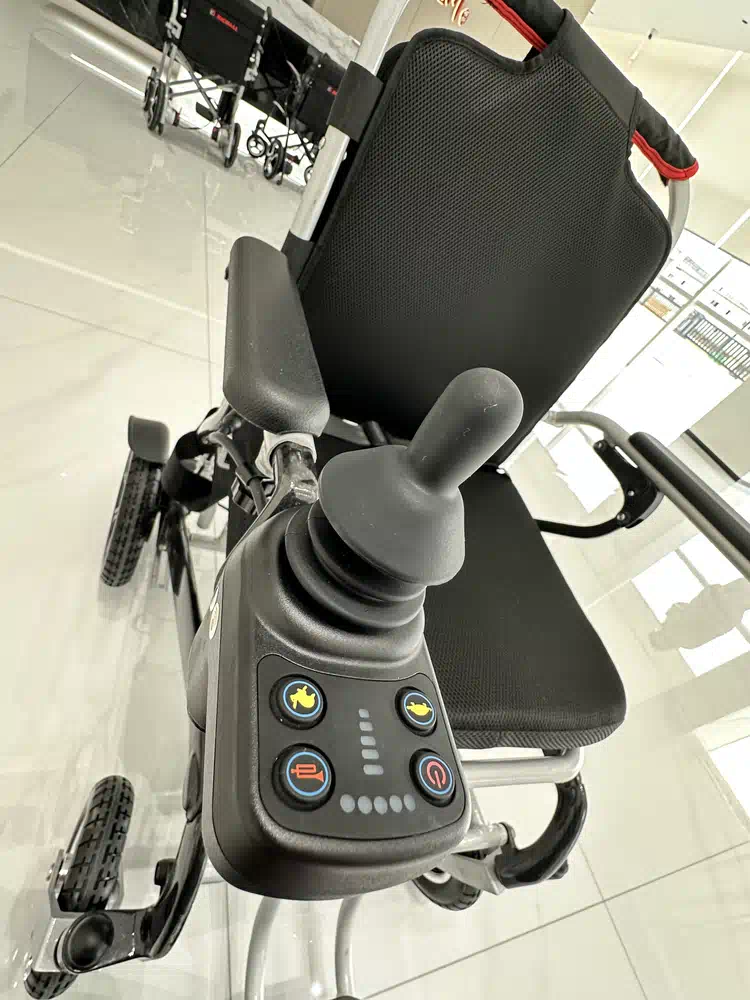
The primary point of control for nearly all electric wheelchairs is the joystick. This simple-looking device is a sophisticated piece of technology. A good joystick provides proportional control, meaning the further you push it in a direction, the faster the chair moves. This allows for incredibly fine-grained control, from inching forward to get closer to a table to moving at a brisk walking pace down a hallway.
When evaluating a joystick controller, consider the following:
- Ergonomics: Does the joystick knob fit comfortably in your hand? Can it be mounted on either the right or left armrest? Some manufacturers offer different types of knobs (e.g., a T-handle or a ball) to accommodate different hand functions.
- User Interface: The controller typically includes a power button, a battery level indicator, and speed setting controls. The display should be clear and easy to read, even in bright sunlight. Some advanced controllers feature LCD screens that provide diagnostic information and allow for the customization of driving parameters, such as acceleration speed and turning sensitivity.
- Programmability: High-end controllers can be programmed by a technician to perfectly match the user’s needs. For example, if a user has tremors, the joystick’s sensitivity can be dampened to prevent jerky movements. If a user needs to navigate very tight spaces, the top speed in one of the lower settings can be capped at a very slow crawl for maximum precision.
The joystick is your connection to the chair. It should feel responsive but not twitchy, powerful but controllable.
Understanding Turning Radius and Its Practical Impact
One of the most important specifications related to maneuverability is the turning radius. This is the amount of space the wheelchair needs to make a 180-degree turn. A smaller turning radius means the chair is more agile and better able to navigate tight corners and confined spaces.
Imagine trying to turn around in a narrow hallway or a small kitchen. A chair with a large turning radius might require a multi-point turn, like a large car trying to parallel park. A chair with a small turning radius can often pivot on the spot. This has a massive impact on daily life, determining whether you can easily use a small elevator, navigate a cluttered room, or turn around in a restroom stall.
The turning radius is determined by the chair’s wheelbase (the distance between the front and rear wheels) and the type of drive system. Most lightweight folding electric wheelchairs use a rear-wheel-drive system, which provides good stability at speed but can have a larger turning radius. However, clever engineering and the placement of the drive wheels relative to the user’s center of gravity can result in surprisingly nimble chairs. When you see a turning radius listed in a chair’s specifications (e.g., 60 cm or 24 inches), try to visualize that circle on the floor. This will give you a good sense of how it will perform in the real-world environments you frequent.
Suspension Systems: Smoothing Out the Bumps
Life is not a perfectly smooth surface. Sidewalks have cracks, doorways have thresholds, and paths have bumps. A rigid frame without any form of suspension will transmit every one of these jolts directly to the user, leading to a fatiguing and uncomfortable ride. This is where suspension systems come into play.
Even a simple suspension can dramatically improve ride quality. Many lightweight electric wheelchairs incorporate shock absorbers, often using springs or polymer elastomers, on the front casters or the rear drive wheels. These components compress to absorb the energy from an impact before it reaches the frame and the user.
A more advanced system might feature independent suspension on all wheels, allowing each wheel to move up and down in response to the terrain without affecting the rest of the chair. This not only improves comfort but also enhances traction and stability, as it helps to keep all wheels in contact with the ground on uneven surfaces (Cooper et al., 2008).
The presence and quality of a suspension system is a key differentiator in comfort-focused electric carbon aluminium alloy wheelchairs for daily use. While it may add a small amount of weight and complexity, the benefit to ride quality is undeniable. A smoother ride is not just about comfort; it reduces the cumulative fatigue that comes from being jostled throughout the day, leaving you with more energy to engage with the world around you.
Safety Features: A Comprehensive Approach to User Security
A mobility device that grants freedom must also guarantee security. Safety in an electric wheelchair is not a single feature but a holistic system designed to protect the user in a variety of situations. It encompasses everything from the way the chair stops to its stability on inclines and its visibility to others. When you are entrusting your mobility to a device, you need the profound assurance that its designers have rigorously considered and mitigated potential risks. A top-tier, comfort-focused electric carbon aluminium alloy wheelchair for daily use integrates these safety features seamlessly into its design, providing peace of mind as a standard, not an optional extra.
Advanced Braking Systems: Electromagnetic Brakes Explained
Perhaps the single most important safety feature on an electric wheelchair is its braking system. The vast majority of modern, high-quality electric wheelchairs use an electromagnetic braking system. This is a fail-safe design that is fundamentally different from the brakes on a car or a bicycle.
Instead of requiring the user to activate the brakes, electromagnetic brakes are engaged by default. The brakes are held open by a constant flow of electrical power from the controller. The moment you let go of the joystick, or if the chair loses power for any reason, the electrical current to the brakes is cut. This causes powerful electromagnets to instantly and automatically engage the brakes, bringing the chair to a smooth but swift stop. The motors themselves are locked, preventing the chair from rolling.
This system is brilliant in its simplicity and safety.
- Automatic Engagement: The chair will not roll away from you on a hill. The moment you release the joystick, the brakes are on.
- Fail-Safe: If the battery dies or a cable becomes disconnected, the chair stops safely instead of coasting uncontrollably.
- Parking Brake: The electromagnetic brakes also serve as a parking brake, holding the chair securely in place whenever it is not actively being driven.
Some chairs have a manual brake release lever, which allows the chair to be pushed by hand in an emergency (e.g., if the battery is completely dead and the chair needs to be moved). This lever should be clearly marked and only used when the chair is on a level surface. The reliability of electromagnetic brakes provides a foundational layer of security for the user.
Anti-Tip Wheels and Stability
Stability, especially on inclines and uneven surfaces, is another paramount safety concern. To address this, most electric wheelchairs are equipped with anti-tip wheels. These are small, secondary wheels located at the rear of the chair (and sometimes the front).
Under normal operation on a flat surface, these wheels do not touch the ground. However, if you are accelerating quickly or driving up a steep ramp, the chair’s center of gravity shifts backward. The anti-tip wheels are positioned to make contact with the ground and prevent the chair from tipping over backward. This simple but effective feature provides a crucial safety net.
The overall stability of the chair is also a function of its design. A low center of gravity, a wide wheelbase, and the proper distribution of weight (including the user and the batteries) all contribute to a more stable platform. Manufacturers perform extensive stability testing to ensure their chairs can safely handle specified maximum incline angles. Always be aware of your chair’s incline rating and approach steep ramps or hills with caution.
Visibility: Lighting and Reflectors for Safe Travel
A wheelchair user is, in effect, a pedestrian. Being visible to others—drivers, cyclists, and other pedestrians—is critical for safety, especially during dusk, at night, or in inclement weather. A comprehensive safety design includes features to enhance visibility.
- LED Lighting: Many modern electric wheelchairs come equipped with built-in LED lights. A bright headlight can illuminate your path, while a rear taillight makes you visible from behind. LEDs are an ideal choice as they are extremely bright, durable, and draw very little power from the battery.
- Reflectors: In addition to active lighting, passive reflectors are essential. These should be placed on the front, rear, and sides of the wheelchair. The spokes of the wheels are another excellent location. Reflectors catch the light from car headlights and other sources, making the chair stand out in low-light conditions.
Some users choose to supplement the built-in features with additional high-visibility items, such as a safety flag or reflective tape on their clothing, which is always a prudent choice. Being seen is a fundamental aspect of staying safe when sharing space with others. A manufacturer that includes integrated lighting and reflectors in their base design demonstrates a serious commitment to user security.
Customization and Future-Proofing: Adapting the Chair to Your Life
Our exploration culminates in a consideration of the wheelchair’s ability to adapt and endure. A wheelchair is not a disposable commodity; it is a significant, long-term investment in health and quality of life. Therefore, a truly superior device must be capable of evolving with its user’s needs and be supported by a framework of service and reliability. This involves a modular design that allows for customization, the seamless integration of accessories that enhance daily life, and the assurance of a strong warranty and responsive after-sales support. This is how a wheelchair transforms from a product you buy into a solution you live with.
The Importance of a Modular Design
A modular design philosophy means that the wheelchair is constructed from distinct, interchangeable components. This is the opposite of a “closed box” design where everything is integrated and inaccessible. The benefits of modularity are manifold.
- Personalización: A modular chair can be easily configured at the time of purchase. You can select your preferred type of joystick, armrests, leg rests, and seating system. This allows the chair to be tailored to your specific physical requirements and preferences from day one.
- Upgradability: As technology improves or your needs change, a modular design allows for upgrades. You might start with a basic foam cushion and later upgrade to a gel or air cushion. You might want to switch from a standard joystick to one with an LCD screen. Modularity protects your initial investment by allowing the chair to be enhanced over time.
- Serviceability: When a component fails, a modular design makes repair simpler, faster, and less expensive. Instead of replacing an entire integrated control system, a technician can simply swap out the faulty joystick. This reduces downtime for the user and lowers the long-term cost of ownership.
When examining a wheelchair, ask about its design. Are the key components, such as the controller, motors, and seating, easily accessible and replaceable? A manufacturer that embraces modularity is one that respects the user’s long-term needs.
Accessory Integration: From Cup Holders to Tech Mounts
While the core function of a wheelchair is mobility, its utility is greatly enhanced by its ability to accommodate the tools of daily life. A well-thought-out design includes provisions for mounting a wide range of accessories. These are not frivolous additions; they are practical tools that solve everyday problems.
Consider the possibilities:
- Holders and Bags: A simple cup holder, a storage bag under the seat, or a rear-mounted basket can make running errands vastly more convenient.
- Technology Mounts: We live in a connected world. Mounts for smartphones, tablets, or GPS devices allow the user to stay connected and navigate with ease. A USB charging port integrated into the controller is an increasingly common and incredibly useful feature.
- Medical Equipment Mounts: For users who require supplemental oxygen or other medical devices, secure mounting points are not just a convenience, they are a necessity.
- Specialized Controls: For individuals who cannot use a standard joystick, a modular system can accommodate alternative controls, such as head arrays, sip-and-puff systems, or attendant controls that allow a caregiver to drive the chair.
The availability of a rich ecosystem of accessories indicates that the manufacturer understands that a wheelchair user’s life extends beyond simple mobility. Companies like RICHALL Medical often provide a range of optional parts to enhance their chairs, demonstrating this user-centric approach (electricwheelchair.en.made-in-china.com).
Considering After-Sales Support and Warranty
A wheelchair is a complex piece of machinery, and like any machine, it may eventually require service or repair. The quality of the manufacturer’s after-sales support and warranty is a critical, though often overlooked, part of the purchasing decision.
- Warranty: A comprehensive warranty is a statement of the manufacturer’s confidence in their product. Scrutinize the warranty details. What is the warranty period for the frame, the motors, the electronics, and the batteries? A long warranty on the frame (often 2-3 years or more) is a good sign of robust construction.
- Parts Availability: If a part needs to be replaced, how quickly can you get it? A manufacturer with a strong distribution network and a commitment to stocking spare parts can minimize the time you are without your mobility aid.
- Technical Support: Does the manufacturer or dealer provide accessible and knowledgeable technical support? Can they help you troubleshoot minor issues over the phone or provide clear guidance on service procedures? Reputable companies often detail their after-sales service process, providing a clear pathway for customers to get help.
Before you purchase, investigate the reputation of both the manufacturer and the local dealer. Read reviews and ask other users about their experiences with service and support. A great wheelchair backed by poor support can become a source of immense frustration. A great wheelchair backed by a strong warranty and responsive service is a reliable partner for years to come.
Preguntas más frecuentes (FAQ)
What is the most significant difference between a carbon fiber and an aluminum alloy wheelchair frame?
The most significant difference is the weight. Carbon fiber frames are exceptionally lightweight for their strength, making the wheelchair much easier to lift and transport. This comes at a higher cost. Aluminum alloy frames offer a great balance of being relatively lightweight (much lighter than steel), durable, and more affordable.
How long does the battery on an electric wheelchair typically last, and how long does it take to charge?
Most modern electric wheelchairs using lithium-ion batteries offer a range of 15-25 kilometers (9-15 miles) on a single charge. However, this varies greatly depending on user weight, terrain, and driving style. A full charge typically takes between 4 to 6 hours.
¿Puedo llevar mi silla de ruedas eléctrica en un avión?
Yes, most lightweight, foldable electric wheelchairs are designed to be travel-friendly. The key is the battery. You must confirm with your airline beforehand, as they have specific rules for transporting lithium-ion batteries. Usually, the batteries must be removed and carried into the cabin.
Are comfort-focused electric carbon aluminium alloy wheelchairs for daily use difficult to maintain?
They are generally designed for low maintenance. Models with brushless motors have no brushes to wear out. The primary maintenance tasks involve keeping the chair clean, periodically checking tire pressure (if pneumatic), and ensuring the battery is charged correctly according to the manufacturer’s instructions.
How do I choose the right seat cushion for my needs?
The choice depends on your risk for pressure sores and your need for postural support. Foam cushions are good for basic comfort and support. Gel cushions offer better pressure distribution for those who sit for long periods. Air flotation cushions provide the highest level of pressure relief and are often recommended for individuals with high skin breakdown risk. Consulting with a therapist or clinician is the best way to determine the right cushion.
Conclusión
The journey toward selecting the right mobility aid is an exercise in aligning technology with human need. It is a deeply personal process that balances considerations of material science, ergonomic principles, and practical, everyday realities. We have traversed the landscape of modern mobility, from the foundational choice between the featherlight strength of carbon fiber and the reliable versatility of aluminum alloy, to the critical importance of a supportive, ergonomic seating system that forms the basis of all-day comfort.
We have seen how advancements in brushless motors and lithium-ion batteries have revolutionized performance and range, while clever folding mechanisms and a focus on minimizing weight have unlocked new levels of portability and freedom. A responsive joystick, a nimble turning radius, and a smooth suspension system transform the act of driving from a task into an intuitive experience. Integrated safety features like electromagnetic brakes and anti-tip wheels provide a constant, silent assurance of security. Finally, a commitment to customization, modularity, and robust after-sales support ensures that the wheelchair is not merely a static product, but a dynamic and reliable partner for the years ahead.
Making an informed choice about a comfort-focused electric carbon aluminium alloy wheelchair for daily use is an act of empowerment. It is about looking beyond marketing claims to understand the tangible benefits that specific features provide. By carefully considering these seven key areas, you can select a device that does not just meet your physical needs but also supports your aspirations, enhances your independence, and ultimately, improves your quality of life.
Referencias
Bao, G. (2019). Mechanics of advanced materials. Acta Mechanica Solida Sinica, 32(5), 527–543.
Cooper, R. A., Dvorznak, M. J., O’Connor, T. J., Boninger, M. L., & Jones, D. K. (2008). A new design of a wheelchair with a suspension. Journal of Rehabilitation Research and Development, 35(4).
electricwheelchair.en.made-in-china.com. (n.d.). Richall automatic folding lightweight power wheelchair remote control carbon fibre electric wheelchair. Made-in-China.com. Retrieved from https://electricwheelchair.en.made-in-china.com/product/OdofkxVvLlGs/China-Richall-Automatic-Folding-Lightweight-Power-Wheelchair-Remote-Control-Carbon-Fibre-Electric-Wheelchair.html
richallmed.com. (n.d.). Best carbon fiber folding wheelchair for travel. Richall Medical.
richallmed.com. (n.d.). Top 5 lightweight electric wheelchairs under 50 pounds. Richall Medical.
Stockton, L., & Rithalia, S. (2009). A review of the evidence for the effectiveness of pressure-relieving cushions. Journal of Wound Care, 18(4), 139–145.
Zhejiang Richall Medical Technology Co., Ltd. (2025). RICHALL: Leading carbon fiber electric wheelchair supplier. Richall Medical. Retrieved from https://www.richallmed.com/