.png)
.png)

The 2025 Expert Checklist: 7 Factors for Your Luxury Wheelchair with Personalized Adjustments
December 9, 2025
Abstract
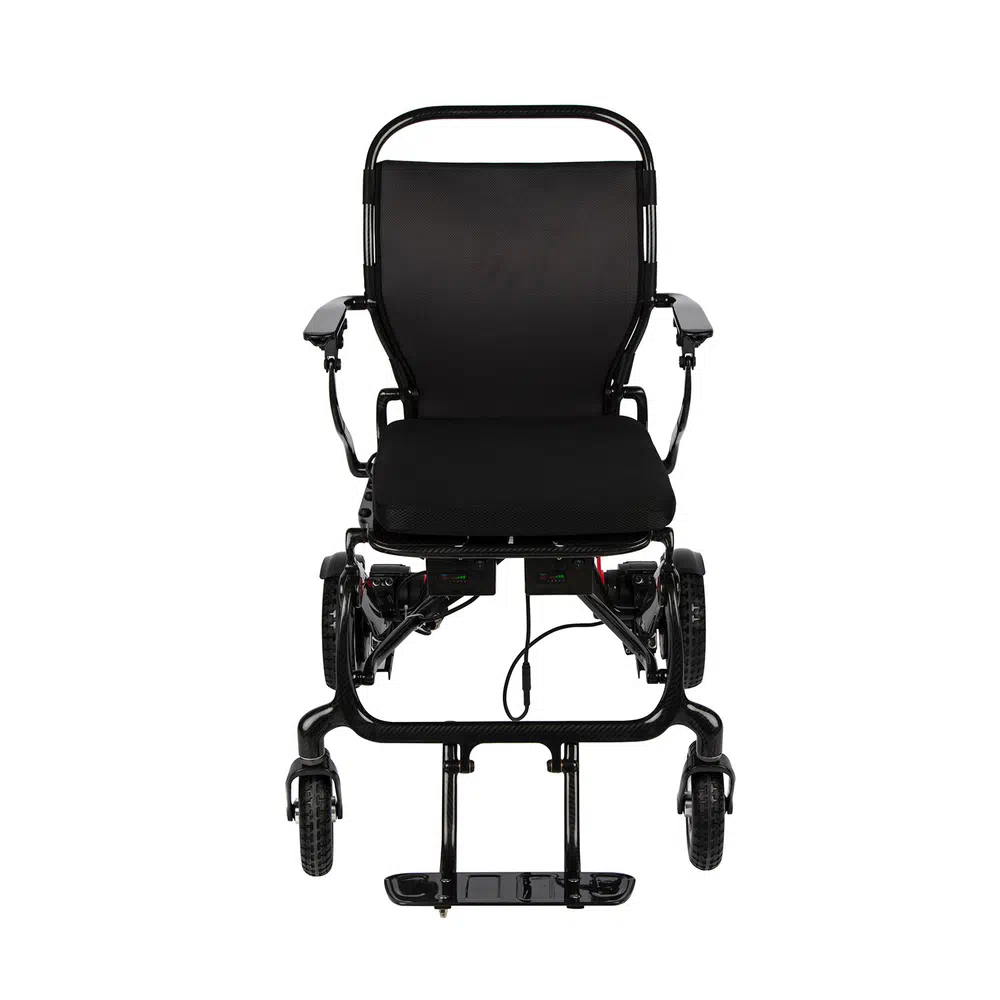
The conception of the wheelchair is undergoing a profound transformation, moving away from a purely functional medical apparatus toward a bespoke extension of the individual’s body and will. This evolution is particularly evident in the domain of the luxury wheelchair with personalized adjustments, where advanced materials and user-centric design converge to enhance human capability. An examination of this sector reveals that materials such as carbon fiber are not merely chosen for aesthetic appeal but for their significant contributions to performance, including reduced weight and superior durability. Concurrently, the process of personalization, which encompasses detailed ergonomic assessments and tailoring of control systems, is fundamental to maximizing user health, comfort, and autonomy. This shift reflects a deeper understanding of mobility technology’s role in facilitating a flourishing life, enabling users to navigate their environments with greater freedom and confidence. The modern luxury wheelchair is thus a testament to engineering and a powerful tool for personal empowerment.
Key Takeaways
- Prioritize a professional fitting to ensure the chair matches your specific ergonomic needs.
- Consider a carbon fiber electric wheelchair for its superior strength-to-weight ratio.
- Personalized adjustments in seating and controls are vital for long-term health and comfort.
- A luxury wheelchair with personalized adjustments is a long-term investment in your quality of life.
- Evaluate the battery, motor, and control system to match your daily usage patterns.
- Explore aesthetic customization to make the wheelchair a true reflection of your personal style.
Table of Contents
- The Philosophical Shift: From Medical Device to Extension of Self
- Factor 1: The Material Revolution – Carbon Fiber vs. Traditional Metals
- Factor 2: The Art of Ergonomics – Achieving the Perfect Fit
- Factor 3: Propulsion and Power – Tailoring the Driving Experience
- Factor 4: Aesthetics and Identity – The Power of Personal Expression
- Factor 5: Portability and Lifestyle Integration
- Factor 6: The Digital Ecosystem – Smart Technology and Connectivity
- Factor 7: The Investment – Understanding Cost, Value, and Support
- Frequently Asked Questions (FAQ)
- Conclusion
- References
The Philosophical Shift: From Medical Device to Extension of Self
The discourse surrounding assistive technology has historically been framed within a medical model, viewing devices like wheelchairs as corrective instruments for a deficit. This perspective, while well-intentioned, often overlooks the person and focuses on the condition. A more humanistic framework, informed by philosophies like the capabilities approach, suggests a different view. Within this lens, the purpose of a tool is not merely to “fix” a problem but to expand a person’s capabilities—their genuine opportunities to do and to be what they have reason to value (Nussbaum, 2011). A wheelchair, seen through this lens, is not just about mobility; it is about enabling participation in community life, pursuing professional ambitions, and experiencing the world with dignity and autonomy.
This philosophical evolution finds its most tangible expression in the rise of the luxury wheelchair with personalized adjustments. The very term “luxury” signals a departure from the sterile, one-size-fits-all equipment of the past. It suggests an object of quality, craftsmanship, and personal choice. It reframes the user from a patient into a discerning consumer who demands performance, comfort, and style. The decision to invest in such a device becomes an act of self-affirmation, a declaration that one’s mobility and quality of life are worthy of the highest standards of engineering and design. The chair ceases to be an external object and begins to feel like an integrated part of oneself—an extension of personal will that translates intention into effortless motion. This paradigm shift is about recognizing that the tools we use to interface with the world profoundly shape our experience of it and our sense of self within it.
Factor 1: The Material Revolution – Carbon Fiber vs. Traditional Metals
The physical substance of a luxury custom wheelchair stylish design is the foundation upon which all other features are built. For decades, steel and then aluminum were the standard bearers, chosen for their strength and manufacturability. Yet, the introduction of composite materials, particularly carbon fiber, has initiated a revolution in wheelchair design. Understanding this material is key to appreciating the performance of a modern mobility device.
Understanding Carbon Fiber’s Superiority
Imagine weaving together thousands of microscopic crystalline filaments of carbon—each one thinner than a human hair—into a fabric. Then, imagine layering these fabrics and infusing them with a rigid polymer resin, baking them under intense pressure and heat. The result is a carbon fiber composite, a material that is extraordinarily strong yet astonishingly light. This process creates a synergy where the carbon fibers provide immense tensile strength while the resin protects them and distributes loads across the structure.
The strength-to-weight ratio of carbon fiber is its most celebrated characteristic. It can be up to five times stronger than steel and twice as stiff, at a fraction of the weight (Mallick, 2007). For a wheelchair user, this is not an abstract engineering statistic. It translates directly into a more responsive, efficient, and easily manageable chair. Pushing a manual chair or powering an electric one requires less energy, which reduces fatigue over the course of a day. Lifting a foldable carbon fiber electric wheelchair into a vehicle becomes a manageable task rather than a prohibitive barrier.
A Comparative Analysis
To fully grasp the differences, a direct comparison is helpful. The choice of frame material fundamentally influences the final product’s weight, performance, and longevity.
| Feature | Carbon Fiber | Aluminum Alloy | Steel |
|---|---|---|---|
| Weight | Very Low | Low | High |
| Strength-to-Weight Ratio | Highest | Medium | Low |
| Vibration Damping | Excellent | Poor | Fair |
| Corrosion Resistance | Excellent | Good | Poor (requires coating) |
| Fatigue Resistance | Excellent | Fair | Good |
| Manufacturing Complexity | High | Medium | Low |
| Cost | High | Medium | Low |
This table illustrates why a carbon fiber electric wheelchair represents the pinnacle of current mobility technology. While aluminum offers a good compromise, it cannot match carbon fiber’s performance characteristics, especially in vibration damping—the material’s ability to absorb and dissipate small bumps and shocks from the ground, leading to a smoother and less fatiguing ride.
The Experiential Difference
The tangible benefits of a lightweight frame permeate every aspect of daily use. Consider the simple act of navigating a crowded city street. A lighter, more rigid frame transfers the user’s inputs—whether from a push on the handrims or a command to the joystick—more directly and efficiently into movement. The chair feels nimble and responsive, darting through gaps and turning in tight spaces with a precision that heavier chairs lack.
For those who travel, the weight advantage is transformative. A foldable electric wheelchair weighing under 20 kilograms changes the calculation for what is possible. Spontaneous day trips, air travel, and visits to friends’ homes that are not fully accessible become far less daunting. The psychological burden of managing a heavy, cumbersome piece of equipment is lifted, fostering a greater sense of freedom and spontaneity. This is a core benefit of investing in a luxury wheelchair with personalized adjustments built with advanced materials; it is an investment in reducing the friction between you and the life you want to lead.
Factor 2: The Art of Ergonomics – Achieving the Perfect Fit
If the frame material is the skeleton of the wheelchair, then ergonomics is its soul. A perfect fit is not a luxury; it is a clinical necessity for long-term health and a prerequisite for genuine comfort. An ill-fitting chair can lead to a cascade of negative health outcomes, from pressure injuries and chronic pain to poor posture and respiratory difficulties (Frank & Abel, 2019). The process of creating a luxury wheelchair with personalized adjustments is therefore an intimate collaboration between the user, their clinical team, and the manufacturer.
Beyond Seat Width: The Science of Custom Seating
A common mistake is to think that wheelchair fitting ends with selecting the correct seat width. In reality, that is just the beginning. A comprehensive seating assessment considers numerous dimensions:
- Seat Depth: Too short, and the thighs are inadequately supported, concentrating pressure on the ischia (sitting bones). Too long, and it can press into the back of the knees, restricting circulation and encouraging a slouched posture.
- Backrest Height and Angle: The height must support the user’s trunk appropriately without impeding the shoulder movement required for propulsion or reaching. The angle affects pelvic tilt and spinal alignment, which are critical for stability and comfort.
- Cushion Selection: This is a science in itself. Cushions are made from foam, gel, air cells, or hybrid combinations. The goal is to redistribute pressure away from bony prominences, reducing the risk of pressure ulcers, which are a serious and common complication for long-term wheelchair users (Sprigle & Sonenblum, 2011). Pressure mapping technology can be used to visualize high-pressure areas and guide the selection of the optimal cushion.
Adjustable Components for Dynamic Needs
A person is not a static object. Their seating and positioning needs can change throughout the day or evolve over months and years due to changes in their condition, weight, or activity level. A truly personalized wheelchair anticipates this.
- Adjustable Armrests: Height-adjustable armrests ensure the shoulders can remain in a relaxed, neutral position, preventing neck and shoulder strain. They also assist with pressure relief lifts and transfers.
- Adjustable Footplates and Leg Rests: The height, angle, and length of footplates must be set to support the feet properly, ensuring a 90-degree bend at the knees and hips for optimal pelvic stability. Elevating leg rests can be essential for managing edema or accommodating specific orthopedic conditions.
- The ability to make micro-adjustments to these components allows the chair to adapt with the user, maintaining that perfect fit over the long term.
The Role of a Professional Fitting
Achieving this level of customization is not a do-it-yourself project. It requires the expertise of a qualified professional, such as an occupational therapist (OT) or a certified Assistive Technology Professional (ATP). These clinicians are trained in biomechanics, anatomy, and the specifics of seating and mobility equipment. They will conduct a thorough evaluation, taking dozens of measurements and considering the user’s lifestyle, environment, and functional goals. Their prescription is the blueprint from which the luxury wheelchair with personalized adjustments is built. For those in North America, seeking a professional certified by an organization like the [Rehabilitation Engineering and Assistive Technology Society of North America (RESNA)]() is a crucial step in this journey.
Factor 3: Propulsion and Power – Tailoring the Driving Experience
The power system of an electric wheelchair is its heart and brain. It determines how the chair moves, how it feels to drive, and how well it integrates into the user’s life. In a high-end chair, this system is not a standard, off-the-shelf package; it is a suite of components that can be selected and programmed to create a bespoke driving experience.
Motors, Batteries, and Range
The core of the propulsion system is the motor and battery. Modern luxury wheelchairs almost exclusively use brushless DC motors. Compared to their older, brushed counterparts, brushless motors are more efficient, more reliable, have a longer lifespan, and offer smoother power delivery.
The power source is typically a lithium-ion battery pack. Lithium-ion technology provides the best energy density available, meaning it stores the most power in the smallest, lightest package. This is another area where a lightweight carbon fiber electric wheelchair has an advantage; a lighter frame requires less energy to move, translating into a longer driving range from the same battery.
When considering range, it’s vital to think beyond the manufacturer’s stated maximum. That figure is usually based on ideal conditions (flat, smooth surface, low speed, light user). Real-world range is affected by terrain, user weight, tire pressure, and even ambient temperature. A thoughtful assessment of your daily needs—your commute, errands, and social activities—will help determine the battery capacity you require to eliminate “range anxiety.”
The Brain of the Chair: Advanced Joystick Controls
The joystick is the primary interface between the user and the chair. Advanced control modules offer a staggering degree of programmability. A technician can fine-tune dozens of parameters, including:
- Acceleration and Deceleration: How quickly the chair starts and stops.
- Top Speed: Setting different maximum speeds for indoor and outdoor use.
- Turning Sensitivity: Adjusting how quickly the chair turns in response to a sideways push on the joystick.
- Tremor Dampening: Filtering out involuntary movements for users with conditions like Parkinson’s or cerebral palsy.
For users who cannot operate a standard joystick, a luxury wheelchair with personalized adjustments can be fitted with a wide array of alternative input devices. These include head arrays that respond to head movements, sip-and-puff systems controlled by breath, and compact joysticks that require minimal finger movement. The goal is to find an input method that is intuitive, non-fatiguing, and provides precise control.
Suspension Systems for a Smoother Journey
Just as suspension is a hallmark of a luxury car, it is a critical feature of a high-quality outdoor electric wheelchair. Every crack in the sidewalk, every cobblestone, and every patch of uneven grass transmits vibrations through the frame and into the user’s body. Over time, this whole-body vibration can contribute to pain and fatigue (Wolf et al., 2007).
Basic wheelchairs may have no suspension or only simple spring systems. Advanced chairs, however, feature fully independent suspension on all wheels, often using adjustable shock absorbers. This allows the chair to glide over minor imperfections in the terrain, keeping the user stable and comfortable. A good suspension system not only improves comfort but also enhances safety by ensuring all wheels remain in contact with the ground, maximizing traction and stability, especially when navigating slopes or curb cuts.
Factor 4: Aesthetics and Identity – The Power of Personal Expression
For too long, the appearance of medical equipment has been an afterthought, dictated by function and cost alone. The result has often been devices that are stigmatizing, that broadcast “disability” before they reveal the person. The philosophy behind a luxury wheelchair with personalized adjustments rejects this premise entirely. It acknowledges that aesthetics are not frivolous; they are deeply intertwined with personal identity, self-esteem, and social interaction.
More Than Just a Color
The design of a wheelchair communicates a message. A clunky, institutional-looking chair can reinforce feelings of being a patient or an object of pity. Conversely, a chair with clean lines, a sleek profile, and high-quality finishes can be a statement of confidence and style. It can be a conversation starter for positive reasons. When your mobility device looks like a piece of high-performance technology, it changes how others perceive you and, just as importantly, how you perceive yourself. It shifts the narrative from one of limitation to one of empowerment and sophisticated taste.
Think about the way people choose their car, their watch, or their smartphone. These are functional objects, but they are also expressions of personal identity. There is no reason a wheelchair should be any different. It is one of the most intimate and consistently present objects in its user’s life; it should reflect their personality and be a source of pride, not shame.
Customization Options
The possibilities for aesthetic personalization on a high-end chair are extensive. Manufacturers like carbon fiber electric wheelchair understand that choice is paramount. The customization process can include:
- Frame Finishes: Beyond a basic palette, carbon fiber frames can have a raw, woven finish, a matte black look, or be painted in virtually any color imaginable.
- Accent Colors: Small components like wheel hubs, caster forks, or joystick housings can be anodized in contrasting colors, adding a pop of personality.
- Upholstery: Seating can be crafted from a range of materials, from breathable, high-tech fabrics to luxurious leathers, in a wide variety of colors and textures.
- Personal Touches: Some manufacturers even offer options for personalized engravings or decals, allowing the user to make the chair uniquely their own.
By embracing aesthetic customization, the luxury wheelchair with personalized adjustments becomes more than a tool. It becomes a chosen accessory, a part of the user’s personal brand, and a beautiful object in its own right.
Factor 5: Portability and Lifestyle Integration
A wheelchair should enable life, not constrain it. For many users, a key aspect of this enablement is portability. The ability to easily transport a wheelchair—in a car, on a train, or on an airplane—is often the deciding factor in whether they can participate in an activity. This is where the design of a foldable electric wheelchair and the choice of materials become paramount.
The Mechanics of a Foldable Design
There are two primary approaches to making a wheelchair portable. The first is the traditional cross-brace folding mechanism, where the chair collapses sideways like an accordion. The second, more common in modern rigid chairs, involves a folding backrest and quick-release wheels. The frame itself remains rigid, which enhances performance, but it can be quickly disassembled for transport.
In the realm of electric wheelchairs, innovative folding designs have emerged that allow the entire chair to collapse into a compact, suitcase-like shape. A well-designed foldable electric wheelchair can be folded or unfolded in seconds, often with a single latch or button. This ease of use is critical for users and caregivers who may not have the strength or dexterity to manage a complicated disassembly process.
Weight and Transportability in the Real World
Even the most ingenious folding mechanism is of little use if the resulting package is too heavy to lift. This is where the material science discussed earlier has its most practical impact. A traditional electric wheelchair can easily weigh over 100 kg, making it impossible to lift into a car without a specialized hoist. In stark contrast, a carbon fiber electric wheelchair can weigh as little as 15-20 kg (without batteries). This is a weight that many users or their family members can manage independently, representing a monumental leap in autonomy.
Air travel presents another set of challenges. Most airlines require the batteries of an electric wheelchair to be removed and carried in the cabin. A design that features easily detachable, airline-safe lithium-ion batteries is therefore essential for frequent flyers. The compact, folded size of a modern chair also makes it easier for airline staff to handle and less likely to be damaged in transit.
A Tale of Two Frames: Rigid vs. Folding
For manual wheelchair users, and even for some electric models, there is a fundamental choice between a rigid and a folding frame. Each has distinct advantages that cater to different priorities.
| Feature | Rigid Frame | Folding Frame (Cross-Brace) |
|---|---|---|
| Performance & Energy Efficiency | Excellent. The rigid structure wastes very little energy, making each push or pulse of power more effective. | Good. Some energy is lost to flex in the folding mechanism. |
| Weight | Generally lighter for the same material, as there is no heavy folding mechanism. | Generally heavier due to the cross-brace and associated hardware. |
| Durability | Excellent. Fewer moving parts mean fewer points of failure. | Good, but the folding mechanism can wear out over time and may require maintenance. |
| Portability | Folds into a more awkward shape (frame + wheels) but can be very compact with wheels removed. | Folds into a single, taller package that can be easier to store upright in a closet or car trunk. |
| Adjustability | Highly adjustable during initial setup, but less so “on the fly.” | Often offers less fine-tuning of the frame geometry. |
Choosing between these two styles is a classic trade-off. A rigid frame offers the best performance and is often the choice of highly active users. A folding frame offers convenience in storage and transport. However, the advent of ultra-lightweight materials is blurring these lines, with modern rigid-frame chairs becoming ever easier to transport.
Factor 6: The Digital Ecosystem – Smart Technology and Connectivity
The modern wheelchair is evolving into a smart device, a connected hub that does more than just provide mobility. The integration of sophisticated electronics and software is opening up new possibilities for user convenience, safety, and health management. This digital ecosystem is a defining feature of a contemporary luxury wheelchair with personalized adjustments.
Onboard Diagnostics and Health Monitoring
Just as a modern car’s dashboard alerts the driver to low tire pressure or the need for an oil change, smart wheelchairs can now monitor their own status. Sensors within the motors, batteries, and control module can track usage hours, battery health, and potential fault codes. This information can be displayed on an LCD screen on the joystick or transmitted to a smartphone app.
This capability allows for proactive maintenance, addressing small issues before they become major problems that could leave the user stranded. Beyond the chair’s health, some systems are beginning to integrate user health monitoring. For example, a smart cushion can track sitting time and prompt the user to perform a pressure relief lift, helping to prevent pressure injuries.
Integration with Smart Devices
The control module of an electric wheelchair can now be equipped with Bluetooth technology, turning it into a universal remote for the user’s personal electronics. This feature, often called “environmental control,” allows the user to operate their smartphone, tablet, or computer directly from the wheelchair’s joystick. They can answer calls, send messages, browse the web, or control smart home devices like lights, thermostats, and televisions, all without needing to reach for a separate device. This level of integration can dramatically increase independence for individuals with significant upper body limitations.
The Future: GPS, IoT, and Remote Assistance
The trajectory for this technology is pointed toward even greater connectivity. The integration of GPS is a promising next step, offering built-in navigation tailored to accessible routes, as well as a safety feature allowing family members or caregivers to locate the user in an emergency.
As part of the broader Internet of Things (IoT), future wheelchairs could communicate directly with a manufacturer’s service department. If the onboard diagnostics detect a problem, the chair could automatically send a report to a technician, who could then remotely diagnose the issue or even apply a software fix. This would streamline the service process and minimize downtime for the user. This forward-looking approach to service and support is a key consideration when selecting a brand, and a comprehensive 2025 buyers guide can help navigate these emerging features.
Factor 7: The Investment – Understanding Cost, Value, and Support
There is no avoiding the fact that a luxury wheelchair with personalized adjustments represents a significant financial investment. The price tag can be surprising to those unfamiliar with the market. However, it is essential to deconstruct this cost and view it not as an expense, but as a long-term investment in health, independence, and quality of life.
Deconstructing the Price Tag
The high cost is a direct reflection of the materials, research, and expertise that go into creating a bespoke mobility device. The key cost drivers include:
- Research & Development: Companies invest millions in engineering new frame designs, improving suspension systems, and developing smarter control software.
- Advanced Materials: The cost of raw carbon fiber and the complex, labor-intensive process required to manufacture a composite frame are substantially higher than for a welded metal frame.
- Precision Components: High-efficiency brushless motors, advanced electronic controllers, and durable, low-maintenance components all come at a premium.
- The Customization Process: The time and expertise of the clinicians and technicians involved in the assessment, fitting, and final assembly are a crucial part of the product’s value.
Long-Term Value vs. Upfront Cost
When viewed over the typical 5- to 7-year lifespan of a wheelchair, the value proposition becomes clearer. A properly fitted, high-quality chair can prevent costly secondary health complications like pressure sores or musculoskeletal issues. Its durability means fewer repairs and less downtime. The enhanced independence it provides can enable a user to work, study, or participate in community life more fully, which has its own economic and personal value.
The lightweight nature of a carbon fiber electric wheelchair might even eliminate the need for a costly vehicle modification like a hoist or ramp. When all these factors are considered, the initial higher cost can often lead to lower overall costs and a significantly higher quality of life over the long term.
The Importance of Warranty and After-Sales Service
A wheelchair is a complex piece of machinery that will inevitably require service. A manufacturer’s warranty and the quality of its after-sales support are therefore just as important as the physical product. Before purchasing, you should understand the warranty coverage for different components—the frame often has a longer warranty than the electronic parts or batteries.
Look for a company with a strong reputation for customer service and a responsive network of dealers or technicians. The ability to get timely repairs and replacement parts is critical. A company like RICHALL Medical, which provides a full range of mobility aids from manual wheelchairs to advanced electric models and rollator walkers, demonstrates a deep commitment to the mobility sector and is more likely to provide the robust, direct supply wheelchair needed to support your investment for years to come.
Frequently Asked Questions (FAQ)
Is a carbon fiber electric wheelchair really worth the extra cost?
For many users, the answer is a resounding yes. While the initial investment is higher, the benefits in terms of reduced weight, increased portability, and superior ride comfort are transformative. The lighter weight makes the chair easier to self-propel or transport, reduces user fatigue, and improves battery efficiency. The material’s durability also means it can be a more cost-effective choice over its entire lifespan due to fewer repairs.
How do I get a wheelchair with personalized adjustments?
The process begins with a referral to a specialized seating clinic or a certified Assistive Technology Professional (ATP). They will conduct a thorough mat evaluation and needs assessment. Based on this clinical evaluation, they will write a detailed prescription or letter of medical necessity that specifies the exact dimensions, components, and adjustments required for your chair. You then take this prescription to a qualified equipment supplier who works with high-end manufacturers to build the chair to your specifications.
Can I travel by air with my electric wheelchair?
Yes, you can. However, there are procedures you must follow. Most airlines require that the wheelchair’s batteries be disconnected. Lithium-ion batteries below a certain watt-hour rating (typically 100 Wh, or up to 160 Wh with airline approval) must be removed and carried in the cabin. It is essential to check your specific chair’s battery specifications and the airline’s policy well in advance of your flight. A foldable, lightweight chair is much easier for baggage handlers to manage and less prone to damage.
What is the typical lifespan of a luxury wheelchair?
With proper care and maintenance, a high-quality, custom-built wheelchair is typically designed to last for five to seven years of daily use. The frame itself, especially a durable carbon fiber or titanium one, may last much longer. Components like batteries, tires, and cushions are considered consumables and will likely need to be replaced one or more times during the chair’s lifespan.
How much does a fully customized luxury wheelchair cost?
The price can vary dramatically based on the materials, components, and level of customization. A highly customized, lightweight manual wheelchair can range from $5,000 to $12,000 USD. For a luxury wheelchair with personalized adjustments that is powered, featuring a carbon fiber frame and advanced electronics, the cost can range from $15,000 to over $40,000 USD.
What’s the difference between an indoor electric wheelchair and an outdoor one?
While many chairs are designed for both, there are key differences. An indoor electric wheelchair is typically more compact, with a smaller turning radius to navigate tight hallways and doorways. It may have smaller wheels and a less powerful motor. An outdoor electric wheelchair usually has larger, more robust tires, a more powerful motor to handle inclines, and a sophisticated suspension system to provide a smooth ride over varied terrain.
Conclusion
The journey to selecting a wheelchair has evolved from a simple choice of a medical device to a nuanced process of commissioning a piece of personal technology. It is a process that places the individual’s aspirations, lifestyle, and well-being at the center. The modern luxury wheelchair with personalized adjustments is the culmination of this evolution, representing a convergence of advanced materials science, sophisticated engineering, and a deep, empathetic understanding of the human body.
Choosing a carbon fiber electric wheelchair is not about indulgence; it is a practical decision based on the profound daily benefits of a lighter, stronger, and more responsive tool. Engaging in the process of detailed ergonomic customization is not an optional extra; it is the foundation of long-term health and comfort. By investing in a device that is meticulously tailored to your body and your life, you are not just acquiring a means of mobility. You are acquiring a key that unlocks a greater capacity to engage with the world on your own terms, a vehicle for personal flourishing and an unapologetic expression of self. The future of mobility is not just about moving from one place to another; it is about moving through life with confidence, dignity, and grace.
References
Frank, A. O., & Abel, E. (2019). The basic guide to wheelchairs. The Disabled Living Foundation.
Mallick, P. K. (2007). Fiber-reinforced composites: Materials, manufacturing, and design (3rd ed.). CRC Press.
Nussbaum, M. C. (2011). Creating capabilities: The human development approach. The Belknap Press of Harvard University Press.
RICHALL Medical. (2025). Best carbon fiber folding wheelchair for travel. Richallmed.com. https://www.richallmed.com/Best-Carbon-Fiber-Folding-Wheelchair-for-Travel-id46725416.html
RICHALL Medical. (2025). Top 5 lightweight electric wheelchairs under 50 pounds. Richallmed.com. https://www.richallmed.com/Top-5-Lightweight-Electric-Wheelchairs-Under-50-Pounds-id41635416.html
Sprigle, S., & Sonenblum, S. (2011). Assessing evidence supporting clinically relevant recommendations for wheelchair seating. Journal of Rehabilitation Research and Development, 48(2), 115–126.
Wolf, E., Pervan, M., & Chuy, O. (2007). Whole-body vibration: An overview of its effects on the musculoskeletal system. Military Medicine, 172(10), 1033–1039.