.png)
.png)

A Practical Buyer’s Guide: The 5 Best Carbon Fiber Power Wheelchairs of 2025
desember 24, 2025
Sammendrag
The proliferation of carbon fiber composites in the medical device sector represents a significant advancement in assistive technology, particularly concerning personal mobility. This article examines the landscape of carbon fiber power wheelchairs in 2025, focusing on their material advantages, technological innovations, and the tangible impact on user autonomy and quality of life. By analyzing the inherent properties of carbon fiber—specifically its high strength-to-weight ratio and durability—this piece elucidates the paradigm shift away from traditional steel and aluminum frames. It presents a comprehensive evaluation of the market’s leading models, assessing them against a set of robust criteria including total weight, battery performance, portability, motor efficacy, and ergonomic design. The objective is to provide a detailed, evidence-based guide for consumers, caregivers, and healthcare professionals. Through a comparative analysis and a discussion of practical ownership considerations, the article aims to empower informed decision-making in the selection of a device that best supports individual capabilities and life aspirations.
De viktigste erfaringene
- Carbon fiber offers superior strength and lightness compared to traditional metals.
- Evaluate battery range, weight, and folding mechanisms for real-world usability.
- The best carbon fiber power wheelchairs of 2025 prioritize both portability and performance.
- Consider your primary environments, such as home, city, or travel, when choosing.
- Proper battery maintenance is fundamental to maximizing the wheelchair’s lifespan.
- Look for models with airline-approved batteries if you plan to fly frequently.
- Consult manufacturer specifications and user reviews before making a final purchase.
Innholdsfortegnelse
- The Evolution of Mobility: Understanding the Carbon Fiber Revolution
- Core Criteria for Selecting Your 2025 Carbon Fiber Power Wheelchair
- A Deep Dive into the Top 5 Carbon Fiber Power Wheelchairs of 2025
- Comparative Analysis: Finding the Right Fit for Your Lifestyle
- Living with a Carbon Fiber Power Wheelchair: Maintenance, Care, and Maximizing Lifespan
- The Future of Mobility: What Lies Beyond 2025?
- Ofte stilte spørsmål (FAQ)
- Konklusjon
- Referanser
The Evolution of Mobility: Understanding the Carbon Fiber Revolution
The quest for human mobility is, at its core, a quest for freedom. It is the ability to navigate one’s environment, to engage with community, and to pursue a life of one’s own choosing. When physical limitations arise, technology can serve as a profound extension of human capability, not merely as a compensatory tool, but as an instrument for flourishing. In the realm of personal mobility aids, we are witnessing a quiet yet powerful transformation, driven by a material that once belonged to the exclusive domains of aerospace and high-performance racing: carbon fiber. The emergence of the best carbon fiber power wheelchairs of 2025 is more than a trend; it signifies a deeper understanding of the user’s need for a device that is strong without being burdensome, and sophisticated without being complicated.
What is Carbon Fiber? A Material Science Primer
To appreciate the significance of this shift, let us first consider the material itself. What exactly is carbon fiber? Imagine taking thousands of incredibly thin strands of carbon—each one far thinner than a human hair—and weaving them together into a fabric. This fabric is then impregnated with a stiffening polymer, typically an epoxy resin, and heated in a mold. The result is a composite material, formally known as a carbon-fiber-reinforced polymer (CFRP), that possesses a remarkable combination of properties.
Think of the structure of a bird’s bone: it is hollow and lightweight, yet incredibly strong and rigid to withstand the forces of flight. Carbon fiber achieves a similar feat of engineering. The carbon atoms are bonded together in crystals that are aligned parallel to the long axis of the fiber, a molecular arrangement that gives the strand immense strength for its size. When these fibers are bundled and set in resin, they create a material that is, pound for pound, significantly stronger and stiffer than steel or aluminum. This quality is precisely what makes it so valuable for applications where weight is a penalty and strength is a necessity.
From Aerospace to Accessibility: The Journey of a Wonder Material
The history of carbon fiber is a story of trickle-down innovation. Developed in the mid-20th century, its initial applications were in military aircraft and spacecraft, where reducing weight by even a single kilogram could save thousands of dollars in fuel and allow for greater performance. From there, it migrated into Formula 1 racing, high-end sporting goods like tennis rackets and bicycles, and eventually, into the world of medical prosthetics.
Its application in power wheelchairs is the logical and, indeed, empathetic next step in this journey. For decades, power wheelchair users have faced a difficult trade-off. A chair with powerful motors and long battery life was invariably heavy, often exceeding 100 kg (220 lbs), making it nearly impossible for an individual or caregiver to lift into a vehicle without a specialized ramp or lift. Conversely, a lighter, more portable chair often compromised on power, range, and durability. Carbon fiber disrupts this compromise. It allows manufacturers to design frames that are robust and resilient yet astonishingly lightweight. A carbon fiber power wheelchair can provide the performance of a heavier model while weighing as little as 15 kg (around 33 lbs), a weight that is manageable for many to lift and transport.
Why Choose Carbon Fiber Over Traditional Materials?
The decision to opt for a carbon fiber power wheelchair involves weighing its benefits against its higher cost. While the upfront investment is greater, the long-term value proposition for many users is undeniable. The following table provides a clear comparison.
| Funksjon | Karbonfiber | Aluminiumslegering | Stål |
|---|---|---|---|
| Vekt | Svært lav | Lav | Høy |
| Forholdet mellom styrke og vekt | Svært høy | Medium | Lav |
| Stivhet | Svært høy | Medium | Høy |
| Motstandsdyktighet mot korrosjon | Utmerket | Bra | Poor (requires coating) |
| Motstandsdyktighet mot utmattelse | Utmerket | Rimelig | Bra |
| Manufacturing Cost | Høy | Lav | Svært lav |
As the table illustrates, carbon fiber excels in nearly every performance metric except for initial cost. Its resistance to corrosion means it will not rust or degrade when exposed to moisture, a significant advantage for users in humid climates or who frequently navigate wet conditions. Furthermore, its excellent fatigue resistance implies that the frame can withstand repeated stress cycles over many years without developing micro-fractures, contributing to a longer, safer operational life. The choice is not merely about a material, but about the possibilities that material unlocks: the spontaneous trip to the park, the ease of visiting family, the independence of traveling by air without excessive burden.
Core Criteria for Selecting Your 2025 Carbon Fiber Power Wheelchair
Choosing a power wheelchair is an intensely personal decision, akin to selecting a vehicle or even a home. It is an object with which you will intimately interact daily, and its characteristics will directly shape your experience of the world. When evaluating the best carbon fiber power wheelchairs of 2025, moving beyond marketing claims to scrutinize the core specifications is paramount. Let us approach this as a thoughtful, systematic process, breaking down the key criteria into manageable components.
Deciphering Weight: Net Weight vs. Travel Weight
The headline feature of any carbon fiber wheelchair is its weight, but it is crucial to understand what the stated numbers represent. Manufacturers often list several weight specifications, and the differences are significant.
- Net Weight (Without Batteries): This is typically the lightest figure advertised. It refers to the weight of the frame, wheels, motors, and seat, but excludes the batteries. While useful for comparing the base weight of different frames, it is not the weight you will be lifting.
- Travel Weight / Gross Weight (With Batteries): This is the most important figure for portability. It represents the total weight of the chair as you would lift it for transport. Lithium-ion batteries, which are standard in these chairs, typically weigh between 1.5 to 3 kg (3 to 7 lbs) each. Since many chairs use two batteries, the total weight can be 3 to 6 kg (6 to 14 lbs) more than the net weight.
When a manufacturer, such as Richall Medical, lists a chair’s weight at 16.2 kg, it is vital to check if that includes the batteries elektrisk rullestol i karbonfiber. A chair weighing 16 kg without batteries and 19 kg with them might be more manageable than one advertised as 15 kg that becomes 20 kg once the power source is added.
Battery Life and Travel Range: The Heart of Your Freedom
The battery is the heart of your power wheelchair. Its capacity dictates how far you can go and how much confidence you can have in venturing out. The travel range is typically advertised in kilometers or miles, but this figure is an estimate based on ideal conditions.
Consider this mental exercise: Imagine you are driving a car. Your fuel efficiency changes based on whether you are driving on a flat highway or up a steep mountain, with a light load or a heavy one. The same principle applies to a power wheelchair. Real-world range is influenced by:
- Brukervekt: A heavier user will require more energy to move, reducing the overall range.
- Terreng: Traveling on smooth, level surfaces uses far less power than navigating grass, thick carpet, or inclines.
- Hastighet: Consistently driving at top speed will drain the battery faster than moving at a moderate pace.
- Temperatur: Batteries perform less efficiently in very cold weather.
Most carbon fiber models use one or two lightweight, high-density lithium-ion batteries. A typical configuration might be a 24V 10Ah battery, which can provide a range of 15-20 km (9-12 miles). Some models allow for a second battery to be connected to double the range. When examining specifications, look for the battery’s voltage (V) and amp-hour (Ah) rating. A higher Ah rating generally translates to a longer range, all other factors being equal.
Portability and Folding Mechanisms: Real-World Convenience
A lightweight frame is only useful if it can be easily managed. The folding mechanism is a critical aspect of a chair’s portability. The goal is to transition the chair from a ready-to-ride state to a compact, transportable package with minimal effort.
There are generally three types of folding mechanisms:
- Manuell sammenlegging: This often involves pulling a lever or strap and physically pushing the chair to collapse it, similar to a baby stroller. While simple, it can require some bending and physical effort.
- One-Click or Automatic Folding: More advanced models feature a button on the frame or a remote control that initiates an automated folding sequence. This is an exceptional feature for users with limited strength or for whom bending is difficult.
- Disassembly: Some ultra-light models, like the Pride Go Chair, are designed to be broken down into several smaller, lighter pieces for transport. While this results in the lightest possible individual components to lift, the process of disassembly and reassembly can be time-consuming.
When folded, the chair’s dimensions are just as important as its weight. Will it fit in the trunk of your car or in a closet at home? A compactly folded chair is far more versatile for travel and storage.
Motor Power and Terrain Capability: Navigating Your World
The motors are the muscles of your wheelchair. Most lightweight power wheelchairs are equipped with two brushless DC motors, one for each rear wheel. Brushless motors are favored for their efficiency, reliability, and low maintenance requirements compared to older brushed designs.
Motor power is measured in watts (W). A typical setup might involve two 200W or 250W motors. While higher wattage generally means more power for tackling inclines and rougher surfaces, it must be balanced with battery consumption. The true test of a chair’s capability lies in its synergy of motor power, wheel size, and frame design.
- Hjulstørrelse: Larger rear wheels generally provide a smoother ride and better traction, especially outdoors. Smaller front casters allow for a tighter turning radius, which is ideal for indoor maneuverability.
- Drive System: Nearly all folding carbon fiber models use a rear-wheel drive system, which offers good stability at speed and performs well in most everyday situations. Mid-wheel drive systems, which have a tighter turning radius, are more common on heavier, non-folding chairs .
Comfort and Ergonomics: The Human-Machine Interface
You may spend many hours a day in your wheelchair, making comfort a non-negotiable priority. The seat is the primary point of contact between you and the machine, and its design has a profound impact on your well-being.
Key ergonomic considerations include:
- Seat Dimensions: The width and depth of the seat should comfortably accommodate your body without being too tight or too loose. A properly sized seat distributes pressure evenly and supports good posture.
- Demping: Look for high-quality foam or memory foam cushions that provide both support and pressure relief. A breathable cover is also important for long-term comfort and skin health.
- Backrest and Armrests: An adjustable-tension backrest can be customized to your preferred level of support. Armrests that flip up make it easier to transfer in and out of the chair and to sit closer to tables.
- Joystick Controller: The controller should be intuitive and responsive. Many can be mounted on either the left or right armrest to accommodate user preference.
A chair that is physically uncomfortable can lead to fatigue, pain, and pressure sores. Never underestimate the importance of ergonomics in your selection process.
A Deep Dive into the Top 5 Carbon Fiber Power Wheelchairs of 2025
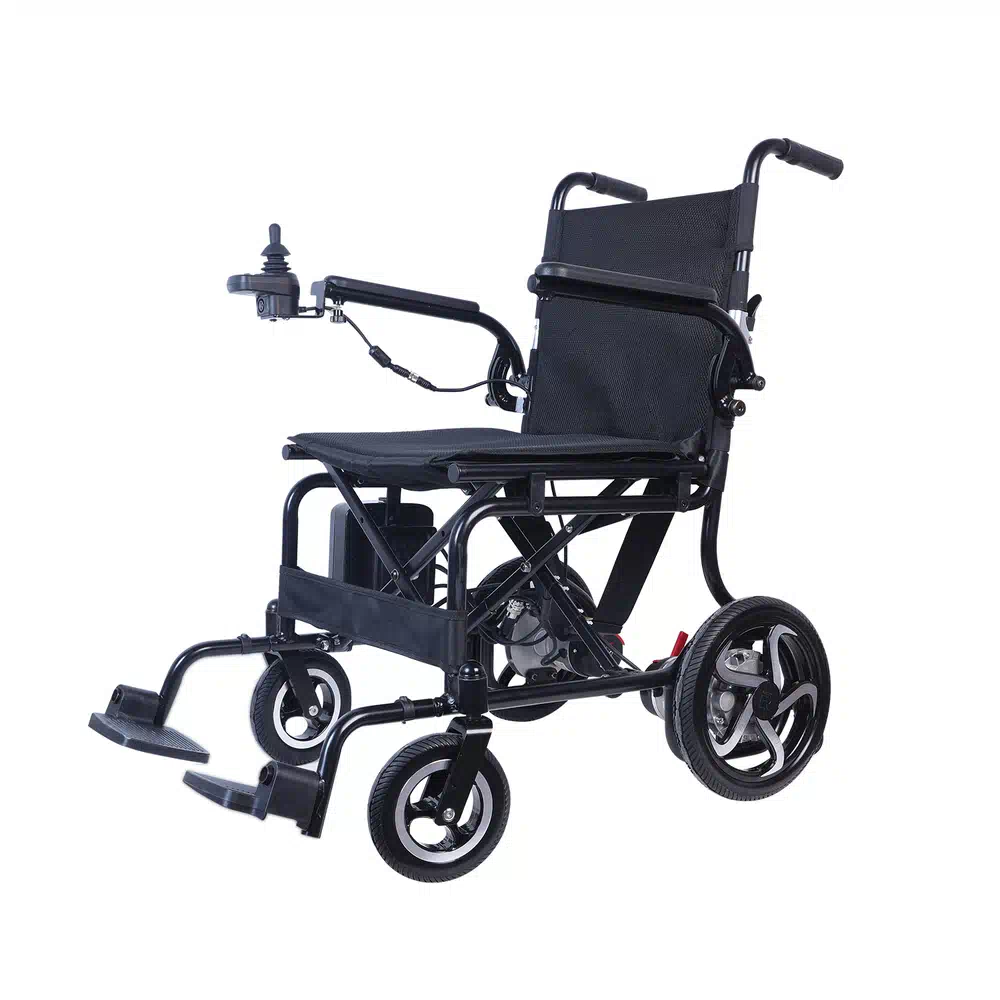
Having established a framework for evaluation, we can now turn our attention to the specific models that exemplify the best of what the market has to offer in 2025. This selection is based on an analysis of specifications, innovative features, and manufacturer reputation, drawing from available industry data. Each of these chairs represents a thoughtful balance of weight, power, and user-centric design, making them standout choices in the category of lightweight carbon fiber electric wheelchairs.
1. The Richall W3902: The Benchmark for Lightweight Durability
The Richall W3902 has established itself as a leading contender by offering a compelling blend of premium features in an exceptionally lightweight package. Manufactured by Zhejiang Richall Medical Technology Co., Ltd., a company with a deep specialization in carbon fiber fabrication, the W3902 is a testament to meticulous engineering.
- Core Specifications: The frame is constructed entirely of carbon fiber, resulting in a net weight of just 16.2 kg (35.7 lbs). With its two 10Ah lithium batteries, the total travel weight comes to approximately 18.8 kg (41.4 lbs), placing it firmly in the ultra-lightweight category. It is powered by dual 200W brushless motors and supports a generous weight capacity of 136 kg (300 lbs) (Richall Medical, n.d.-b).
- Performance and Portability: The W3902 delivers a travel range of up to 20 km (12.4 miles) on a full charge. Its folding mechanism is straightforward and collapses the chair into a compact form (62 x 34 x 72 cm), making it suitable for car trunks and airline travel. The combination of 7-inch front wheels and 8.5-inch rear wheels provides a good balance between indoor agility and outdoor stability.
- User-Centric Design: The chair features an intelligent joystick that can be mounted on either side, along with an ABS electromagnetic braking system for safety. The option for remote control folding adds a layer of convenience. The seat dimensions (44 cm width, 42 cm depth) are designed to provide a comfortable fit for the average adult user.
- Ideal User: The Richall W3902 is an excellent all-around choice for the user who needs a reliable, lightweight, and durable primary wheelchair for daily activities and travel. It does not compromise on essential features to achieve its low weight, making it a benchmark for others in the field.
2. The Golden Cricket GP302: The Featherweight Champion
Golden Technologies, a well-respected name in the mobility industry, made a significant impact with the release of the Cricket GP302. Its defining feature is its astonishingly low weight, which sets a new standard for portability.
- Core Specifications: The Cricket’s frame is a blend of carbon fiber and lightweight alloys, achieving a remarkable total weight of just 33 lbs (approximately 15 kg), including its single FAA-approved lithium-ion battery . It supports a weight capacity of 300 lbs (136 kg).
- Performance and Portability: Designed with travel as a priority, the Cricket folds down in a single, fluid motion. Its travel range is rated at up to 9.3 miles (15 km), which is suitable for day trips, shopping, and navigating airports. The 8.5-inch rear drive wheels provide adequate performance on sidewalks and in indoor environments.
- User-Centric Design: The chair comes with a comfortable padded seat, flip-back armrests for easy transfers, and a convenient storage basket under the seat. The focus is clearly on simplicity and ease of use for the user on the go.
- Ideal User: The Golden Cricket GP302 is the quintessential travel chair. It is the perfect solution for individuals who need a secondary wheelchair for vacations or for whom lifting weight is a primary concern. Its ultra-light design makes it exceptionally easy for a caregiver or the user themselves to handle.
3. The Jovy II Carbon Fibre Wheelchair: The Innovator in Design
The Jovy II, available through retailers like Active Mobility, represents a focus on sleek, modern aesthetics combined with high-tech functionality. It challenges the traditional look of mobility aids with its revolutionary design and ultra-lightweight construction.
- Core Specifications: The Jovy II boasts an ultra-light carbon fiber frame, with a total weight (including battery) starting around 18.5 kg (40.8 lbs), depending on the configuration. It supports a safe working load of up to 140 kg (308 lbs) .
- Performance and Portability: It features a simple one-touch folding system, collapsing into a very compact and manageable shape. The chair is powered by efficient brushless motors and airline-safe lithium batteries, providing a respectable range for daily use. A unique feature of the Jovy II is its emphasis on a smooth ride, often incorporating suspension elements not always found on such lightweight chairs.
- User-Centric Design: The design is minimalist and elegant. It often includes features like integrated LED lighting for safety and a high-tech joystick with clear displays. The seating system is ergonomically designed for comfort during extended use.
- Ideal User: The Jovy II appeals to the user who values both form and function. It is for the individual who wants a high-performance, lightweight power wheelchair that does not look like a conventional medical device. Its stylish design and advanced features make it a popular choice among younger users and those with a keen eye for technology.
4. The Richall CF-Mini: The Urban Explorer’s Choice
Another standout from the Richall Medical lineup, the CF-Mini is engineered specifically for navigating tight, urban environments. It prioritizes a compact footprint and supreme agility without sacrificing the core benefits of a carbon fiber frame.
- Core Specifications: As its name suggests, the CF-Mini is one of the lightest models available, with some configurations weighing as little as 34 lbs (15.4 kg) without the battery (Richall Medical, n.d.-a). It maintains a strong frame, typically supporting users up to 120 kg (265 lbs).
- Performance and Portability: The CF-Mini’s greatest strength is its maneuverability. Its compact dimensions and tight turning radius make it ideal for navigating narrow hallways, small apartments, crowded shops, and busy sidewalks. The folding mechanism is quick and intuitive, and its folded size is exceptionally small. The travel range of 15-20 km is more than adequate for a full day of city exploration.
- User-Centric Design: The design emphasizes simplicity and practicality. It features a responsive joystick, a comfortable and breathable seat, and a frame that is easy to handle and lift.
- Ideal User: The CF-Mini is the perfect companion for the city dweller. If your life involves navigating elevators, public transportation, and confined indoor spaces, this chair’s agility and compact size will be invaluable. It is an excellent choice for those who need a nimble and effortless mobility solution for their urban lifestyle.
5. The Pride Mobility Jazzy Carbon: A Trusted Name Reimagined
Pride Mobility is one of the most recognized brands in the power mobility space, and the Jazzy Carbon is their answer to the growing demand for ultra-lightweight options. It combines the company’s reputation for reliability with modern carbon fiber technology.
- Core Specifications: The Jazzy Carbon utilizes a carbon fiber frame to achieve a base weight of around 43.6 lbs (19.8 kg) with its airline-approved lithium battery. It is designed to be both lightweight and robust, supporting a weight capacity of up to 300 lbs (136 kg).
- Performance and Portability: This model is built for travel. It folds quickly and compactly, making it easy to store in a car, plane, or cruise ship cabin. The travel range is approximately 9.3 miles (15 km) per charge. Its performance is geared towards smooth surfaces found in airports, shopping centers, and homes.
- User-Centric Design: The Jazzy Carbon includes a padded seat and backrest for comfort, a front storage pouch for personal items, and a user-friendly joystick. As part of the Jazzy family, it benefits from Pride’s extensive service and support network, which can be a significant factor for many buyers.
- Ideal User: The Jazzy Carbon is a strong choice for the brand-conscious consumer who wants the assurance of a large, established manufacturer combined with the modern benefits of a carbon fiber frame. It is particularly well-suited for travelers who prioritize reliability and easy access to service.
Comparative Analysis: Finding the Right Fit for Your Lifestyle
Selecting the ideal carbon fiber power wheelchair from this impressive lineup is not about finding the “absolute best” chair, but about identifying the chair that is best for you. Your unique daily routines, physical needs, and personal aspirations should guide your decision. Let’s compare these top models directly and then analyze them through the lens of different user lifestyles.
| Modell | Weight (with Battery) | Max Range | Vektkapasitet | Key Feature |
|---|---|---|---|---|
| Richall W3902 | ~18.8 kg / 41.4 lbs | 20 km / 12.4 mi | 136 kg / 300 lbs | Balanced all-around performance and durability. |
| Golden Cricket GP302 | ~15 kg / 33 lbs | 15 km / 9.3 mi | 136 kg / 300 lbs | Exceptionally lightweight; ideal for lifting. |
| Jovy II | ~18.5 kg / 40.8 lbs | ~15-20 km / 9-12 mi | 140 kg / 308 lbs | Sleek, modern design with innovative features. |
| Richall CF-Mini | ~18 kg / 39.7 lbs | ~15-20 km / 9-12 mi | 120 kg / 265 lbs | Supreme agility and compact size for urban use. |
| Pride Jazzy Carbon | ~19.8 kg / 43.6 lbs | 15 km / 9.3 mi | 136 kg / 300 lbs | Trusted brand reliability; designed for travel. |
For the Frequent Traveler: Air Travel Considerations
If your lifestyle involves regular air travel, your priorities will be low weight, compact folded dimensions, and airline-compliant batteries.
- Top Recommendation: Den Golden Cricket GP302 is the standout choice here. At only 33 lbs, it is the easiest to check in at the gate and for travel companions to handle. Its single FAA-approved lithium-ion battery simplifies the airline approval process.
- Strong Contenders: Den Pride Jazzy Carbon og Richall CF-Mini are also excellent travel partners. The Jazzy Carbon benefits from Pride’s global brand recognition, which can be helpful when dealing with airline staff, while the CF-Mini’s incredibly compact folded size makes it easy to stow.
- Key Consideration: Before flying, always contact your airline to declare your mobility device. Most airlines require that lithium-ion batteries under 300 watt-hours be removed from the chair and carried into the cabin. All the chairs listed here use batteries that fall within these guidelines.
For the Daily Commuter: Durability and Ride Quality
If your wheelchair is your primary means of getting around your community every day, your focus will shift toward durability, comfort for extended use, and a longer travel range.
- Top Recommendation: Den Richall W3902 excels as a daily driver. Its robust carbon fiber frame is built for longevity, and its 20 km range provides a comfortable buffer for a full day of activities. The balance of its components makes for a reliable and comfortable ride on varied everyday surfaces like sidewalks, ramps, and store aisles. For those looking for a diverse selection, exploring a full range of carbon fibre lightweight wheelchairs can provide more tailored options.
- Strong Contender: Den Jovy II is another strong option, particularly if ride comfort is a top priority. Its focus on suspension and ergonomic seating can make a significant difference over a long day.
- Key Consideration: For daily use, pay close attention to the warranty, especially for the frame, motors, and electronics. A strong warranty is an indicator of the manufacturer’s confidence in their product’s durability.
For the Bariatric User: Weight Capacity and Frame Strength
While ultra-lightweight chairs are not typically designed for bariatric users, the strength of carbon fiber allows some models to support higher weight capacities than their aluminum counterparts.
- Top Recommendation: Den Jovy II offers the highest weight capacity in this list at 140 kg (308 lbs), making it the most suitable option. The inherent stiffness of its carbon fiber frame provides a sense of security and stability for a heavier user.
- Strong Contenders: Den Richall W3902, Golden Cricket GP302, og Pride Jazzy Carbon all support a respectable 136 kg (300 lbs). When choosing among these, a heavier user should prioritize a model with a wider seat option to ensure a comfortable and safe fit.
- Key Consideration: It is imperative to adhere strictly to the manufacturer’s specified weight limit. Exceeding this limit can compromise the chair’s structural integrity, braking performance, and overall safety.
Living with a Carbon Fiber Power Wheelchair: Maintenance, Care, and Maximizing Lifespan
The purchase of a power wheelchair is the beginning of a long-term relationship. Like any sophisticated piece of equipment, your chair requires regular care and attention to perform at its best and provide years of reliable service. Adopting a proactive approach to maintenance ensures not only the longevity of your investment but also your safety and confidence. Let’s explore some simple yet effective practices for caring for your carbon fiber power wheelchair.
Battery Care and Charging Best Practices
The lithium-ion batteries are the lifeblood of your chair. Proper care is the single most important factor in maximizing their performance and lifespan. Think of your battery not as a disposable component, but as a sensitive power plant that thrives on a consistent routine.
- Charge After Every Use: It is generally recommended to charge the batteries after each day of use, regardless of how far you traveled. Lithium-ion batteries do not have a “memory effect” like older battery types, so you do not need to fully deplete them before recharging. A regular charging routine keeps them in optimal condition.
- Avoid Deep Discharges: Do not make a habit of running the batteries until they are completely empty. This can put stress on the battery cells and shorten their lifespan. If the battery indicator on your joystick shows it is in the red, it is time to charge.
- Use the Correct Charger: Always use the charger that was supplied by the manufacturer. It is specifically designed to deliver the correct voltage and current for your batteries. Using an incompatible charger can be ineffective and potentially dangerous.
- Storage: If you plan to store your wheelchair for an extended period (more than a month), it is best to charge the batteries to around 50-70% and store them in a cool, dry place. Check the charge level every month or so and top it up if necessary. Storing a fully depleted or fully charged battery for a long time can degrade it.
Frame and Component Maintenance
The carbon fiber frame itself is remarkably low-maintenance. It will not rust and is resistant to dents and scratches. However, keeping it clean and performing regular visual inspections is good practice.
- Cleaning: Wipe down the frame with a soft, damp cloth to remove dust and dirt. Avoid using harsh chemical cleaners or abrasive pads, which could damage the resin finish.
- Tires: Regularly check your tires for wear and tear. Ensure they are free of embedded stones or debris. While most of these chairs use solid, puncture-proof tires, it is still important to check that they are seated correctly on the wheel rim.
- Fasteners: About once a month, perform a quick visual check of the main bolts and fasteners on your chair to ensure nothing has loosened with use. If you are unsure, you can have a qualified technician check them during an annual service.
- Joystick and Electronics: Keep the joystick controller clean and dry. If you are caught in the rain, protect the controller with a plastic cover.
Customization and Accessories
Making your wheelchair your own can enhance both its functionality and your enjoyment of it. Many manufacturers and third-party companies offer a wide range of accessories.
- Komfort: You might consider upgrading to a different cushion for specialized pressure relief or adding a contoured headrest for additional support.
- Convenience: Popular accessories include cup holders, phone mounts, and larger storage bags that can attach to the armrests or under the seat.
- Safety: For those who are often out in the evening, adding reflective tape or supplementary LED lights can significantly improve visibility.
By integrating these simple habits into your routine, you can ensure your carbon fiber power wheelchair remains a safe, reliable, and empowering partner in your daily life for many years to come.
The Future of Mobility: What Lies Beyond 2025?
The advancements we see in the best carbon fiber power wheelchairs of 2025 are not an endpoint, but a milestone on a continuing journey of innovation. The convergence of materials science, battery technology, and smart electronics promises an even more integrated and intuitive future for personal mobility. Looking ahead, we can anticipate several key areas of development that will further enhance user autonomy and experience.
Smart Technology Integration
The next generation of power wheelchairs will likely be more connected and intelligent. Imagine a wheelchair that can interface with a smartphone app to run diagnostics, track usage patterns, and even provide navigation assistance with accessibility in mind. This could include features like:
- GPS and Route Planning: An app that can plan a route to your destination while specifically identifying curb cuts, ramps, and accessible entrances.
- Remote Monitoring: The ability for a family member or caregiver to check the chair’s battery status and location remotely, providing peace of mind.
- Integration with Smart Home Devices: Voice commands to your home assistant could bring your wheelchair from its charging station to your bedside.
Advances in Battery Technology
While lithium-ion batteries are a massive improvement over older lead-acid types, research into next-generation power sources is ongoing. Solid-state batteries, for example, promise even greater energy density (longer range in a smaller, lighter package) and enhanced safety. As these technologies mature and become more affordable, we can expect to see power wheelchairs with travel ranges that could double what is possible today, further reducing “range anxiety” and opening up new possibilities for exploration.
Sustainable Manufacturing
As with all industries, there is a growing awareness of the environmental impact of manufacturing. The production of carbon fiber is energy-intensive. Future innovations will likely focus on more sustainable production methods, such as using bio-based resins and developing more efficient recycling processes for composite materials at the end of their life cycle. This reflects a broader commitment to creating suppliers of wheelchairs that are not only beneficial for the user but also responsible for the planet.
The evolution of the power wheelchair is a powerful reflection of our societal values. It shows a commitment to leveraging our best technology to foster inclusion, dignity, and the fundamental human right to move freely. The future is not just about lighter and faster chairs; it is about creating a more seamless and empowering relationship between the user and their mobility aid.
Ofte stilte spørsmål (FAQ)
Is a carbon fiber power wheelchair worth the higher cost? While the initial investment is higher than for aluminum or steel models, the value is found in the long-term benefits. The exceptional lightweight nature makes it far easier to transport, promoting greater independence and spontaneity. For many, the ability to lift their own chair into a car without assistance is a life-changing advantage. Additionally, the durability and corrosion resistance of carbon fiber can lead to a longer lifespan for the chair, making it a sound long-term investment in your mobility and quality of life.
Can I take a carbon fiber power wheelchair on an airplane? Yes, virtually all carbon fiber power wheelchairs are designed with air travel in mind. Their lightweight, folding frames are easy to handle for airline staff. The key is the battery. The chairs listed use lithium-ion batteries that are compliant with FAA and IATA regulations (typically under 300 Wh). You must notify the airline in advance and will usually be required to remove the battery from the chair and carry it with you into the passenger cabin.
How do I choose the right seat size for my wheelchair? Choosing the correct seat size is crucial for both comfort and health. To measure seat width, sit on a flat surface and measure the distance across the widest part of your hips or thighs, then add one to two inches. For seat depth, measure from the back of your pelvis to the back of your knee, then subtract one to two inches. This prevents the seat edge from pressing into the back of your knees. It is always best to consult with a healthcare professional or a mobility equipment specialist to get a precise fitting.
What is the real-world battery range I can expect? The advertised range is based on ideal conditions. Your actual range will vary based on your weight, the terrain you are navigating, and your average speed. A good rule of thumb is to expect about 70-80% of the maximum advertised range in mixed, real-world conditions. If you frequently travel up hills or on soft surfaces like grass, the range will be closer to the lower end of that estimate.
What is the difference between a power wheelchair and a mobility scooter? While both are powered mobility devices, they are designed for different needs. A power wheelchair is typically more maneuverable, with a much smaller turning radius, making it better suited for indoor use. It is controlled with a joystick and offers more comprehensive postural support. A mobility scooter is steered with a tiller, like a bicycle, and is generally designed for longer-distance outdoor use. Power wheelchairs are often the prescribed choice for individuals who need to use their mobility device for most of the day.
Konklusjon
The journey toward greater mobility and independence is being profoundly reshaped by the application of advanced materials. The carbon fiber power wheelchair of 2025 is not merely a product of clever engineering; it is a response to a deeply felt human need for autonomy without the burden of excessive weight. Through our exploration of its material science, evaluation criteria, and the market’s leading models, a clear picture emerges. The ideal choice is not dictated by a single specification, but by a thoughtful alignment of the device’s capabilities with the unique contours of an individual’s life.
Whether the priority is the featherlight portability of the Golden Cricket for the world traveler, the urban agility of the Richall CF-Mini for the city dweller, or the balanced durability of the Richall W3902 for the daily commuter, the modern market offers a solution. The deliberation process requires a clear-eyed assessment of weight, battery life, portability, and comfort. By approaching this decision with knowledge and self-awareness, users and their families can select a carbon fiber power wheelchair that does more than just provide mobility; they can choose a tool that actively expands the horizons of what is possible, fostering a life of greater freedom, engagement, and personal fulfillment.
Referanser
Active Mobility Systems. (n.d.). Jovy II carbon fibre wheelchair. Retrieved May 16, 2025, from
Home Med-Equip. (n.d.-a). Cricket GP302 carbon fiber folding power chair by Golden. Retrieved May 16, 2025, from
Home Med-Equip. (n.d.-b). Electric power wheelchairs. Retrieved May 16, 2025, from
Richall Medical. (n.d.-a). Top 5 lightweight electric wheelchairs under 50 pounds. Retrieved May 16, 2025, from https://www.richallmed.com/Top-5-Lightweight-Electric-Wheelchairs-Under-50-Pounds-id41635416.html
Richall Medical. (n.d.-b). RC-W3902 best seller all carbon electric wheelchair. Retrieved May 16, 2025, from https://www.richallmed.com/RC-W3902-Best-Seller-All-Carbon-Electric-Wheelchair-pd546915278.html
Richall Medical. (n.d.-c). RICHALL: Leading carbon fiber electric wheelchair supplier. Retrieved May 16, 2025, from https://www.richallmed.com/
Zhejiang Ruichuan Medical Technology Co., Ltd. (n.d.). Richall automatic folding lightweight power wheelchair remote control carbon fibre electric wheelchair. Made-in-China.com. Retrieved May 16, 2025, from https://electricwheelchair.en.made-in-china.com/product/OdofkxVvLlGs/China-Richall-Automatic-Folding-Lightweight-Power-Wheelchair-Remote-Control-Carbon-Fibre-Electric-Wheelchair.html