.png)
.png)

A Data-Backed Guide to Versatile Power Carbon Aluminium Alloy Wheelchairs: 5 Key Factors for 2026
desember 30, 2025
Sammendrag
The landscape of personal mobility assistance is undergoing a significant transformation in 2026, moving beyond the traditional compromises between strength and weight. This analysis examines the emergence and engineering principles behind versatile power carbon aluminium alloy wheelchairs. By strategically combining the lightweight, high-tensile strength of carbon fiber with the durable, cost-effective properties of aerospace-grade aluminum alloys, manufacturers are creating a new class of mobility devices. These hybrid chairs offer the robust performance required for daily, varied use while maintaining the portability essential for travel and independent living. The investigation delves into the material science, advanced battery and motor systems, ergonomic considerations, and long-term value proposition of these innovative wheelchairs. It posits that the synthesis of these materials and technologies represents a pivotal advancement, fundamentally enhancing user autonomy and quality of life by delivering an optimized balance of flexibility, power, and resilience without the trade-offs that once defined the market.
De viktigste erfaringene
- Understand that hybrid frames combine carbon fiber’s lightness with aluminum’s durability for optimal performance.
- Prioritize models with brushless motors and smart lithium-ion batteries for greater efficiency and range.
- Look for high levels of adjustability in seating and components to ensure long-term health and comfort.
- Evaluate folding mechanisms and total weight for practical, everyday portability and ease of travel.
- Invest in versatile power carbon aluminium alloy wheelchairs for better long-term value and reliability.
- Consider after-sales support and warranty as part of the overall value of your mobility device.
- Assess the total cost of ownership, not just the initial purchase price, for a wise investment.
Innholdsfortegnelse
- Factor 1: The Material Synergy of Carbon Fiber and Aluminum Alloys
- Factor 2: Advanced Motor and Battery Technology for Uncompromised Performance
- Factor 3: Ergonomics and Customization for All-Day Comfort and Health
- Factor 4: Portability and Design for a Life in Motion
- Factor 5: Durability, Maintenance, and Long-Term Value
- Ofte stilte spørsmål (FAQ)
- Konklusjon
- Referanser
Factor 1: The Material Synergy of Carbon Fiber and Aluminum Alloys
The pursuit of human flourishing, particularly in the context of physical limitation, calls for a deep and empathetic examination of the tools that facilitate autonomy. A wheelchair is not merely a piece of medical equipment; it is an extension of the self, a primary means through which an individual engages with the world. For decades, the design of these crucial devices was governed by a difficult compromise: the choice between a heavy, durable chair and a lighter, more fragile one. In 2026, this dichotomy is increasingly obsolete, thanks to the thoughtful engineering behind versatile power carbon aluminium alloy wheelchairs. By understanding the distinct virtues of each material and how they are synthesized, we can appreciate the profound impact this innovation has on a user’s daily existence. It is a story of material science in service of human capability.
Deconstructing Carbon Fiber: The Champion of Lightweight Strength
To grasp the significance of carbon fiber, one must look beyond its sleek, modern appearance and into its very atomic structure. Imagine a thread, but instead of cotton or wool, this thread is composed of carbon atoms bonded together in long, crystalline chains. These threads, or filaments, are thinner than a human hair yet possess extraordinary tensile strength. Now, imagine thousands of these filaments bundled together to form a “tow,” and these tows are woven into a fabric-like sheet. This is the basis of carbon fiber composite.
The magic, however, happens when this woven fabric is impregnated with a polymer resin, typically epoxy, and then cured under intense heat and pressure. The carbon fibers provide the strength and stiffness, while the resin holds them in place, protecting them and distributing the load among them. The result is a composite material that is, pound for pound, significantly stronger and stiffer than steel, yet much lighter. This strength-to-weight ratio is why it became the material of choice for aerospace, Formula 1 racing, and high-performance sports equipment.
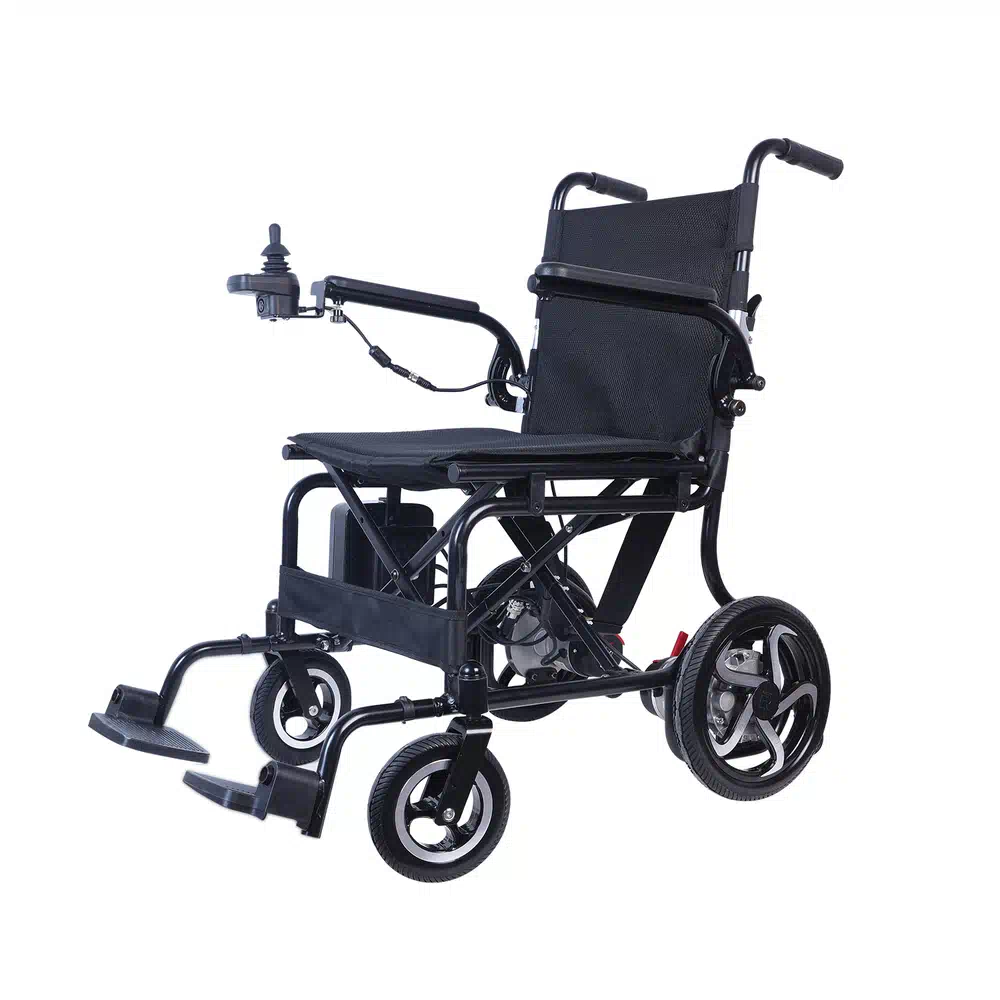
In the context of a elektrisk rullestol i karbonfiber, this translates to a frame that can withstand the rigors of daily use—the bumps, the transfers, the transportation—without the burden of excessive weight. A lighter chair is easier for a user or a family member to lift into a car, requires less energy from the motors to propel, and feels more responsive to the user’s commands. It is a direct reduction in the physical and energetic cost of mobility.
| Eiendom | Karbonfiberkompositt | 6061 Aluminum Alloy | Steel (4130) |
|---|---|---|---|
| Tetthet (g/cm³) | ~1.6 | ~2.7 | ~7.85 |
| Tensile Strength (MPa) | 600 – 1500+ | ~310 | ~670 |
| Stiffness (GPa) | 70 – 200+ | ~69 | ~205 |
| Forholdet mellom styrke og vekt | Svært høy | Medium | Lav |
| Motstandsdyktighet mot korrosjon | Utmerket | Bra | Poor (requires coating) |
This table illuminates the clear advantages of carbon fiber. Its low density combined with high strength creates a material that is uniquely suited for applications where performance and weight are paramount.
Understanding Aerospace-Grade Aluminum Alloys: The Foundation of Durability
While carbon fiber is the star of the show in terms of weight reduction, aluminum alloy plays an indispensable supporting role. It would be a mistake to view it as a lesser material; rather, it is a different material with its own set of virtues. Not all aluminum is created equal. The aluminum used in high-quality wheelchairs is not the same as the foil in your kitchen drawer. We are talking about aerospace-grade alloys, such as the 6000 or 7000 series.
These alloys contain specific additional elements—like magnesium, silicon, or zinc—that dramatically enhance their mechanical properties. For instance, 6061 aluminum alloy is renowned for its excellent corrosion resistance, good workability, and weldability. This makes it an ideal candidate for the main chassis of a wheelchair, the structural core that must endure constant stress and exposure to the elements. It can be formed, welded, and finished with high precision and reliability.
The 7000 series alloys, often containing zinc, offer even higher strength, approaching that of some steels. While they can be more challenging to weld, they are often used in high-stress components where maximum durability is needed. The key benefit of aluminum alloy in a wheelchair frame is its ability to provide a robust, reliable, and cost-effective foundation. It is resilient, resisting impacts and deformations that might cause a more brittle material to fail. This inherent toughness provides a sense of security and confidence for the user, who must trust their wheelchair implicitly.
The Hybrid Advantage: How Versatile Power Carbon Aluminium Alloy Wheelchairs are Engineered
The true innovation lies not in using one material or the other, but in using both in a thoughtful, integrated design. Engineers of versatile power carbon aluminium alloy wheelchairs do not simply swap steel for a lighter material. They conduct a meticulous analysis of the entire wheelchair structure, asking: “Which material is best suited for the function of this specific component?”
This leads to a hybrid construction philosophy:
- Chassis and Structural Frame: The core frame, which bears the primary load of the user and the stresses of movement, is often constructed from a precisely welded aluminum alloy. This provides the foundational strength, durability, and impact resistance needed for long-term safety and reliability. It is the skeleton of the chair.
- Seating, Backrest, and Side Panels: Components where weight savings are most impactful and where complex, ergonomic shapes are desired are often made from molded carbon fiber. The backrest, seat base, and side guards can be crafted to be incredibly thin and light yet strong, and they can be shaped to provide postural support that would be difficult or heavy to achieve with metal.
- Folding Mechanisms and Small Components: Smaller, intricate parts of the folding mechanism or brackets might also use aluminum for its ease of machining and proven reliability in moving parts.
By adopting this hybrid approach, manufacturers can create a wheelchair that embodies the best of both worlds. The user gets the rock-solid, dependable feel of an aluminum chassis combined with the significant weight savings and modern aesthetic of carbon fiber components. This is not a compromise; it is an optimization. It is the recognition that different parts of a complex tool have different demands, and the most elegant solution is to meet each demand with the most appropriate material.
A Human-Centered Perspective on Material Choice
Let us move from the engineer’s workshop to the lived experience of an individual. Consider a user in Sydney, Australia, who wants to attend a family barbecue at a local park. Their day involves navigating their home, being transported by car, traversing paved paths, and rolling over uneven grass.
With a traditional, heavy power chair, the first hurdle is leaving the house. Lifting a 70-pound (or heavier) chair into a car is a significant challenge, often requiring a dedicated vehicle lift or the assistance of a strong caregiver. With one of the latest versatile power carbon aluminium alloy wheelchairs, which can weigh as little as 35-45 pounds, the task becomes manageable for many more people. This small change can be the difference between spontaneous participation in life and being homebound.
Once at the park, the lower overall weight means the motors and battery work more efficiently. The user experiences less “range anxiety,” confident that their chair has the power to get them through the day. The stiffness of the carbon fiber components and the rigidity of the aluminum frame translate to a responsive ride, where the user’s inputs are met with immediate and precise movements. When navigating the grassy area, the chair’s durable construction provides the confidence that it can handle the imperfect terrain without faltering. This synthesis of materials directly enhances the user’s freedom, confidence, and participation in the social fabric of their community.
Factor 2: Advanced Motor and Battery Technology for Uncompromised Performance
If the frame is the skeleton of a modern power wheelchair, the motor and battery system are its heart and muscles. The most sophisticated material science is of little consequence if the chair lacks the power, efficiency, and endurance to meet the demands of a full and active life. The development of versatile power carbon aluminium alloy wheelchairs has been paralleled by equally impressive advancements in power and energy storage technology. These systems are not just about raw power; they are about intelligent, efficient, and reliable performance that empowers the user. To understand these chairs is to understand the silent, powerful forces that propel them.
The Evolution of Brushless Motors: Power, Efficiency, and Silence
For many years, the standard for electric motors in mobility devices was the brushed DC motor. While effective, these motors have inherent limitations. They rely on small carbon blocks, or “brushes,” to make physical contact with the spinning part of the motor (the commutator) to deliver electricity. This physical contact creates friction, which generates heat, noise, and wear. The brushes eventually wear down and require replacement, making them a point of maintenance and potential failure.
Imagine the difference between dragging a heavy box across a rough floor versus rolling it on smooth wheels. The friction in a brushed motor is like that rough floor—it wastes energy. The advent of the brushless DC motor was a paradigm shift. In a brushless design, the relationship between the permanent magnets and the electromagnets is reversed. The electronics of the motor controller manage the flow of electricity to the electromagnets, eliminating the need for physical brushes.
The benefits for a wheelchair user are profound:
- Greater Efficiency: With no energy lost to friction from brushes, brushless motors convert more electrical energy into mechanical power. For a user, this means a longer travel range from the same size battery. A trip to the local shops and back might consume 15% less battery life, providing a crucial buffer for an unplanned detour.
- Higher Torque-to-Weight Ratio: Brushless motors can generate more power relative to their size and weight. This allows for smaller, lighter motors that can still provide the necessary torque to climb ramps, traverse thick carpets, or cross uneven ground. This contributes to the overall lightness of versatile power carbon aluminium alloy wheelchairs.
- Increased Reliability and Longevity: The absence of wearing parts means brushless motors are virtually maintenance-free and have a significantly longer lifespan. This provides peace of mind, reducing the likelihood of being stranded by a motor failure.
- Quieter Operation: The lack of brush contact makes for a much quieter motor. This is not a trivial detail. A quieter chair is less obtrusive in quiet environments like a library, office, or theater, allowing the user to integrate more seamlessly into their surroundings.
Leading manufacturers, such as those producing high-end carbon fiber electric wheelchair models, have almost universally adopted brushless motor technology as the standard, recognizing that it is fundamental to providing a premium mobility experience (RICHALL Medical, 2025).
Lithium-Ion Batteries in 2026: Beyond Range to Smart Management
The power for these advanced motors comes from the battery, and here too, the technology has leaped forward. The heavy, cumbersome sealed lead-acid (SLA) batteries that once dominated the market have been largely supplanted by lighter, more powerful lithium-ion technology. But even within the lithium-ion family, there are important distinctions.
Modern power wheelchairs predominantly use lithium-ion chemistries like Lithium Iron Phosphate (LiFePO4). Compared to the lithium-ion batteries in a smartphone (like Lithium Cobalt Oxide), LiFePO4 batteries are more chemically stable, less prone to thermal runaway (overheating), and offer a much longer cycle life. This means they can be fully charged and discharged many more times before their capacity begins to degrade significantly—often thousands of cycles compared to just a few hundred for older battery types.
However, the true intelligence of a modern battery system lies in the Battery Management System (BMS). The BMS is an electronic brain that constantly monitors the battery pack. It performs a host of functions that are invisible to the user but critical for safety, performance, and longevity:
- Cellebalansering: It ensures that all the individual cells within the battery pack are charged and discharged evenly. Without this, some cells would wear out faster than others, prematurely crippling the entire pack.
- Overcharge and Over-Discharge Protection: The BMS prevents the battery from being charged beyond its capacity or drained to a level that would cause permanent damage.
- Temperaturovervåking: It monitors the battery’s temperature and can reduce power or shut down the system if it detects overheating, a key safety feature.
- State-of-Charge Calculation: It provides the user with an accurate reading of the remaining battery life, far more precise than the vague voltage-based gauges of the past.
A critical consideration for users in Europe, the US, and Australia is air travel. Airline regulations regarding lithium-ion batteries are strict. The BMS, combined with robust casing and certifications (like UN38.3), is what makes a battery “airline-approved.” Many versatile power carbon aluminium alloy wheelchairs are designed with batteries that are easily removable and comply with IATA regulations, empowering users with the freedom of global travel (Made-in-China.com, 2025).
Regenerative Braking Systems: A Sustainable Approach to Mobility
A further layer of sophistication in modern power systems is the implementation of regenerative braking. In a conventional braking system, when you slow down, the kinetic energy of the moving wheelchair is converted into heat by the brakes and lost to the environment. It’s wasted energy.
Regenerative braking is a smarter approach. When the user decelerates or goes downhill, the motor’s electronics essentially reverse its function. The motor temporarily acts as a generator, using the chair’s momentum to create electricity, which is then fed back into the battery.
Think of it like a hybrid car. The effect is most noticeable in stop-and-go environments or in hilly areas. While it won’t recharge the battery from empty, regenerative braking can extend the usable range of a wheelchair by a meaningful amount, often between 5% and 15%, depending on the terrain and driving style. It is a subtle but constant process of energy recycling that contributes to the overall efficiency and endurance of the chair, turning what was once wasted energy into extra miles of freedom.
The User Experience of Power Efficiency
These technical advancements—brushless motors, smart batteries, regenerative braking—are not just abstract engineering feats. They coalesce into a user experience defined by confidence and capability. A user in a hilly city like San Francisco can navigate steep inclines without the motors straining or the battery plummeting. An individual in a sprawling suburban area in the United States can plan a day-long outing to a park or shopping center without the constant worry of finding a power outlet. A user traveling through Europe can confidently navigate ancient cobblestone streets, knowing their chair has the power and durability to handle the challenge.
The combination of a lightweight frame made from carbon fiber and aluminum with an efficient power system creates a virtuous cycle. The lighter frame demands less energy to move, which allows for a smaller, lighter battery to achieve the same range. This further reduces the overall weight, making the chair even easier to transport and more efficient to run. It is this holistic, integrated approach to design that defines the excellence of modern versatile power carbon aluminium alloy wheelchairs.
Factor 3: Ergonomics and Customization for All-Day Comfort and Health
A power wheelchair is a place where a person may spend a significant portion of their day. In this light, its design must be approached with the same level of care and consideration as architecture or furniture design. It must be more than functional; it must support the human body in a way that promotes health, prevents injury, and provides comfort. The philosophy behind the best versatile power carbon aluminium alloy wheelchairs recognizes that the user is not a passive passenger but an active individual whose well-being is intrinsically linked to the chair’s design. This leads to a focus on ergonomics and deep customization, transforming the device from a generic tool into a personalized environment.
The Science of Seating: Pressure Mapping and Postural Support
Prolonged sitting places immense pressure on the skin and underlying tissues, particularly over bony areas like the tailbone and hips. If this pressure is not properly managed, it can restrict blood flow, leading to tissue breakdown and the formation of pressure injuries (also known as pressure sores or decubitus ulcers). These are painful, difficult to heal, and can lead to serious health complications.
Therefore, the science of seating is a cornerstone of modern wheelchair design. It is not simply about providing a soft cushion. High-end manufacturers employ sophisticated tools like pressure mapping systems. These systems use a mat of sensors to create a real-time, color-coded map of the pressure distribution between the user and the seat surface. This data allows clinicians and technicians to see exactly where high-pressure “hot spots” are occurring.
Based on this information, the right cushion can be selected. The options are diverse, each with its own properties:
- High-Density Foam: Often contoured to match the shape of the body, providing stability and good pressure distribution for users with moderate risk.
- Viscoelastic Foam (Memory Foam): This material conforms closely to the user’s body, maximizing surface area contact and reducing peak pressures.
- Gel Cushions: These contain a fluid-like gel pack that helps to redistribute pressure and can also help to dissipate heat.
- Air Flotation Cushions: Composed of interconnected air cells, these cushions allow for deep immersion and provide excellent pressure relief for users at high risk of skin breakdown.
Beyond the cushion, the backrest is equally vital for postural support. A properly configured backrest supports the natural curves of the spine, preventing slouching, which can impair breathing and digestion, and reducing fatigue. Modern backrests on chairs like lightweight folding wheelchairs often feature adjustable tension straps, lateral supports, and lumbar pads to create a truly customized fit that cradles the user’s torso.
Adjustability as a Core Feature: From Armrests to Footplates
The human body is not static, and a wheelchair should not be either. A person’s needs can change over the course of a day, or over a period of months or years. True ergonomic design, therefore, is adjustable design. The ability to fine-tune the chair’s configuration is not a luxury; it is essential for long-term health and function.
Consider the sheer number of adjustment points on a well-designed versatile power carbon aluminium alloy wheelchair:
- Seat Dimensions: The seat width and depth must match the user’s body. A seat that is too wide fails to provide proper support and makes the chair unnecessarily bulky. A seat that is too narrow can cause pressure on the hips.
- Backrest Angle and Height: The ability to recline the backrest allows the user to shift their weight and relieve pressure. Adjusting the height ensures that the support is targeted to the correct area of the back.
- Armrest Height and Position: Armrests that are set too high can cause shoulder and neck pain. If they are too low, the user may lean to one side. They should support the forearms comfortably, allowing the shoulders to remain relaxed.
- Leg Rests and Footplates: The length of the leg rests must be adjusted so the thighs are parallel to the seat cushion, with feet resting flat on the footplates. Many models offer elevating leg rests, which are crucial for users who need to manage swelling or have limited knee movement. The angle of the footplates can also often be adjusted for optimal ankle position.
This deep adjustability ensures that the wheelchair can be configured to fit the user, rather than forcing the user to fit the wheelchair. It allows the chair to adapt to changes in the user’s condition, clothing (a thick winter coat changes a person’s dimensions), or activities.
Control Systems and User Interfaces: Intuitive Mobility
The interface between the user and the machine is the joystick controller. Its design is a critical aspect of ergonomics. A modern joystick is far more than a simple directional lever.
- Intelligent Control: The controller’s software allows for extensive programming. The “throw” (the distance you have to move the joystick to reach top speed) can be adjusted. The sensitivity can be turned down for users with tremors or up for those with limited muscle control. The rates of acceleration and deceleration can be smoothed out for a less jerky ride.
- User-Friendly Display: Most controllers now feature a clear LCD screen that provides vital information at a glance: battery level, current speed setting, and diagnostic codes if a fault occurs. This clear communication reduces anxiety and empowers the user to understand their device.
- Ergonomisk design: The joystick knob itself comes in various shapes and sizes to suit different hand sizes and grip styles. The buttons for speed control and the horn are placed for easy access without requiring the user to shift their grip.
For individuals who cannot use a standard joystick, the system’s modularity is key. The central controller can often be connected to a wide array of alternative input devices, such as head arrays, chin controls, or sip-and-puff systems, ensuring that even those with the most significant physical limitations can achieve independent mobility.
A Case Study in Customization: Adapting a Wheelchair for an Active User
Let us imagine a user named Alex in Melbourne, Australia. Alex is a university student who has a spinal cord injury. Their life is dynamic: attending lectures in large halls, navigating crowded campus pathways, working at a desk in the library, and socializing with friends at cafes.
A generic, non-adjustable chair would be a constant source of frustration. But with a versatile power carbon aluminium alloy wheelchair, a seating specialist can perform a detailed assessment. They use pressure mapping to select a low-profile gel cushion that provides protection without adding excessive height. The backrest is a lightweight carbon fiber shell with custom-placed lumbar support.
The armrests are adjusted to be level with the standard-height desks in the university library, allowing Alex to pull up close to their workspace without obstruction. The joystick is programmed with multiple profiles: a low-speed, high-precision mode for navigating tight indoor spaces like bookstore aisles, and a higher-speed, responsive mode for covering the distance between buildings on campus. The lightweight, folding nature of the chair means Alex can easily get a ride with friends in their regular cars, without needing a specialized van.
In this scenario, the wheelchair is not a barrier but an enabler. Its deep customizability and ergonomic design directly support Alex’s educational, social, and personal goals. It demonstrates how a thoughtful approach to design, focusing on the individual, is fundamental to creating a tool that truly enhances human capability.
Factor 4: Portability and Design for a Life in Motion
Mobility, in its truest sense, is the freedom to move through all aspects of life, not just within the walls of one’s home. It is the ability to travel, to visit family, to engage in the community, and to explore the world. For this to be a reality for a power wheelchair user, the device itself must be designed for motion. Portability is not an afterthought; it is a central design principle in the best versatile power carbon aluminium alloy wheelchairs. This focus manifests in the mechanics of folding, a relentless pursuit of weight reduction, and an aesthetic that embraces the chair as a part of a modern, active lifestyle.
The Mechanics of Folding: From Manual to Automatic
The ability to fold a wheelchair is what makes it compatible with the world of standard transportation—cars, taxis, trains, and planes. The evolution of folding mechanisms is a story of increasing convenience and reduced physical effort.
Traditional manual wheelchairs often used a cross-brace design, where the chair folded from side to side like an accordion. While effective, this often resulted in a package that was still quite wide. The innovation in lightweight folding wheelchairs and power chairs has moved towards a different approach. Many modern chairs fold from front to back, collapsing into a much more compact, rectangular shape that is easier to fit into a car trunk or a storage closet.
The engineering behind these folding mechanisms in power chairs is particularly sophisticated.
- Manual Quick-Fold: Many models feature a one-step manual folding process. This might involve a single latch or handle that, when released, allows the chair to collapse in a controlled motion. The goal is to make the process intuitive and require minimal strength.
- Automatisk sammenleggbar: The pinnacle of convenience is automatic folding, often operated via a button on the chair itself or a small remote control. At the touch of a button, the chair will autonomously fold or unfold itself in a matter of seconds. This feature is transformative for users with limited trunk strength, balance, or hand dexterity, who might otherwise be unable to handle their chair independently.
Let’s compare these two common approaches in modern power chairs:
| Folding Mechanism Type | Process | User Effort | Typical Use Case |
|---|---|---|---|
| Manual Quick-Fold | User releases a primary latch and guides the chair as it collapses. | Lav til moderat | For users or caregivers who can comfortably handle the chair’s weight and perform a simple physical action. |
| Automatic Remote Fold | User presses a button; electric actuators perform the entire folding/unfolding sequence. | Minimal | Ideal for users seeking maximum independence, or for those with strength or balance limitations. |
This choice in folding mechanisms reflects a deep understanding of the diverse needs of the user population. It offers a spectrum of solutions that empower more people to manage their mobility equipment independently.
Weight as a Practical Consideration for Travel and Transport
As we have explored, the use of carbon fiber and aluminum alloys is key to reducing weight. But why is every pound, every kilogram, so important? Let’s consider the practical realities.
The average weight of an older-style power wheelchair could easily exceed 70-100 pounds (32-45 kg). Lifting this is simply not feasible for most people and necessitates expensive and cumbersome vehicle lifts. In stark contrast, many versatile power carbon aluminium alloy wheelchairs weigh in at a mere 35-50 pounds (16-23 kg) total, with the battery removed. The heaviest single piece to be lifted might be only 30 pounds (14 kg).
This dramatic weight reduction has a cascading effect on a user’s life:
- Spontaneity: It enables spontaneous trips. A friend can offer a ride, and the user can accept, knowing the chair will fit in a standard car trunk.
- Uavhengighet: The user may be able to lift the chair (or its components) themselves, reducing reliance on others.
- Caregiver Health: For family members or caregivers, repeatedly lifting a heavy piece of equipment poses a real risk of back injury. A lighter chair is a safer chair for everyone involved.
- Accessibility: It opens up travel in taxis or ride-sharing services, which cannot accommodate heavy, non-folding chairs.
The weight specifications provided by manufacturers like RICHALL Medical, which highlight models weighing as little as 16.3 kg (about 36 pounds) without the battery, are not just numbers on a page (Made-in-China.com, 2025). They represent a tangible increase in freedom and a reduction in the logistical barriers to participating in the world.
Navigating the World: Airline, Train, and Vehicle Accessibility
For many, the ultimate expression of mobility is travel. Navigating public transportation systems with a power wheelchair requires a device that is designed with these systems in mind.
- Air Travel: This is often the most daunting prospect. As discussed, the key is the battery. Airlines have strict rules, typically requiring that the lithium-ion battery be removed from the chair, carried into the cabin, and be under a certain watt-hour (Wh) rating (usually 300Wh for a single battery). The design of versatile power carbon aluminium alloy wheelchairs, with their easily detachable, airline-compliant batteries, directly addresses this. The compact, folded size of the chair frame also makes it easier for airline staff to handle and store safely in the cargo hold.
- Train and Bus Travel: In many cities in Europe and parts of the United States, modern trains and buses have designated spaces for wheelchairs. A chair with a compact footprint and a good turning radius is much easier to maneuver into and out of these spaces, especially during busy travel times.
- Vehicle Transport: The front-to-back fold and low weight are the most critical features for transport in personal vehicles. A chair that folds into a shape resembling a piece of luggage is far more practical than one that remains bulky and wide.
A well-designed chair makes the user feel confident when approaching a check-in counter or boarding a train, knowing their device is built to comply with the realities of modern travel.
Aesthetics and Personal Expression: Beyond a Medical Device
Finally, we must address the emotional and psychological dimension of design. For too long, mobility equipment has been designed with a purely clinical aesthetic, marking the user as “other” or “disabled.” This is a failure of empathy in design.
The materials used in versatile power carbon aluminium alloy wheelchairs offer a new aesthetic vocabulary. The woven pattern of carbon fiber has a high-tech, performance-oriented look, associating the chair with innovation and sport rather than just medicine. The clean lines and finishes possible with aluminum create a sleek, minimalist appearance.
Manufacturers are increasingly offering choices in frame colors and accent details, allowing the user to personalize their chair. This shift is profoundly important. It allows the wheelchair to become an accessory, a chosen part of a person’s identity, much like a pair of glasses or a watch. It reframes the device from a symbol of limitation to an expression of personal style and a statement of an active, engaged life. When a person feels good about the appearance of their chair, it enhances their confidence and their willingness to be out in the world. It is a recognition that human flourishing is about more than just physical function; it is also about dignity, identity, and self-expression.
Factor 5: Durability, Maintenance, and Long-Term Value
An investment in a high-quality power wheelchair is a significant one, both financially and in terms of the trust placed in the device. This investment must be justified by more than just initial performance; it must be backed by long-term durability, straightforward maintenance, and reliable support. The true measure of a wheelchair’s value is not its price tag, but its total cost of ownership and its ability to provide safe, dependable service for years. Forward-thinking manufacturers of versatile power carbon aluminium alloy wheelchairs understand this, building longevity and serviceability into the very fabric of their products.
Stress Testing and Quality Control in Manufacturing
The confidence a user has in their wheelchair begins in the factory. The advanced materials used in these chairs require equally advanced manufacturing and testing protocols. A reputable manufacturer’s commitment to quality is evident in their adherence to international standards and their rigorous internal testing processes.
- International Standards: Certifications like CE (for the European market), UKCA (for the UK market), and FDA 510(k) clearance (for the US market) are not just rubber stamps. They signify that the product has been evaluated and found to meet stringent safety, health, and environmental protection requirements. These certifications are a baseline indicator of a manufacturer’s commitment to producing a safe and reliable product.
- Lifecycle and Fatigue Testing: Materials can behave differently after thousands of cycles of stress. Manufacturers use specialized machinery to simulate years of use in a compressed timeframe. For example, a wheelchair frame might be subjected to repeated loads and vibrations to see if any weak points or microscopic cracks develop. The folding mechanism will be operated thousands of times to ensure its durability.
- Impact and Drop Testing: The chair is subjected to controlled impacts and drops to simulate real-world accidents, like running into a curb or being mishandled during transport. This ensures the frame and critical components can withstand such events without catastrophic failure.
- Environmental Testing: The electronics, motors, and materials are tested for performance in a range of temperatures, humidity levels, and conditions to ensure they function reliably whether in the humid summer of Florida, the cold winter of Stockholm, or the dry heat of the Australian outback.
This culture of quality control, as emphasized by manufacturers like leading carbon fiber electric wheelchair manufacturers, ensures that the chair that reaches the user is not just theoretically strong, but proven to be dependable in the real world (electricwheelchair.en.made-in-china.com, n.d.).
A Practical Maintenance Schedule for Owners
While modern wheelchairs are designed to be low-maintenance, they are not “no-maintenance.” Just like a car, a bicycle, or any other mechanical device, they benefit from regular checks and care to ensure their longevity and safety. Empowering the user with a simple, practical maintenance schedule is a key part of responsible ownership.
A good schedule can be broken down into simple intervals:
- Daily (or before each use):
- Visual Inspection: A quick look over the chair for anything obviously loose, damaged, or out of place.
- Tire Check: If the tires are pneumatic (air-filled), check their pressure. For solid tires, check for excessive or uneven wear.
- Battery Level: Check the battery gauge to ensure you have enough charge for your planned activities.
- Weekly:
- Cleaning: Wipe down the frame and seating surfaces. This is not just for appearance; it allows you to inspect the surfaces up close for any signs of wear or damage.
- Check Fasteners: Check that key bolts and screws, particularly around the seat and folding mechanism, are snug.
- Controller Check: Ensure the joystick is moving freely and the buttons are all functioning correctly.
- Monthly:
- Tire and Wheel Inspection: A more thorough check of the tires for embedded objects or damage. Check that the wheels spin freely without wobbling.
- Upholstery Check: Inspect the seams and surfaces of the cushions and backrest for any rips or tears.
- Annually:
- Professional Service: It is highly recommended to have the wheelchair inspected by a qualified technician at least once a year. They can check the motor brushes (if applicable, though rare in modern chairs), load-test the batteries, inspect the electronics, and lubricate moving parts.
This proactive approach to maintenance can prevent small issues from becoming large, expensive problems, ensuring the chair remains safe and reliable for its entire service life.
Understanding Warranty and After-Sales Support
Even the best-made products can sometimes have issues. This is where the manufacturer’s warranty and after-sales support become critically important. A strong warranty is a statement of the manufacturer’s confidence in their own product.
When evaluating a warranty, look at the details:
- Frame: The frame is the core of the chair and should have the longest warranty period, often several years or even a lifetime against manufacturing defects.
- Electronics and Motors: The controller, motors, and wiring are complex components and typically have a warranty of one to two years.
- Batteries: Batteries are a consumable item, and their warranty is usually shorter, often six months to a year, and typically covers only manufacturing defects, not the natural degradation of capacity over time.
Beyond the warranty period, the availability of after-sales support and spare parts is crucial. A user needs to know that if a component fails in year three or four, they can source a replacement. Companies that have a clear after-sales service process, including diagnostic support and parts availability, demonstrate a long-term commitment to their customers (RICHALL Medical, 2025). This support network is a vital part of the product’s overall value.
Calculating the Total Cost of Ownership: An Investment in Independence
The initial purchase price of a versatile power carbon aluminium alloy wheelchair can be higher than that of a simpler, heavier model. However, viewing this price in isolation is a mistake. A more insightful approach is to consider the Total Cost of Ownership (TCO) over the chair’s lifespan.
The TCO includes:
- Initial Purchase Price: The upfront cost of the chair.
- Maintenance and Repair Costs: A well-built, durable chair will require fewer repairs and replacement parts over its life, lowering this cost. The use of maintenance-free brushless motors is a prime example of this.
- Battery Replacement Costs: High-quality LiFePO4 batteries with a long cycle life will need to be replaced less frequently than cheaper alternatives, representing a significant long-term saving.
- Associated Costs: This is a broader category. A lighter, more portable chair may eliminate the need to purchase an expensive vehicle lift or a specialized van, a saving that can amount to tens of thousands of dollars.
When viewed through the lens of TCO, the higher initial investment in a quality chair is often justified by lower running costs and the avoidance of other large expenses. More importantly, there is an intangible value that cannot be quantified in dollars: the value of independence, reliability, and an enhanced quality of life. An investment in a durable, high-performing wheelchair is an investment in freedom and human flourishing.
Ofte stilte spørsmål (FAQ)
What is the primary advantage of a hybrid carbon and aluminum frame?
The primary advantage is the strategic optimization of weight, strength, and cost. The aluminum alloy provides a durable and cost-effective core chassis that can withstand daily stresses, while carbon fiber is used for components like the seat and backrest to significantly reduce overall weight without sacrificing strength. This results in a chair that is both robust and easy to transport.
Are versatile power carbon aluminium alloy wheelchairs suitable for air travel?
Yes, many of these modern wheelchairs are specifically designed for air travel. They typically feature batteries that are compliant with airline regulations (e.g., under 300 Wh) and are easily removable. The frames are designed to fold into a compact size, making them easier for airline staff to handle and store. Always confirm with your specific airline before flying.
How much lighter are these hybrid wheelchairs compared to older models?
The weight savings are substantial. While older power wheelchairs could often weigh 70-100 lbs (32-45 kg) or more, many new versatile power carbon aluminium alloy wheelchairs weigh between 35-50 lbs (16-23 kg). This dramatic reduction makes them far more manageable to lift into a car, enhancing portability and independence.
What kind of maintenance do these wheelchairs require?
They are designed to be low-maintenance, but not zero-maintenance. Daily checks include a visual inspection and checking the battery. Weekly, it is good practice to wipe down the chair and check that bolts are snug. An annual service by a qualified technician is highly recommended to check the motors, electronics, and batteries to ensure long-term safety and performance.
Can the controls be adapted for users who cannot operate a standard joystick?
Absolutely. The electronic systems on these chairs are typically modular. This means the standard joystick controller can be replaced with a wide range of alternative input devices, such as head controls, chin joysticks, or sip-and-puff systems, to accommodate individuals with varying levels of physical ability.
How long does the battery typically last on a single charge?
The range varies depending on the battery size, user weight, terrain, and driving style. However, thanks to efficient brushless motors and lightweight frames, many models offer a range of 15 to 25 km (approximately 9 to 15 miles) per charge. Some models with dual battery options can extend this range even further.
Is a carbon fiber frame as strong as a steel frame?
Pound for pound, carbon fiber is significantly stronger than steel. While a steel frame might be more resistant to a sharp, direct impact, a well-engineered carbon fiber frame is designed to withstand all the normal forces and stresses of daily use while being a fraction of the weight. Its resistance to fatigue over time is also excellent.
Konklusjon
The evolution of the power wheelchair from a cumbersome medical apparatus to a sophisticated personal mobility vehicle is a testament to the power of empathetic design and materials innovation. The emergence of versatile power carbon aluminium alloy wheelchairs marks a significant milestone in this journey. They represent a departure from the era of compromise, demonstrating that it is possible to achieve both the strength and durability required for a life of activity and the lightweight portability necessary for true freedom.
By thoughtfully combining the virtues of aerospace-grade aluminum and advanced carbon fiber composites, engineers have created a platform that is robust, efficient, and adaptable. This foundation, when paired with intelligent power systems, highly customizable ergonomics, and a design philosophy that respects the user’s identity, results in a tool that does more than just provide mobility. It enhances capability, fosters independence, and supports a life of engagement and dignity. Choosing such a wheelchair is an investment not just in a piece of technology, but in the boundless potential of the human spirit to navigate the world on its own terms.
Referanser
electricwheelchair.en.made-in-china.com. (n.d.). Richall Automatic Folding Lightweight Power Wheelchair Remote Control Carbon Fibre Electric Wheelchair. Retrieved from https://electricwheelchair.en.made-in-china.com/product/OdofkxVvLlGs/China-Richall-Automatic-Folding-Lightweight-Power-Wheelchair-Remote-Control-Carbon-Fibre-Electric-Wheelchair.html
Made-in-China.com. (2025). 2025 Richall Carbon Fiber Electric Wheelchair. Alibaba.com. Retrieved from
RICHALL Medical. (2025). Leading Carbon Fiber Electric Wheelchair Supplier. Retrieved from https://www.richallmed.com/
RICHALL Medical. (2025). Top 5 Lightweight Electric Wheelchairs Under 50 Pounds.